The Swing Set Trick That Makes Any Backyard Feel Like a Park — 10 Brilliant Upgrades
You want your backyard to feel like a real park without a big budget or a major overhaul. This article shows simple, proven ideas that let you create a playful, inviting spot with one well-placed swing set and smart landscaping choices. You’ll learn how one swing set and a few low-cost upgrades can turn an ordinary yard into a park-like play space your family will actually use.
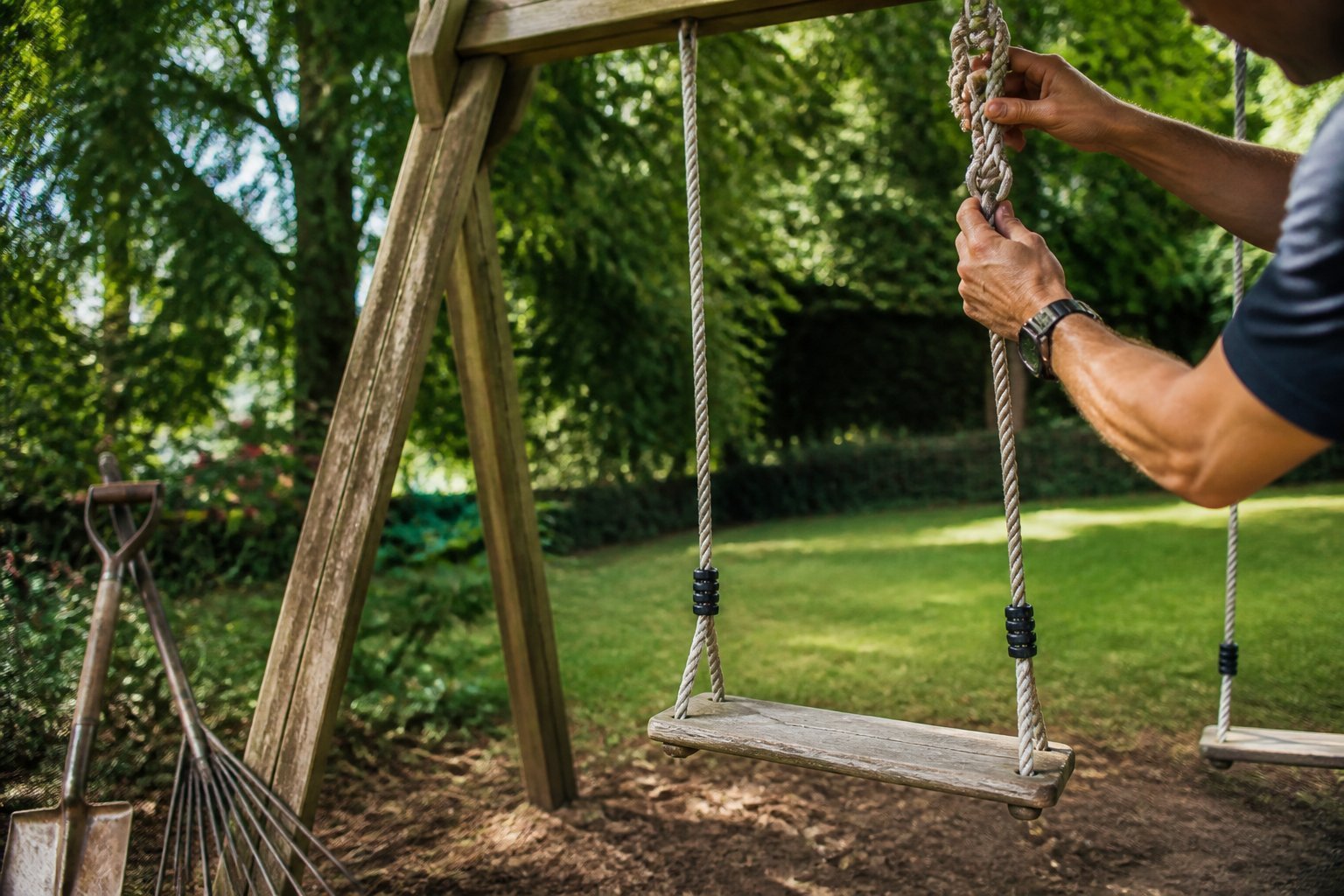
You’ll get practical steps, common pitfalls to avoid, and quick wins that work for small yards and tight budgets. Expect clear guidance on choosing the swing, blending it into your landscape, adding safe surfacing and seating, and even lighting for evening play so you can enjoy the space longer.
1) Install a single A-frame wooden swing set as the focal point
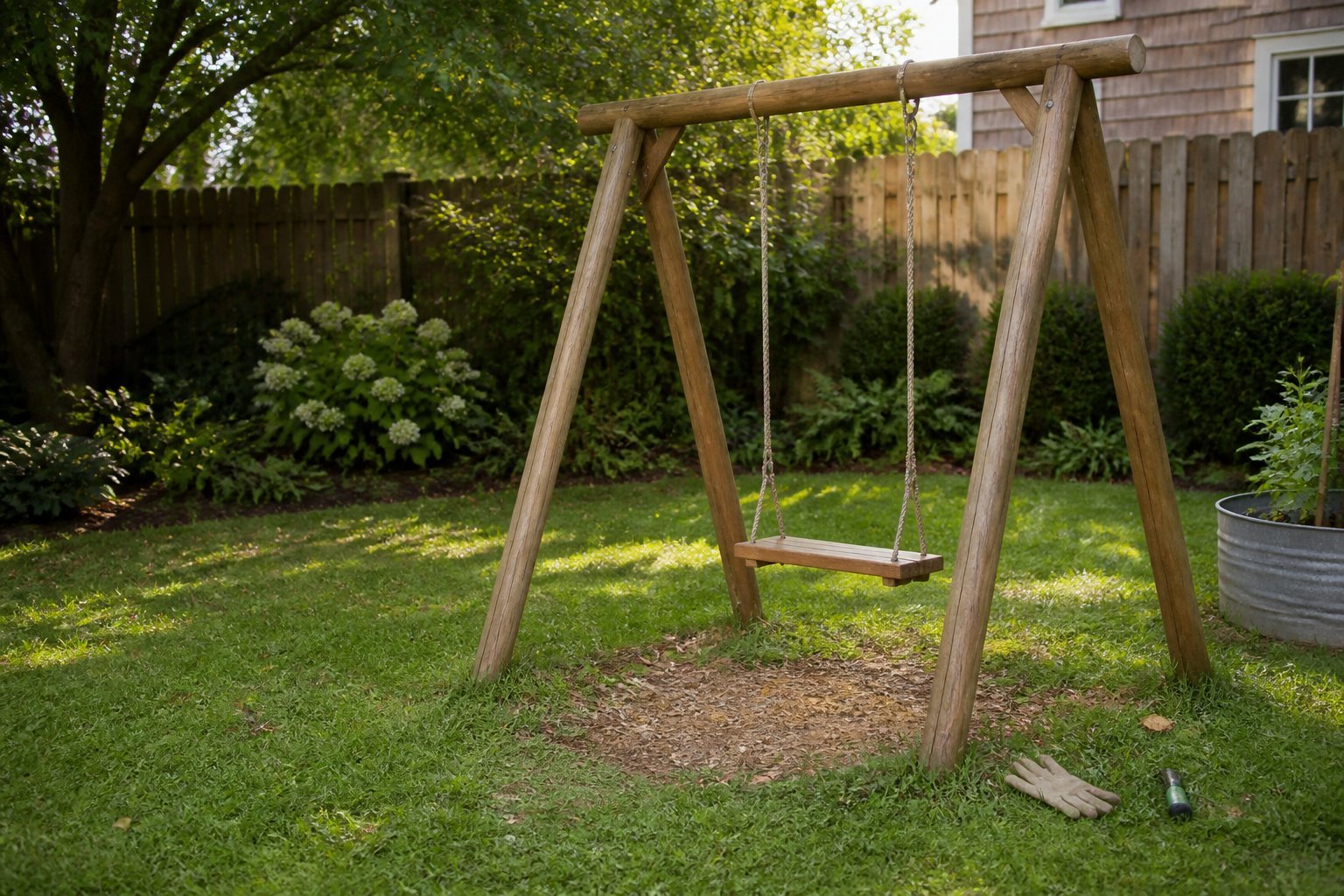
Guide: build or buy a solid A-frame swing set to anchor your yard visually and functionally. Pick treated lumber and 4×4 or 6×6 legs so the frame won’t wobble under kids or adults.
Place it where sightlines from your patio and kitchen meet, creating a natural gathering spot. Keep 6–8 feet of clear space around swings; add mulch or rubber pads to reduce slips.
Use one or two classic swings and a bench swing to balance play and rest. A common mistake is overcomplicating the design—simple lines and natural wood read as park-like and timeless.
If you build it yourself, follow step-by-step plans and secure hardware with stainless steel bolts; uneven legs or loose brackets are what usually fail. Try a weatherproof stain to keep the wood looking fresh longer.
2) Paint the swing set in muted earth tones to blend with landscaping
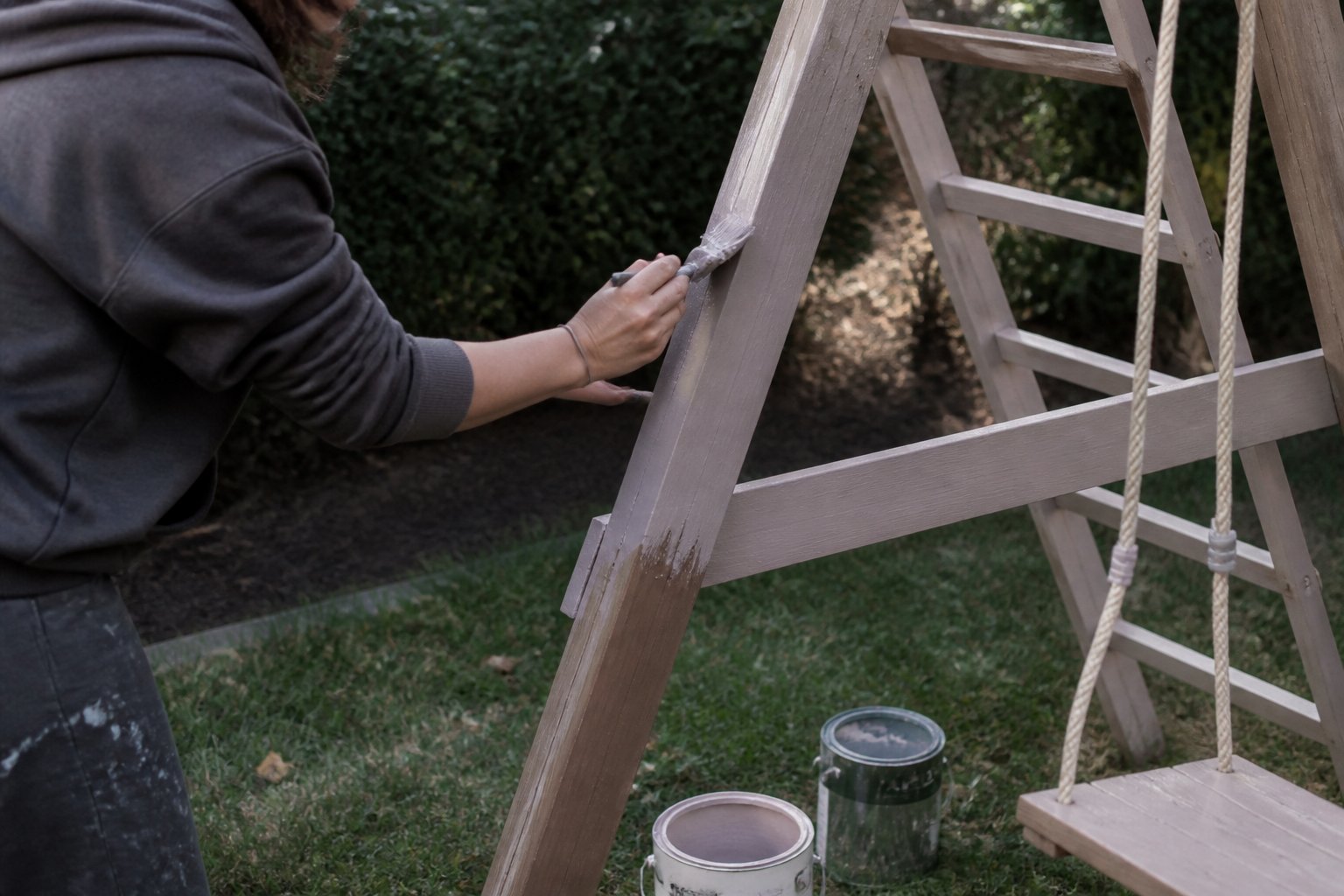
Intent: practical guide for painting to blend the swing set into the yard.
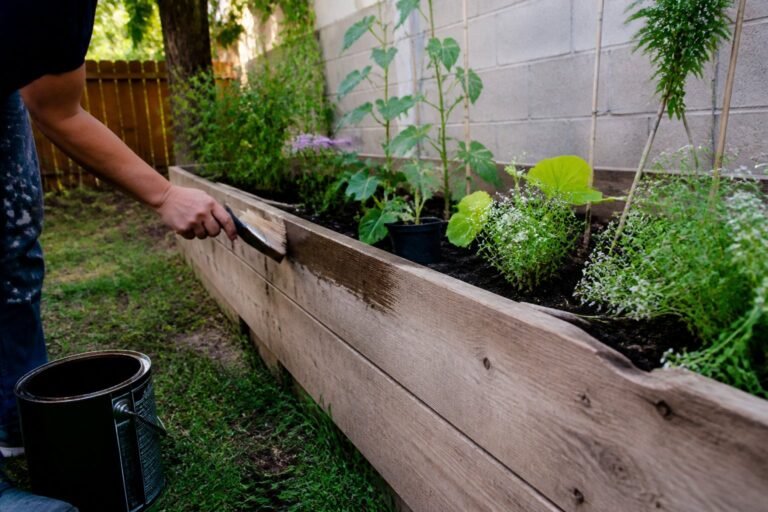
Choose muted greens, warm taupes, or soft clay to make the frame disappear into plants and soil. Test small swatches on wood or metal and view them at different times of day to avoid a color that looks too bright in midday sun.
Prep matters: sand rough spots, prime bare metal, and use exterior paint for durability. A worst-case mistake is skipping primer — paint will peel fast and attract rust or rot.
For accents, paint seats or chains a slightly darker or lighter shade to add depth without shouting. If you want ideas, look at how professionals tuck play zones into parks for a natural feel at https://dearworld.me/swing-set-trick-makes-backyard-feel-park/.
Finish with two thin coats and a non-slip sealer on wood seats. Take a weekend, follow the steps, and your swing set will feel like part of the landscape.
3) Add a reclaimed-wood sign reading “Adventure Park” above the swings
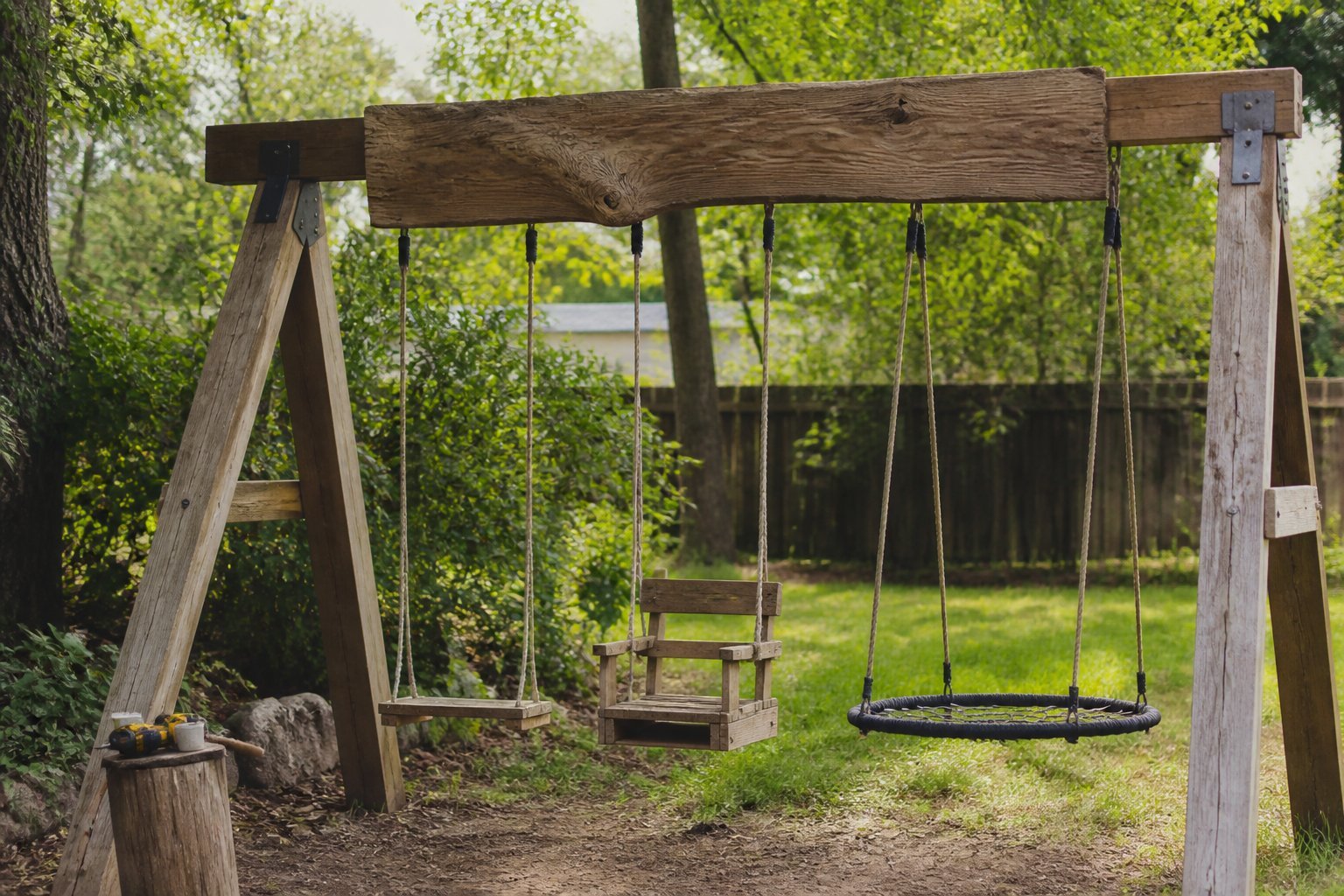
Intent: idea. A reclaimed-wood sign gives the space personality and tells kids this is play time. Pick a board at least 4–6 inches tall so letters read from a distance. Use exterior paint and a clear sealer to keep it looking good through rain and sun.
Stencil the letters to keep them neat, or hand-paint with a steady brush for charm. Fasten the sign to the swing frame with stainless bolts and washers; avoid screws that can loosen. A common mistake is mounting too low—place it high enough to clear heads but low enough to read.
Add small details like painted arrows or a rope fringe to make it feel like a park entrance. If you found the wood from a pallet, sand edges and check for nails first. Hang it, step back, and watch a plain yard feel instantly called-to-play; then adjust height or color to match your set.
4) Surround the swing area with pea gravel and a simple border
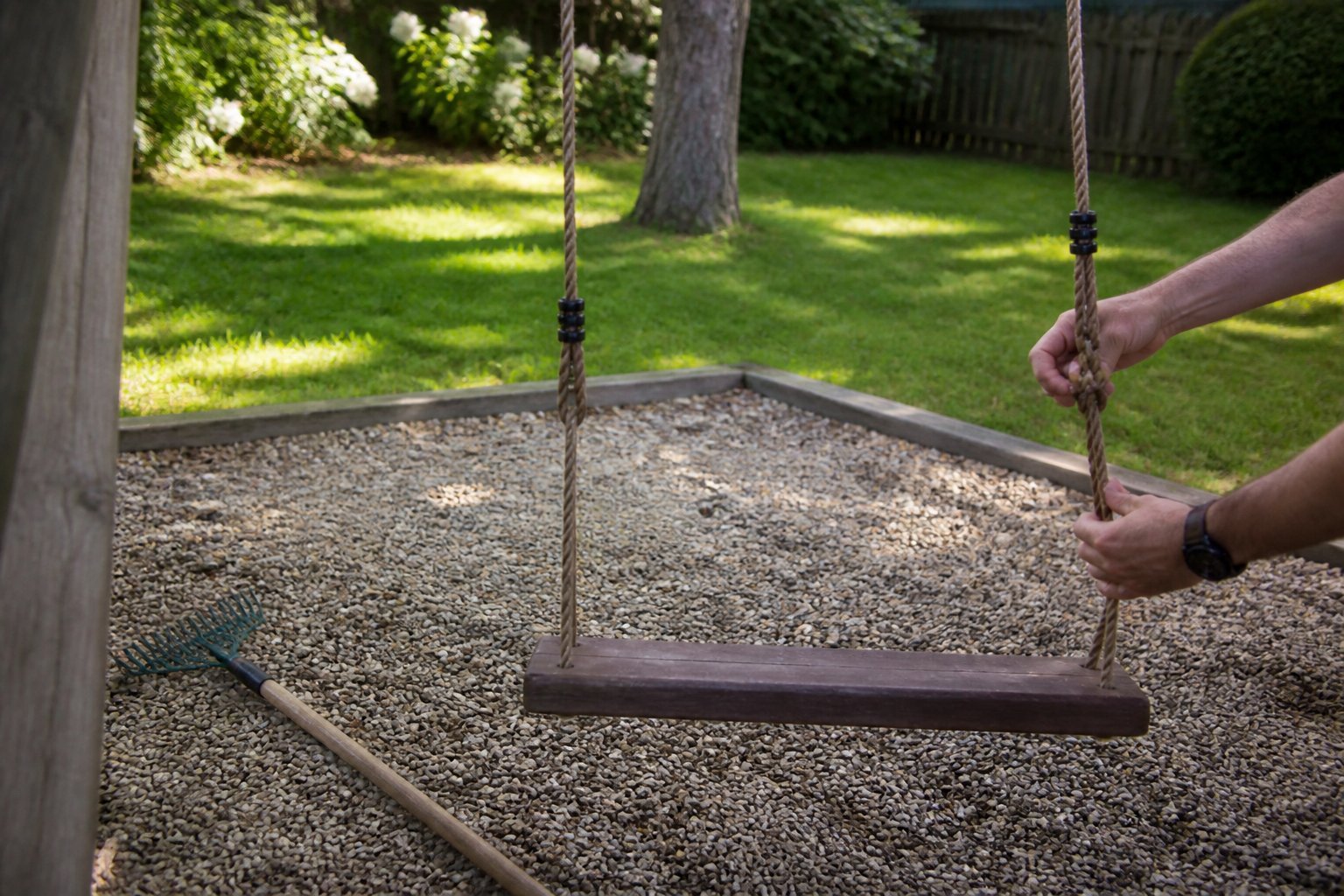
Guide: tutorial. Use pea gravel to create a clean, low-cost play surface that drains well and feels natural underfoot. Lay 3–4 inches for good cushioning and rake it smooth after heavy use.
Pick a simple border like pavers, treated timber, or flexible edging to keep the gravel contained. A 4–6 inch high edge works for most yards; avoid sharp edges and gaps where toes can catch.
Common mistake: skipping weed barrier. Use landscape fabric under the gravel to stop weeds and slow settling. Another mistake is too shallow gravel—kids’ landings need depth.
Example: one parent boxed a 12×10 area with pavers and pea gravel; it cut mud and made the swing spot look like a small park. Check the edge yearly and add gravel as needed to keep it safe and tidy.
5) Plant a mixed native wildflower border behind the swing set
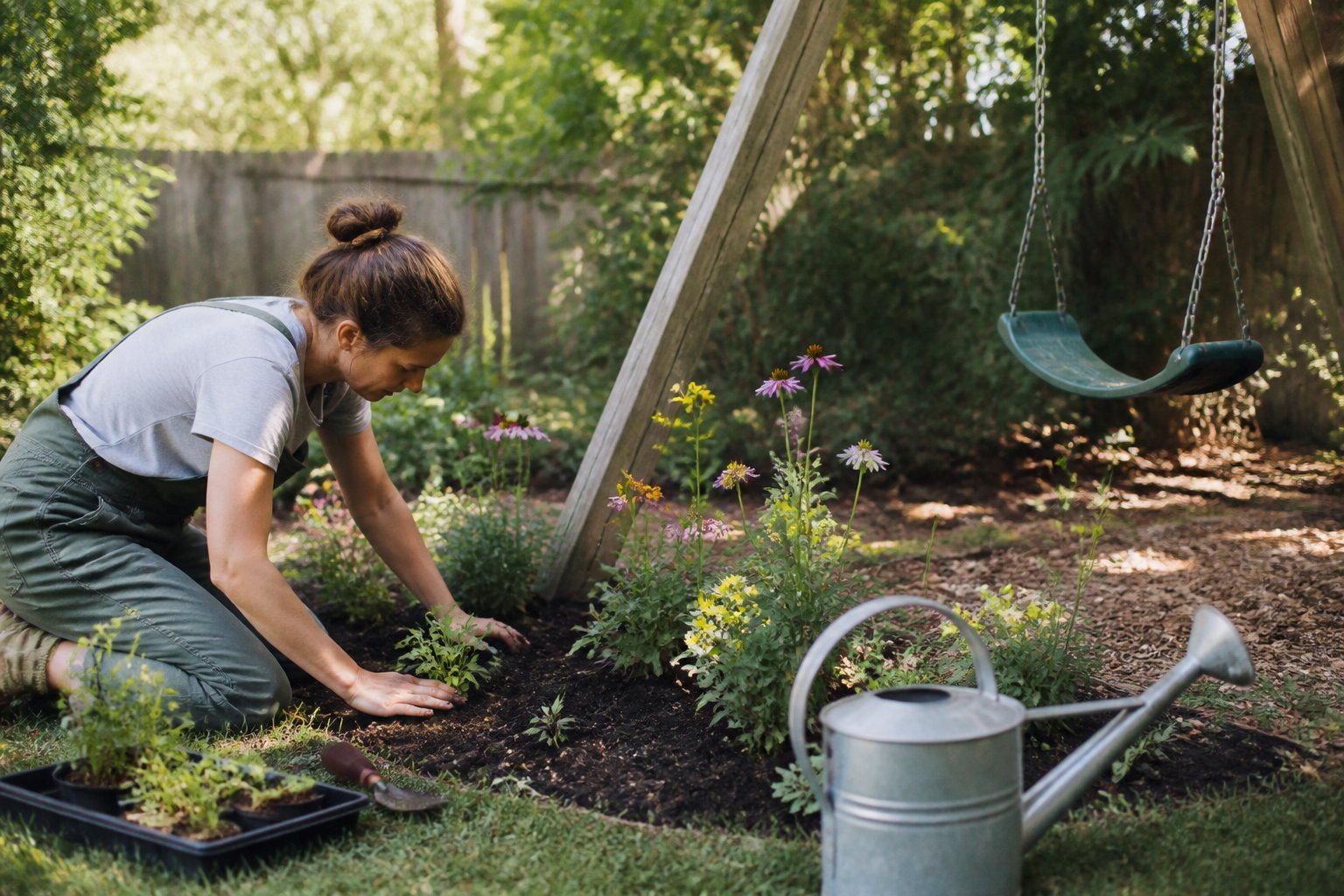
Guide: plant a mixed native wildflower border to frame the swing and invite birds and pollinators. Choose local species that bloom at different times so color returns all season.
Start small: pick a 2–3 foot strip behind the swing and sow a seed mix or plant plugs. Use natives like coneflower, black-eyed Susan, and native asters for varied height and easy care. Avoid overwatering young plants; a common mistake is treating natives like garden annuals.
Place taller plants toward the back so the swing view stays open. Add a narrow path or stepping stones for mowing and kid access. Expect a slower first year; once established, maintenance drops and the space will feel like a park. Try it this spring and watch wildlife move in: adjust plant choices next season based on what thrives.
6) Install a single hanging hammock swing for adults and kids
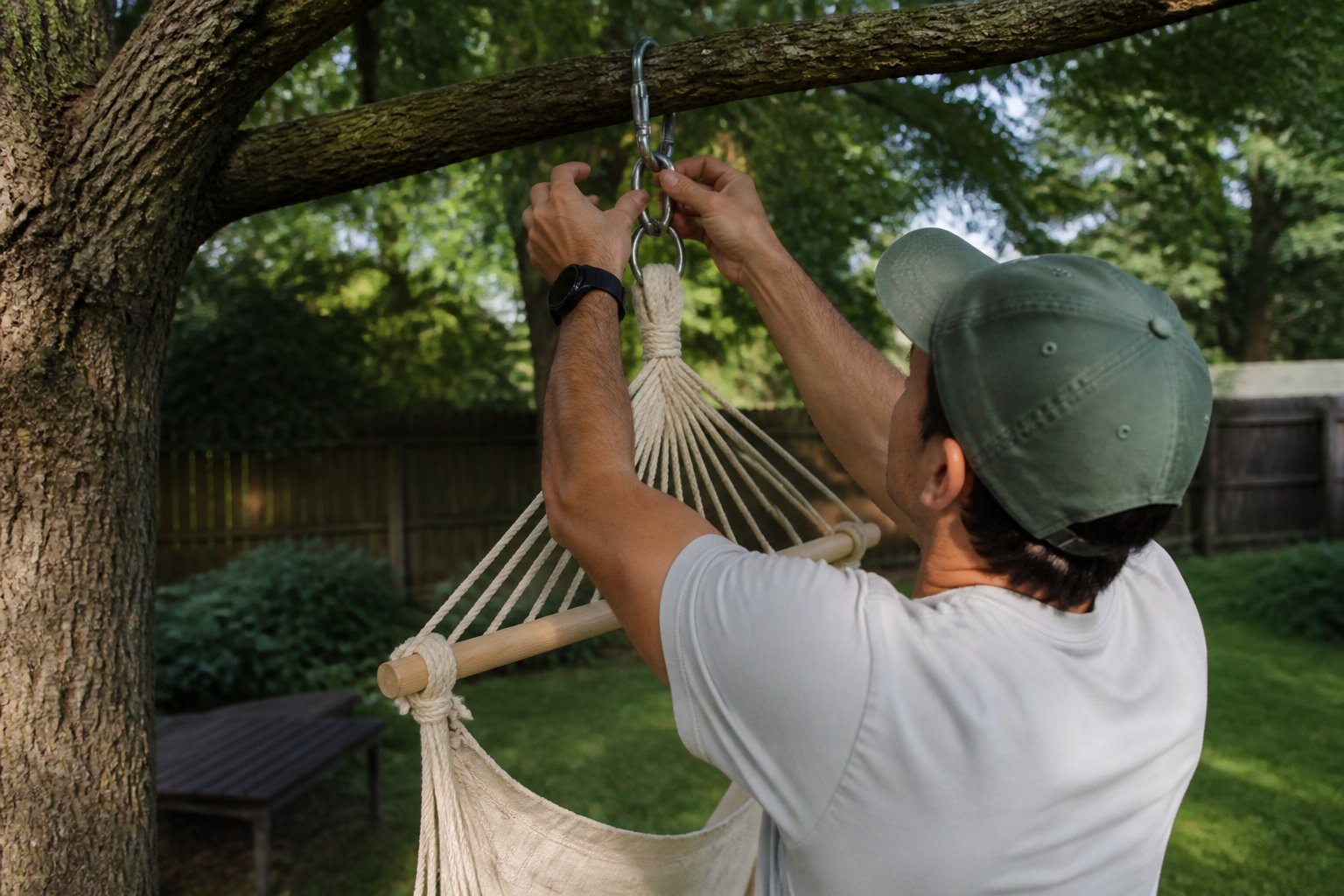
Guide: install a single hanging hammock swing to add a cozy spot for reading, lounging, or gentle play. Pick a strong beam, mature tree branch, or a proper hanging kit rated for at least 300–400 lbs.
Measure and mark the mounting point, then drill and fit a heavy-duty eye bolt or use a rated hammock hanging kit. If attaching to a ceiling joist, find the center of the joist. For trees, use a wide tree strap to protect bark and spread the load.
Test the swing with gradually increasing weight before use. A common mistake is using weak hardware or shallow anchors—those fail quickly. If unsure, call a pro to inspect your mounting.
You can hang the swing low for kids or higher with an adjustable rope for adults. Try it near a shady spot and add a small side table for drinks and books.
7) Lay a curved stepping-stone path leading to the swings
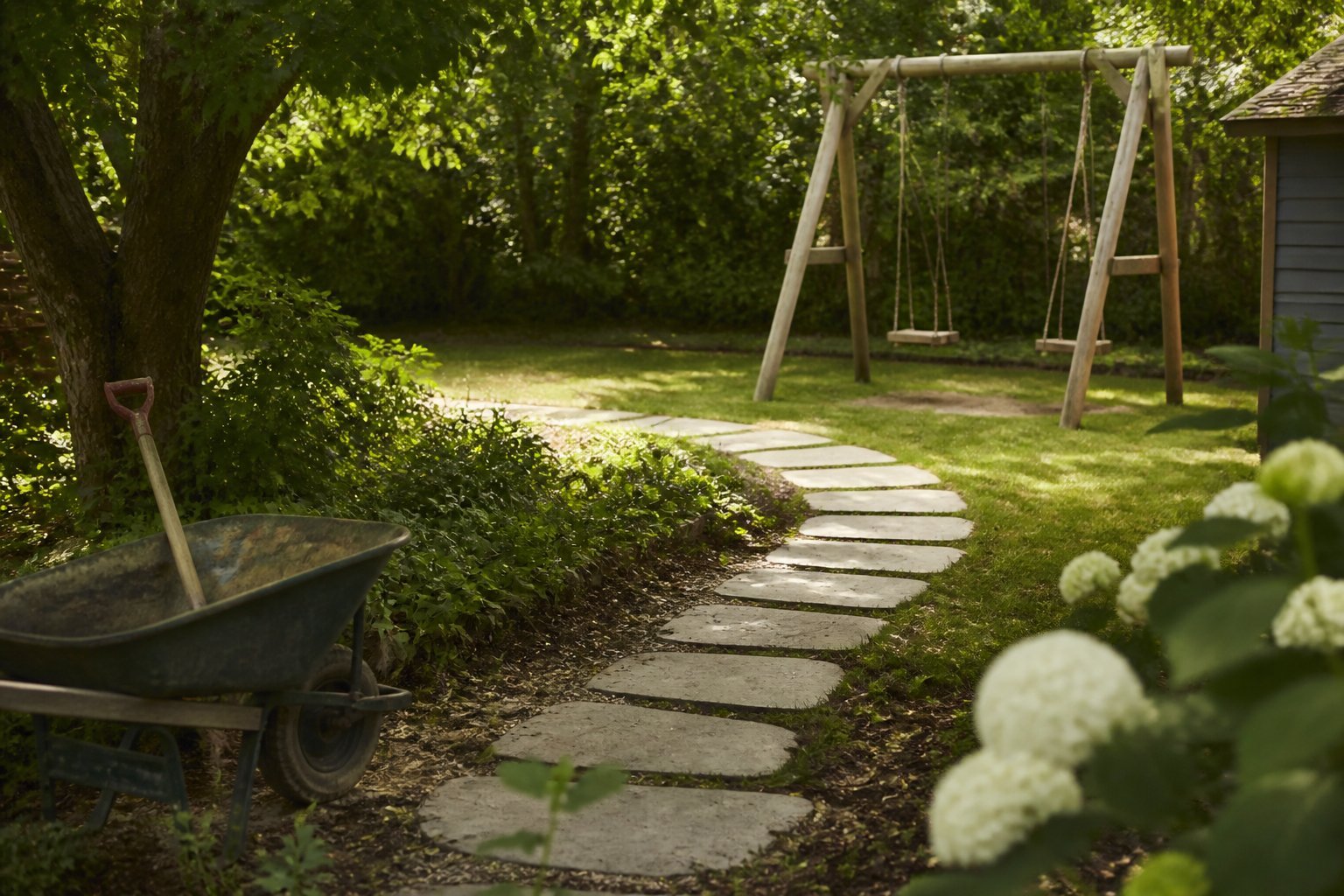
Tutorial: guide your feet and your eye with a gentle curve that feels intentional.
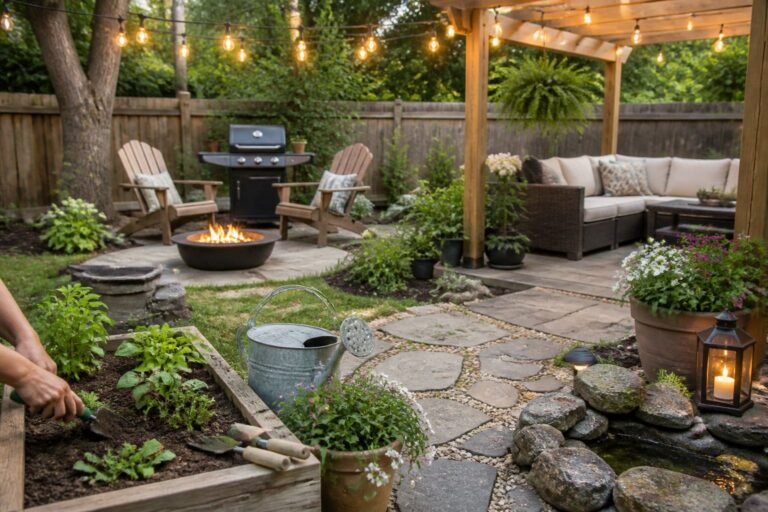
Start by mapping a soft S-shape from your house or patio to the swing set. Curve the stones to avoid a straight, worn strip of grass; this makes the swing feel like a destination. Use a mix of stone sizes for a natural look, and test spacing so kids can step easily without big reaches.
Dig shallow holes, add sand for leveling, and set each stone so the top sits just above the turf. A common mistake is sinking stones too deep — that traps water and causes wobble. Seal edges with gravel or low plants to hide seams and stop grass from creeping back.
If you want charm fast, use poured concrete pavers or pre-cut flagstone. Walk the path after rain to check grip and slope. Try it today and see how the yard suddenly feels planned and inviting.
8) Mount solar string lights along the swing set for evening use
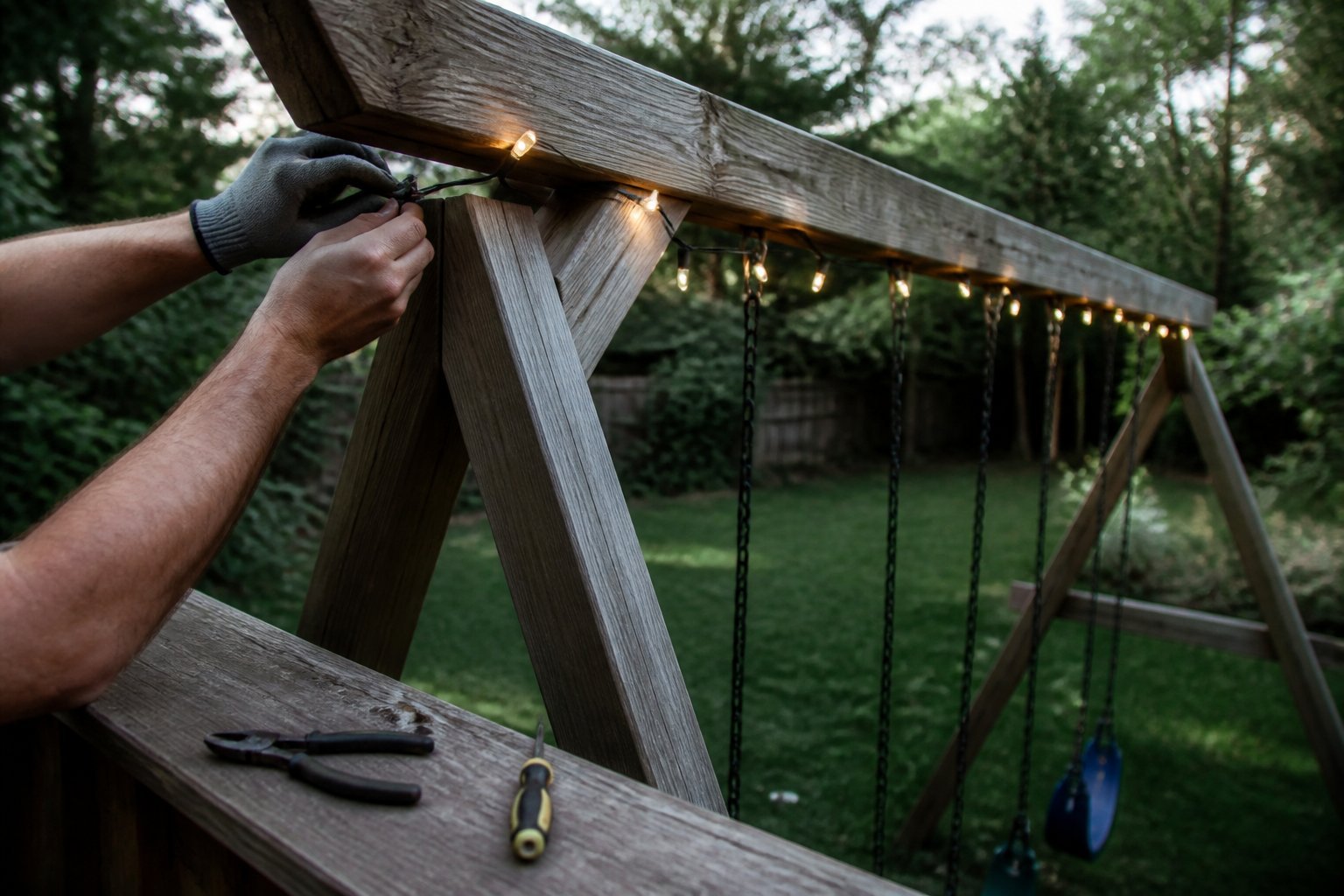
Set the intent: a simple how-to guide. String lights turn a swing set into a backyard park you can use after dusk.
Start by choosing weatherproof solar strings with a separate panel. Run the line along the top beam and secure with zip ties or small hooks every 2–3 feet to avoid sagging. Aim lights away from eyes so kids won’t get glare while swinging.
Test the panel placement in full sun for a few days before final mounting. Common mistakes include placing the panel in shade or over-tightening ties that crack wood.
For a softer look, drape a second strand loosely around posts. If you want a project, add a timer or remote so lights come on only when you need them. Try one change tonight and see how the space feels.
9) Create a low rock retaining wall that doubles as seating
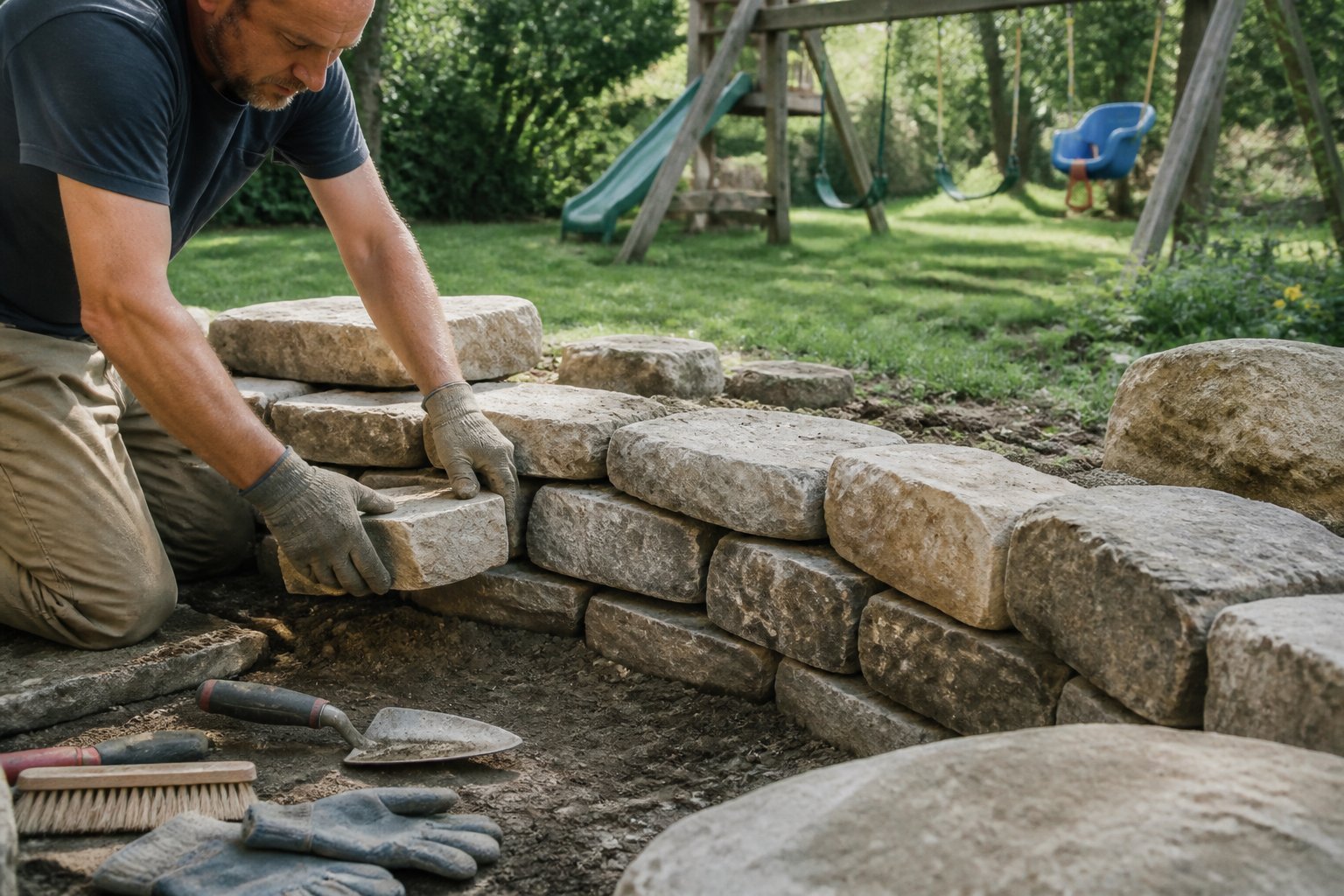
Intent: idea and tutorial. A low rock retaining wall gives you a sturdy border and ready-made seats for kids and adults. Place it along a slope or around a play area to stop erosion and make a natural gathering spot.
Use stacked stone or fieldstone about 12–18 inches high so kids can hop on and off easily. Cap the wall with flatter stones for comfortable seating; add a narrow gravel backfill to aid drainage and prevent bulging.
Common mistake: building it too tall without proper footing. Dig a shallow trench, compact a gravel base, and stagger the joints for stability.
Imagine watching kids swing and then run to sit on the warm stone while you chat. Try a curved layout to frame the swing set and make the yard feel park-like.
For inspiration on seatwall styles and fire-pit layouts, see seating wall ideas and patio uses (https://www.americanpavingdesign.com/our-blog-1/seating-walls-and-retaining-walls).
10) Place a small picnic table near the swing set for snacks and supervision
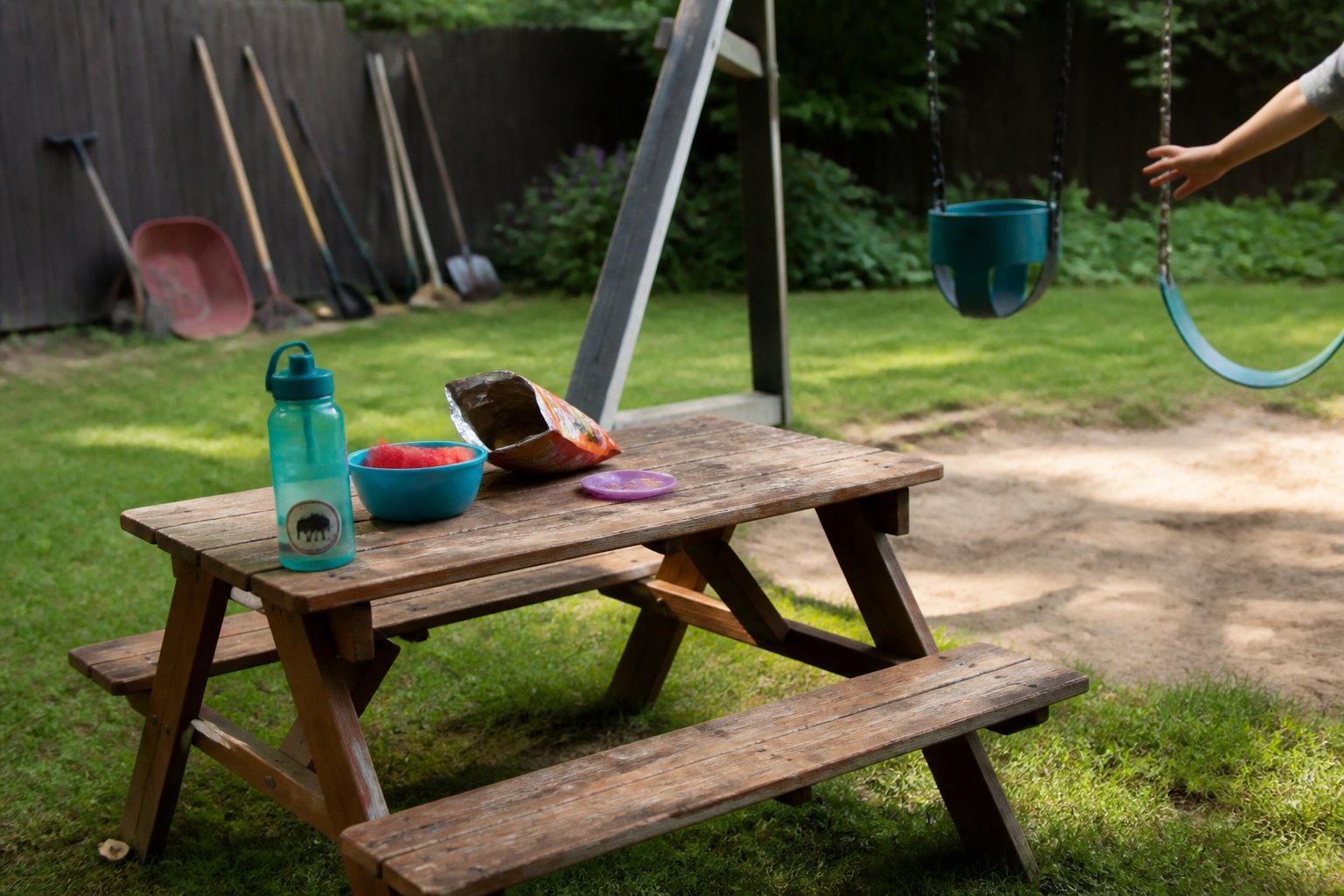
Intent: idea — Make playtime easier and safer with a nearby spot to sit.
Set a sturdy, child-sized picnic table beside the swing set so snacks, water, and crafts stay close. You can keep an eye on kids without standing the whole time, and they get a clear place to pause between runs.
Choose weatherproof materials and anchor the table to prevent tipping. A common mistake is picking a table too close to the swing arc — leave at least 6–8 feet clear for safety.
Use the table for quick snack breaks, play-dough sessions, or simple board games. I’ve seen families add a small caddy for wipes and first-aid; it makes supervision low-effort and more relaxed.
Try matching the table height to your children’s ages and swap a bench for chairs if you want more adult seating. Add shade or a small umbrella to keep kids comfortable, then enjoy more time outside together.
Psychological Benefits of Active Play
Active play on a swing set helps kids think more creatively and connect better with others. It calms the nervous system, builds focus, and gives children tools to solve problems during play.
Boosting Creativity in Children
You can spark imagination simply by adding loose parts near the swing set: a blanket, a cardboard box, or a rope can turn a swing into a pirate ship or rocket. When children repurpose everyday items, they practice symbolic play, which strengthens planning and storytelling skills.
Encourage role play by joining briefly and then stepping back. Your short prompts — “What’s your ship’s name?” or “Where are you flying to?” — push kids to invent rules and keep scenes going.
Watch for common mistakes: don’t over-direct the scenario or rescue problem-solving too quickly. Let children struggle a bit to find solutions; that tension is where creativity grows.
Try rotating simple props every few weeks to avoid play rut. Small, intentional changes keep ideas fresh and invite longer, deeper play sessions.
Fostering Social Connections
Active play on a swing set gives repeated chances to practice sharing, turns, and negotiation. These moments teach children how to read cues, wait patiently, and resolve small conflicts without adult control.
Set clear, simple rules for turn-taking — a timer or counting method works well — and model calm language when disagreements happen. When you intervene, label feelings: “I see you’re upset because the swing is taken.” That teaches emotional vocabulary.
Group games like relay swings or paired pushes create joint goals. Those shared wins build friendship fast.
Be mindful of exclusion: invite a quiet child to join with a specific role, such as timekeeper or cheerer. Small nudges from you can turn solo play into lasting social bonds.
Safety and Maintenance Essentials
You want the swing set to look and perform like a small neighborhood park. Focus on regular hardware checks, safe surfacing, and weather protection so the structure stays steady and kid-ready.
Routine Equipment Checks
Guide: a hands-on inspection routine you can do monthly and after storms.
Start at the top: check beam joints, hangers, and swing seats. Tighten loose bolts with a wrench and replace any missing or stripped fasteners. Look for cracked plastic, frayed ropes, or worn chains; swap these parts immediately. Test swing hang points by lifting each seat to the highest point and inspecting the attachment for wobble or metal fatigue.
Scan wood for splinters, rot, or soft spots. Probe suspect areas with a screwdriver—soft wood needs repair or replacement. For metal frames, look for rust and chipped paint; sand and repaint small areas to stop corrosion. Keep a short checklist: bolts, connectors, seats, ropes/chains, wood condition, and ground anchors. Record dates and actions so you can track recurring issues and avoid a missed repair that could cause an injury.
Weatherproofing Outdoor Structures
Guide: practical steps to protect the set from rain, sun, and freeze-thaw cycles.
Apply a sealant or exterior-grade stain to wooden parts every 1–2 years. Choose a product labeled for playgrounds or decks so you avoid slippery finishes. For metal, use a rust-inhibiting primer and paint on exposed spots; touch up chips within weeks to prevent spread. Remove or store fabric canopies and swings during winter or heavy storms to reduce tear and mildew.
Keep the play area draining well. Add 6–12 inches of loose-fill safety surfacing like engineered wood fiber or rubber mulch and rake it level after heavy rain. Anchor the set to prevent tipping during high winds; follow manufacturer instructions or use ground anchors described in a dedicated how-to anchoring guide. Small proactive steps save you from big repairs later—check now and schedule the next weatherproofing task.