10 DIY Solar Fountain Ideas to Refresh Your Outdoor Space
You can add gentle water sound and bright focal points without spending a lot or running wires through your yard. You’ll learn easy, budget-friendly solar fountain ideas that refresh your outdoor space and lift curb appeal without a big build or big bills.
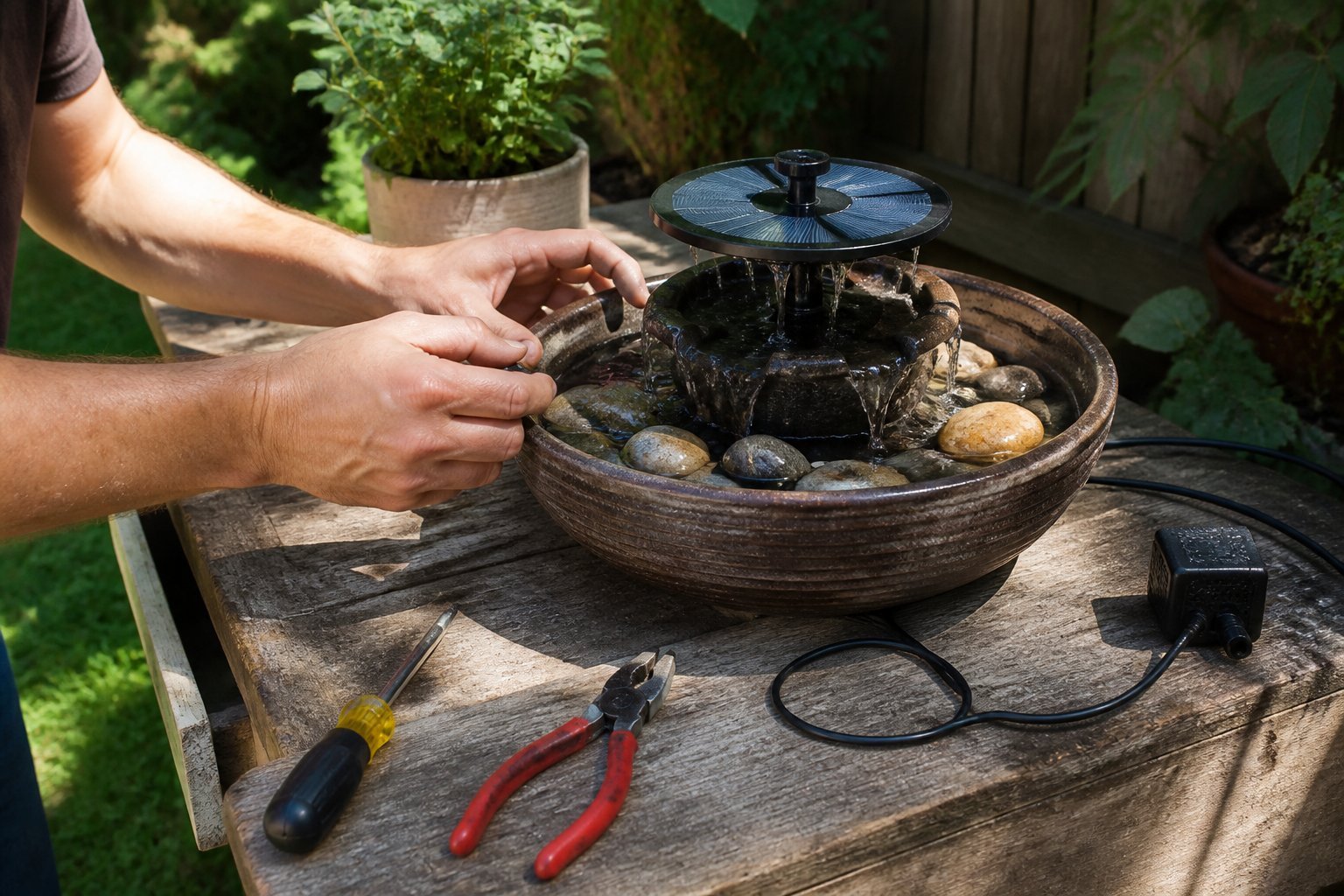
I’ll guide you through simple projects, common mistakes to avoid, and tips that help each fountain last longer and look better. Expect practical how-to steps, materials that won’t break the bank, and design notes to match small patios, planters, tubs, or larger micro-ponds.
1) Solar-Powered Floating Pond Pump with LED Accent Lights
Intent: tutorial. Use a floating solar pump to add motion and light without wiring. Choose a model sized for your pond; small pumps suit birdbaths, larger ones fit backyard ponds. Look for pumps with multiple nozzles and built-in LEDs for easy setup.
Place the floater where sun exposure is strongest. Test it on a sunny day to check flow and light colors. A common mistake is hiding the floater near deep shade — pumps sputter and lights dim.
Swap nozzles to change the spray pattern. If algae builds up on the float, clean the solar panel and pump monthly. Try a warm-white LED for subtle mood or multicolor for parties. Pick a durable unit rated for outdoor use to keep your water clear and your pond feeling cared for.
2) Repurposed Terracotta Pot Tiered Fountain (stacked pot design)
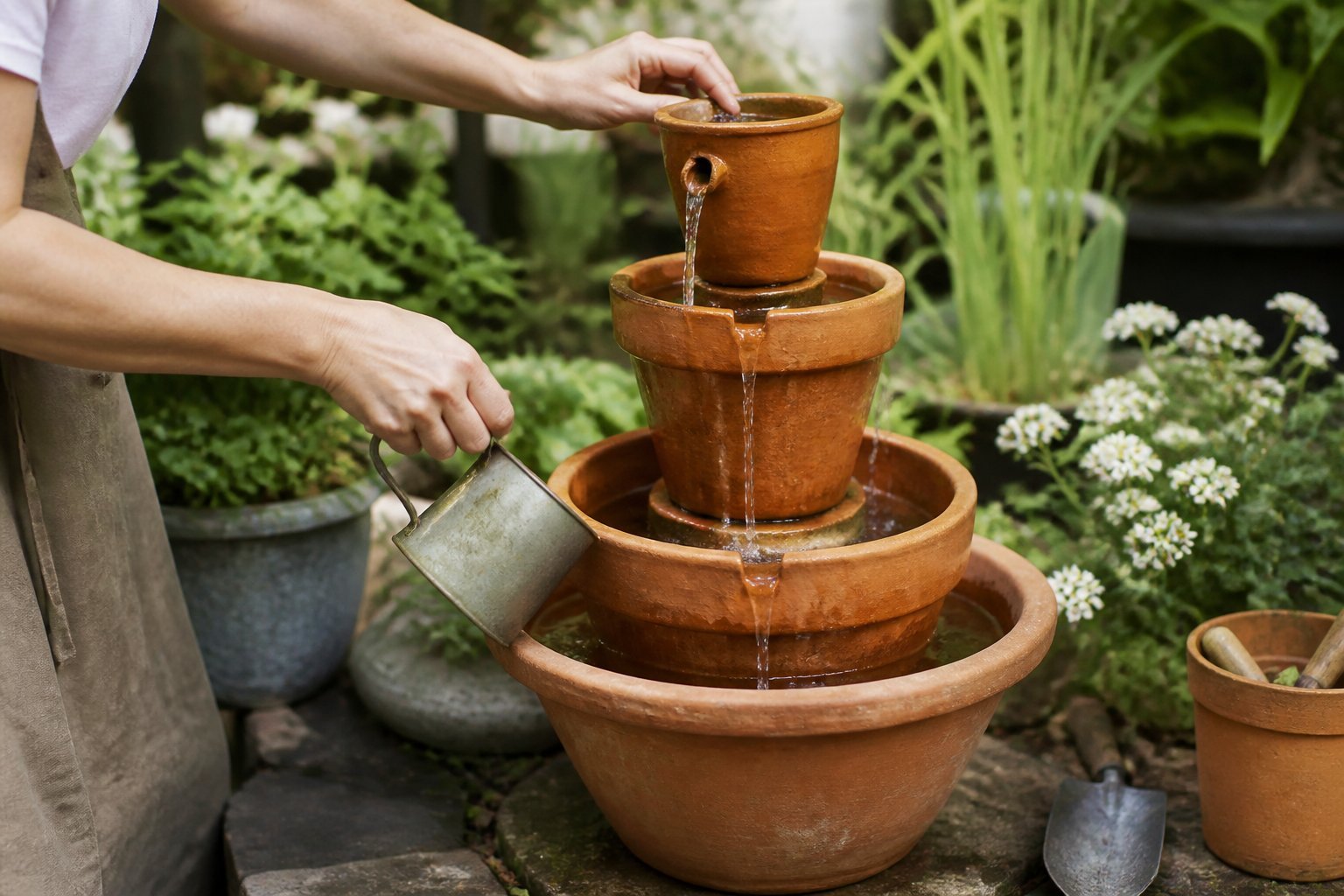
Tutorial: learn to build a simple stacked-pot fountain that uses common clay pots and a small pump.
Start by choosing pots that nest from large to small. Use a waterproof basin at the base and a pump sized for the total drop height; undersized pumps struggle and clog easily.
Drill a center hole in each pot and feed tubing through for a neat, hidden flow. Seal joints with silicone and add gravel layers to steady each pot; this prevents wobble and keeps water clear.
A common mistake is using untreated terracotta outdoors—seal the pots or they’ll absorb water and crack in freeze-thaw cycles. Try paint or moss for a finished look that blends with plants.
If you want solar power, pick a pump rated for your sunlight and test flow on a bright day. Try stacking three to five pots for best sound and visual scale.
3) Galvanized Steel Tub Micro Pond with Solar Fountain Kit
Guide: turn an old galvanized tub into a neat micro pond using a plug-and-play solar fountain kit. Start by cleaning the tub, then add pond liner and a layer of gravel to hide the pump and anchor plants.
Choose a solar pump sized for small containers; cheap kits can sputter in low light. Position the solar panel where it gets sun and test spray height before planting. A common mistake is overfilling with tall plants that block the pump intake.
Add oxygenating plants and a few floating bits to soften sound and hide edges. If algae appears, reduce direct sun and swap water regularly. Try this quick build for a low-cost, charming focal point that’s easy to maintain and enjoy.
Learn more step-by-step tips for a similar project at this detailed DIY tutorial.
4) Mason Jar Solar Bubbling Jar Fountain
This is a hands-on tutorial to build a charming, low-cost fountain using a mason jar and a small solar pump. You’ll need a wide-mouth jar, a solar-powered fountain pump, tubing, and decorative stones or shells.
Start by drilling a small hole in the jar lid for the tubing or use a gasketed feed-through to prevent leaks. Position the pump inside with tubing rising to create a gentle bubble; secure the lid snugly. Add stones to hide the pump and steady the jar, and place the solar panel in full sun.
Common mistakes include using too-strong pumps that splash water out and placing the panel in partial shade. Test during midday sun and trim tubing length if spray is uneven. Try colored glass jars or floating succulents around the rim for extra curb appeal. Give it a quick weekly clean to prevent clogs and algae growth.
5) DIY Bottle Cascade Fountain (recycled glass bottles)
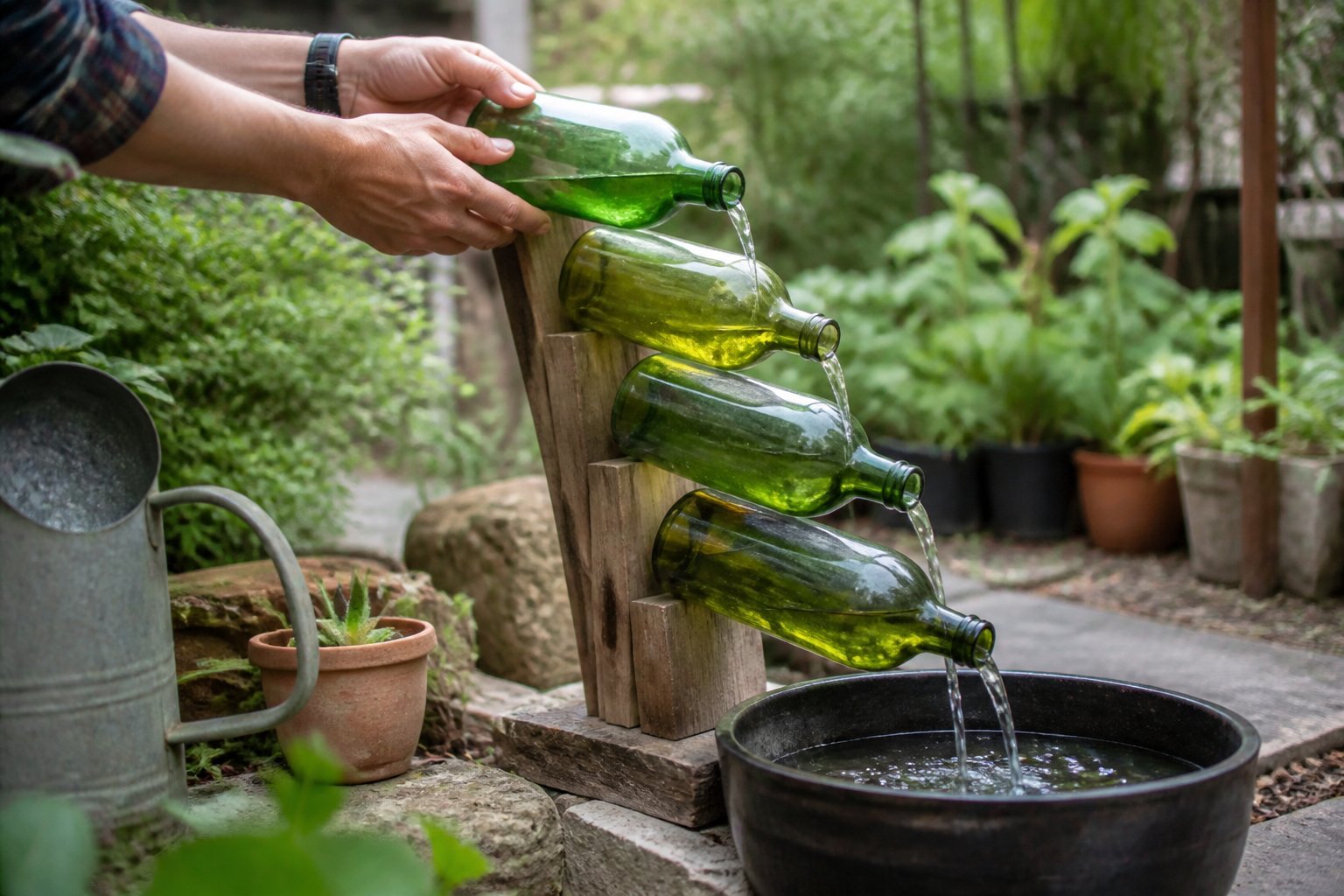
Tutorial: build a low-cost, eye-catching cascade using recycled glass bottles and a small pump. Start by collecting 4–6 bottles of similar neck size; clear or colored bottles both look great.
Stack bottles on a sturdy frame or stagger them on flat stones so water spills from one neck to the next. Use a solar fountain pump sized for shallow falls and hide tubing inside the top bottle. Test flow before sealing any joints.
Common mistakes: using mismatched necks that leak, or a pump too weak for the cascade height. Seal with silicone around bottle joints and secure bottles so wind won’t tip them.
Try mixing bottle colors or adding pebbles for weight and visual interest. If the cascade sputters, clean the pump and check that sunlight hits the panel directly.
6) Solar Panel-Powered Pebble Waterfall (hidden pump)
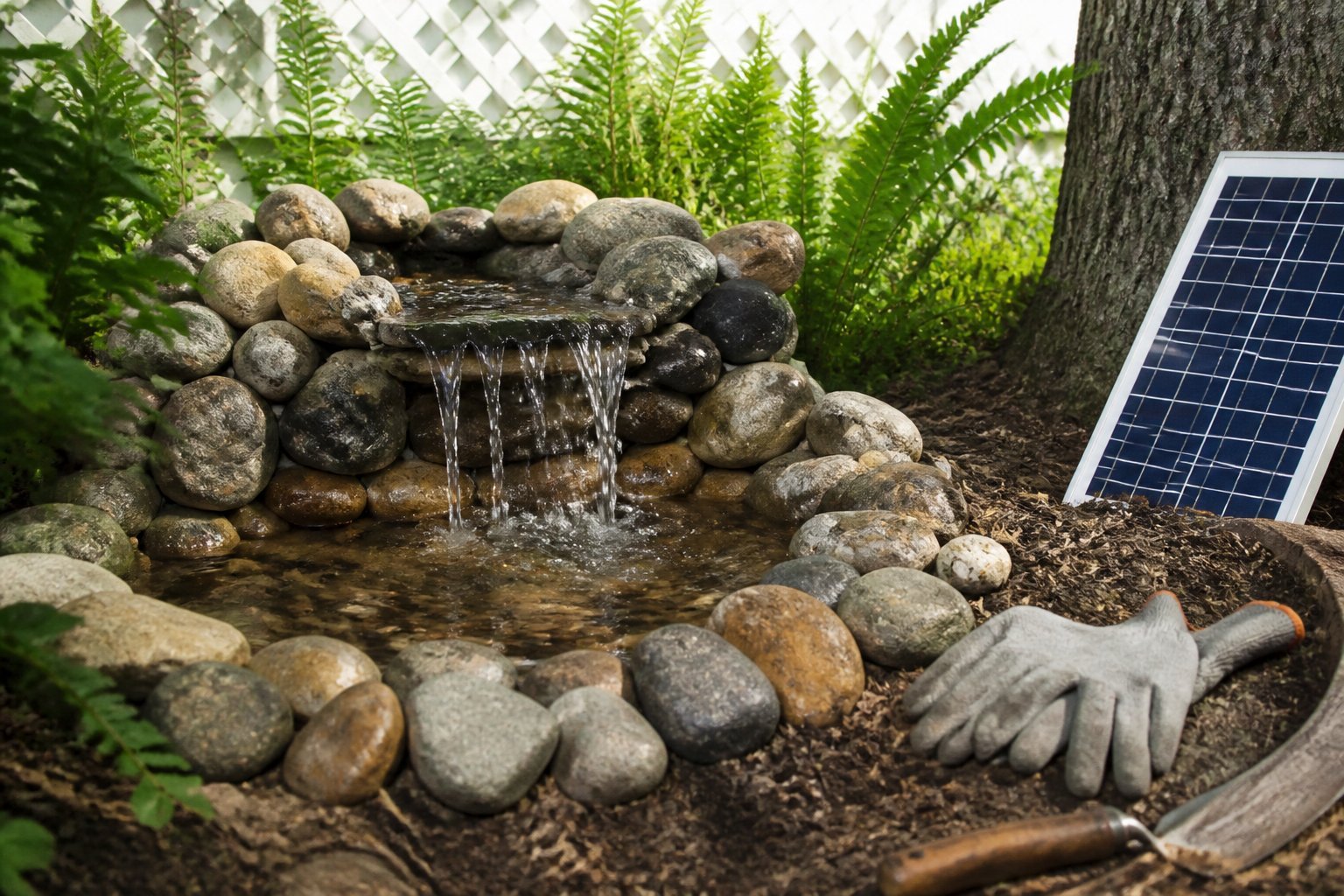
This idea is a hands-on tutorial for a low-profile, natural-looking water feature. You place a shallow basin, stack flat pebbles to make a gentle cascade, and hide a small solar pump under the stones so water appears to seep out of the rock.
Use a submersible solar pump sized for low head and slow flow. Position the panel where it gets direct sun and run the thin cord under mulch or pavers to keep it invisible. A common mistake is stacking pebbles without a drip channel—test and adjust the pebbles so water flows evenly and doesn’t spill.
Try river stones in different sizes to create sound variation. If cloudy weather is frequent, consider a small battery-capable pump or a larger panel. Build, test, then tweak the spill pattern until it looks natural.
7) Old Wheelbarrow Pond with Floating Solar Fountain
This is a hands-on tutorial that turns an old wheelbarrow into a charming mini-pond. You’ll need a waterproof liner, gravel, plants, and a floating solar pump you can place in the center.
Start by cleaning the wheelbarrow and fitting a pond liner, smoothing wrinkles so water sits evenly. Add a layer of gravel to hide the liner and anchor plants; pick small water plants like water lettuce or marginals for low upkeep.
Place a floating solar fountain in the middle; test it in full sun to check spray height and run time. A common mistake is using a cracked wheelbarrow—patch holes first or choose galvanized metal to avoid leaks.
This project creates a unique focal point and stays budget-friendly. Try adding night-safe LED path lights nearby to show off gentle movement after dusk.
8) Concrete Birdbath Retro-fit with Mini Solar Fountain Head
This is a hands-on tutorial to turn a plain concrete birdbath into a moving water feature. You’ll need a small solar fountain kit, a drill with a masonry bit, and waterproof silicone to seal the pump hole.
Start by testing the pump in a shallow tub to confirm flow and tube length. Mark the birdbath center, drill a neat hole just large enough for the pump cord, and feed the cord through. Use silicone to seal gaps so water won’t leak into the pedestal.
A common mistake is overfilling the bowl; keep the water level below the pump rim to avoid splashing. For style, add a few river stones around the nozzle and plant low grasses nearby for birds. If sunlight is limited, choose a kit with a detachable panel so you can place the panel in direct sun. Try it, tweak the nozzle height, and enjoy the new sound and wildlife visits.
9) DIY Bamboo Spout Solar Fountain (Asian-inspired)
This is a simple tutorial to add a calm, natural spout to your yard. Use a solar pump, a length of bamboo, and a shallow basin for an easy setup.
Cut the bamboo at a slight angle so water flows smoothly. Fit the pump inside the basin and run the tube through a drilled hole in the bamboo; test for leaks before burying the basin.
Place river rock around the basin to hide the pump and steady the spout. A common mistake is using too powerful a pump; start with low flow to keep the bamboo from splashing.
Try alternating spout heights or pairing two bamboo lengths for a gentle cascade. If the sun is weak, mount the panel in direct light or add a small battery backup to keep the flow consistent.
10) Vintage Wash Basin Tiered Fountain with Solar Pump
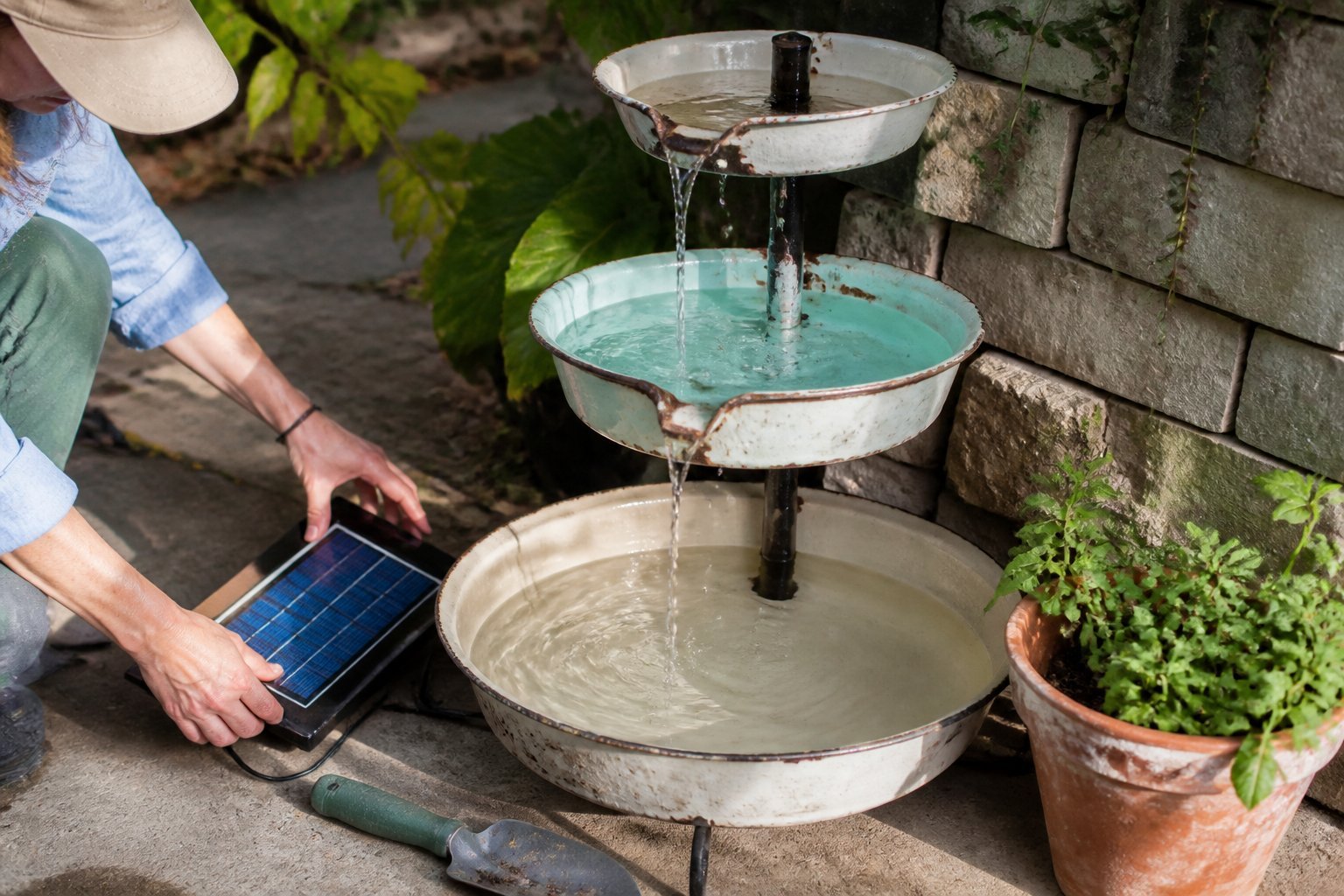
Intent: tutorial. Turn an old wash basin into a tiered fountain using a small solar pump for a charming, low-cost feature.
Start by choosing two or three basins of different sizes. Stack them with short spacers or a threaded rod so water flows from top to bottom. Use a submersible solar pump rated for fountains; place it in the lowest basin and hide tubing through the center.
Watch for leaks where basins meet. Seal with pond-safe silicone and test the pump in bright sun before final assembly. If flow is weak, clean the pump or reduce outlet height. A common mistake is using basins that are too shallow — pick deeper ones to avoid splashing and frequent refills.
This project adds vintage character and runs off sunlight, so position it in full sun. Try antique enamel basins for authentic style or painted metal for a modern twist. Give it a test run and adjust spray height for the look you want.
Choosing the Best Solar Fountain Components
Pick parts that match your fountain size, sun exposure, and the look you want. Prioritize panel wattage, pump flow, and rust-proof materials to avoid common failures and extra work later.
Selecting Efficient Solar Panels
This is a guide to picking panels that will run your pump when the sun is available. Aim for a panel rated 5–20 watts for small to medium fountains; larger tiered features may need 30W or more. Check the voltage: match the panel voltage to the pump’s rated voltage (often 6V or 12V).
Look for monocrystalline panels for higher efficiency in tight sun conditions, or polycrystalline if you want lower cost and durable performance. Consider a panel with a built-in stand or adjustable mount so you can tilt it toward midday sun.
Common mistake: buying a cute-looking tiny panel that can’t produce enough current. If you get dim flow at noon, raise the panel angle, clear shade, or step up to a higher wattage. For reliability, choose a panel with an IP65 or higher rating for outdoor use.
Water Pump Considerations
This is a tutorial for choosing the pump that sets the water look and keeps maintenance low. Match pump flow (GPH) to the feature: 100–300 GPH for small bowls, 300–800 GPH for stacked or multi-tier fountains. Check the pump’s head height—the vertical lift it can sustain—so water reaches the top tier without strain.
Pick a pump with a removable pre-filter or sponge to make cleaning easy. Solar pumps often stall in low light; choose one with a capacitor or small battery buffer if you need short-term operation at dawn or dusk. Noise level matters: submersible pumps are quiet, while surface pumps can hum.
Avoid oversized pumps that cause splashing and water loss. Test pump performance at the installation height before final mounting to prevent disappointing weak flow.
Weatherproof Materials for Outdoor Use
This is a guide to materials that survive sun, cold, and splash without constant upkeep. Choose metals like stainless steel 304 or powder-coated aluminum to resist rust. For stone looks, use concrete mixes sealed with an outdoor sealer or high-density polyethylene (HDPE) pots that won’t crack in freeze-thaw cycles.
Use UV-stable tubing (silicone or reinforced PVC) rated for outdoor use to prevent brittleness. Seal all electrical connectors with marine-grade heat-shrink or waterproof silicone to keep moisture out. Fasteners should be stainless or galvanized; avoid plain steel.
A common oversight: decorative paint or thin seals that peel in one season. Invest in proper outdoor-rated finishes and re-seal visible joints yearly to keep the fountain working and looking great.
Maintenance Tips for Long-Lasting Fountains
Keep water clear, protect the pump, and check solar parts regularly to avoid breakdowns and extra cost. Small weekly tasks prevent big repairs later and keep your fountain looking fresh.
Keeping Water Clean and Algae-Free
This is a practical how-to guide so you can keep water clear without harsh chemicals. Empty and refill small fountains every 1–2 weeks. For larger basins, skim leaves daily and clean the pump intake monthly. Use a soft brush to scrub basin walls and fountain heads to remove film before it becomes slime.
Add a small dose of liquid algaecide or an enzyme treatment per the product label to slow algae. Don’t overdo chemicals—too much can harm birds and plants. Install a simple mesh cover to catch debris and reduce light that feeds algae. If you spot green water, partially drain and refill, then run a filter cartridge or a pool skimmer to pull out particles. Common mistake: letting water level drop too low — that damages the pump and concentrates minerals. Keep the water level at the pump’s recommended mark.
Troubleshooting Common Solar Issues
This section is a step-by-step repair guide for typical solar fountain problems. If the fountain won’t run, first clean the solar panel with a damp cloth and check for shade from new plant growth or debris. Panels work best when tilted toward midday sun. Test the pump battery or capacitor (if present) by placing the panel in strong sun while the pump is disconnected; no spin means panel or wiring fault.
Weak flow often means a clogged nozzle or dirty pump intake. Remove and rinse the nozzle, then inspect the impeller for grit. Replace worn tubing or cracked seals to stop air leaks that reduce pressure. If the pump runs intermittently, tighten connections and look for loose wiring or corroded contacts. Keep a small repair kit: spare tubing, hose clamps, a compact screwdriver, and a replacement impeller. When in doubt, photograph the wiring and parts before disassembly — it saves time and frustration.