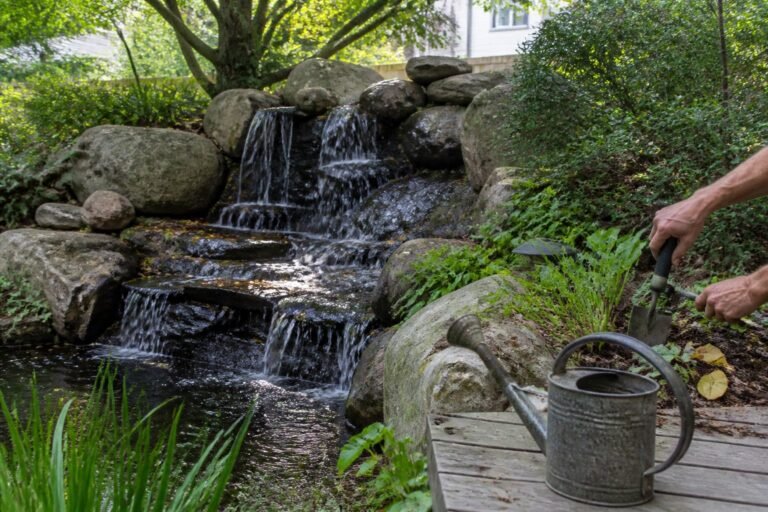
10 Small Corner Backyard Waterfall Ideas That Transform Tiny Spaces Instantly
Imagine stepping into your small corner yard and hearing water soothe the noise of the day while you sip your coffee. You’ll learn simple, real-world ideas that turn tight outdoor spaces into calming waterfall retreats without huge costs or major construction.
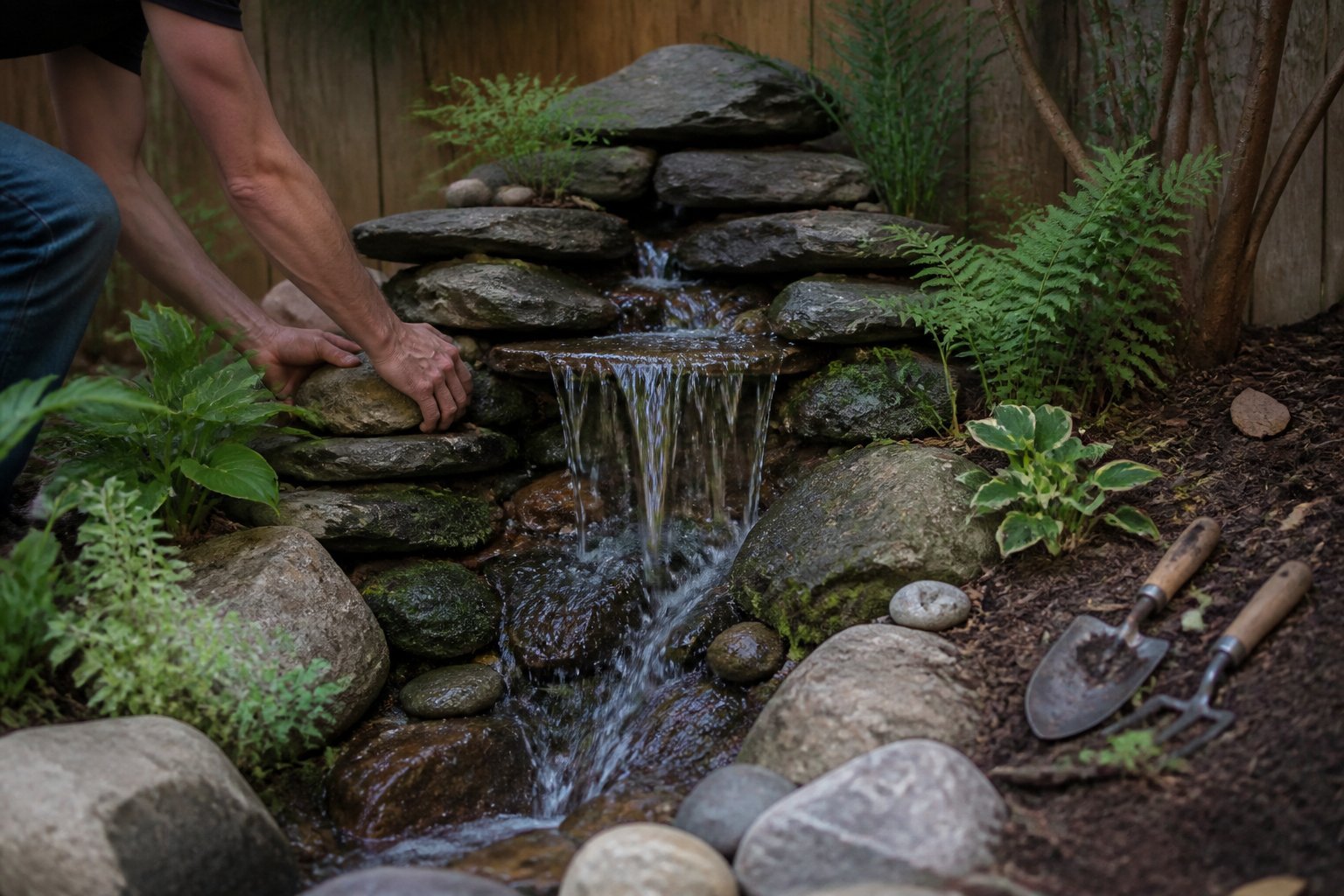
I’ll guide you like an experienced neighbor who’s built a few of these features—showing common mistakes to avoid, materials that work best for small yards, and the styles that fit different landscapes. You’ll leave ready to pick a design, avoid costly errors, and plan the next steps to bring a compact, beautiful waterfall to life.
1) Tiered Boulder Waterfall with Shallow Koi Pool
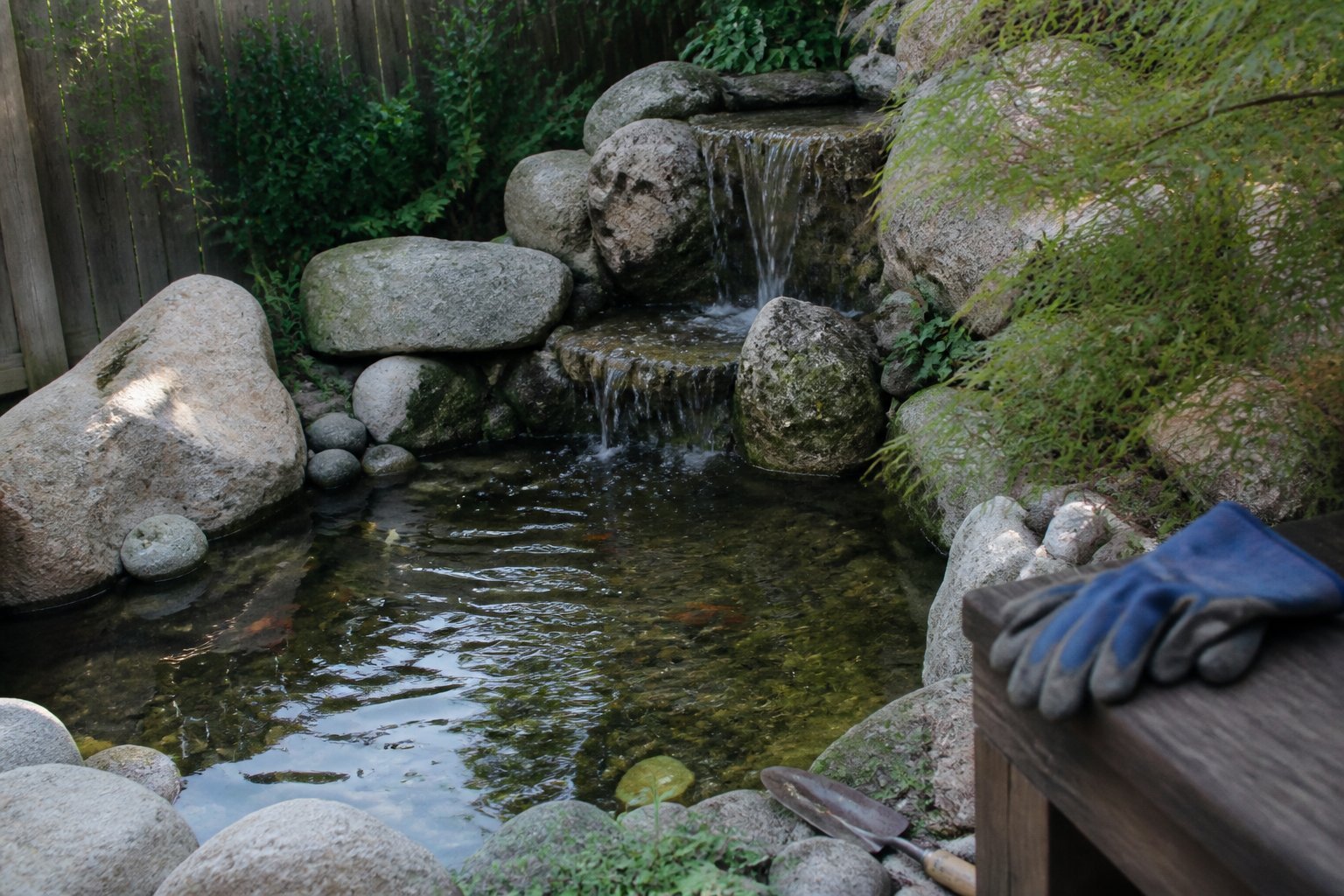
Intent: guide — build a natural-looking tiered boulder fall with a shallow koi-friendly pool.
You’ll stack varied boulders to create stepping tiers that slow water and add sound. Place a shallow pool (12–24 inches) at the base so koi can rest without strong currents.
Start by testing pump size and flow with temporary tubing. Too strong a pump will churn the pool and stress fish; too weak will flatten the cascade. Use underlayment and flexible liner around rocks to prevent leaks and keep edges neat.
Common mistakes: packing river rock too tight, which blocks flow, or making the pool too deep for easy maintenance. I once rebuilt a corner run because the first design trapped debris behind a hidden ledge.
Consider planting low water-tolerant grasses near the tiers to hide liner edges and cushion splash. Try a modest boulder size so the feature fits a small corner and still looks natural.
2) Slate-Ledge Cascades with Native Fern Plantings
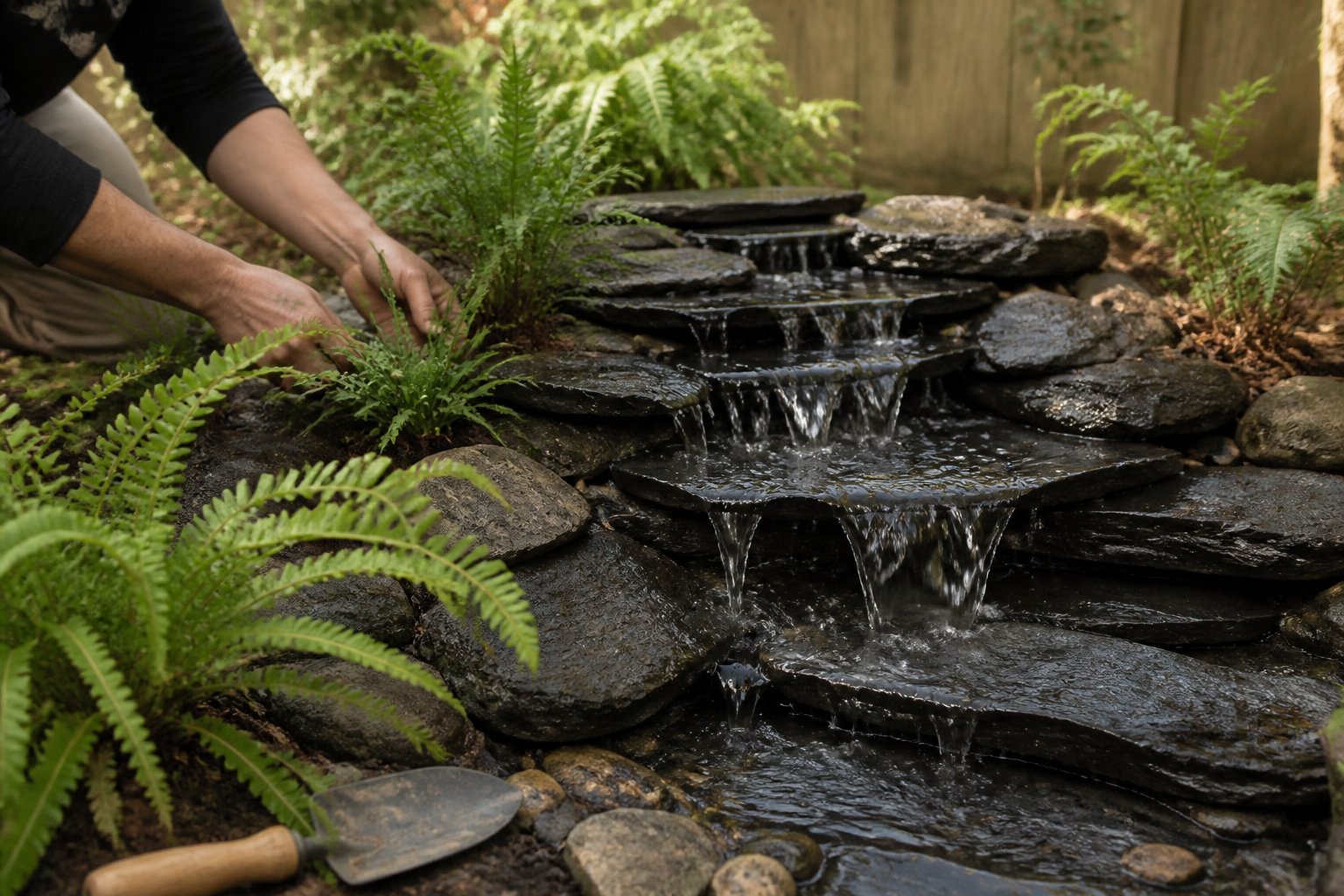
Intent: tutorial. Build a low, layered slate ledge to create a thin, elegant cascade that echoes a natural stream. Place flat slate slabs at staggered heights so water sheets gently over each edge; this keeps splash down and sound soft.
Plant native ferns like maidenhair or sword fern around the base to soften stone lines and attract songbirds. Space them in odd numbers and avoid overcrowding—ferns need room to unfurl and drainage that isn’t waterlogged.
Common mistake: stacking slabs too steeply. That makes water plunge and erode mortar. Instead, test flow with the pump on, adjust angles, and use pebble seams to hide joints.
Example: a 3-foot-wide ledge with three slate tiers, a small hidden pump, and three ferns looks natural and stays low-maintenance. Try one layout, then tweak plant spacing until it reads as part of the yard.
3) Recycled Stone Barrel Spillover Fountain
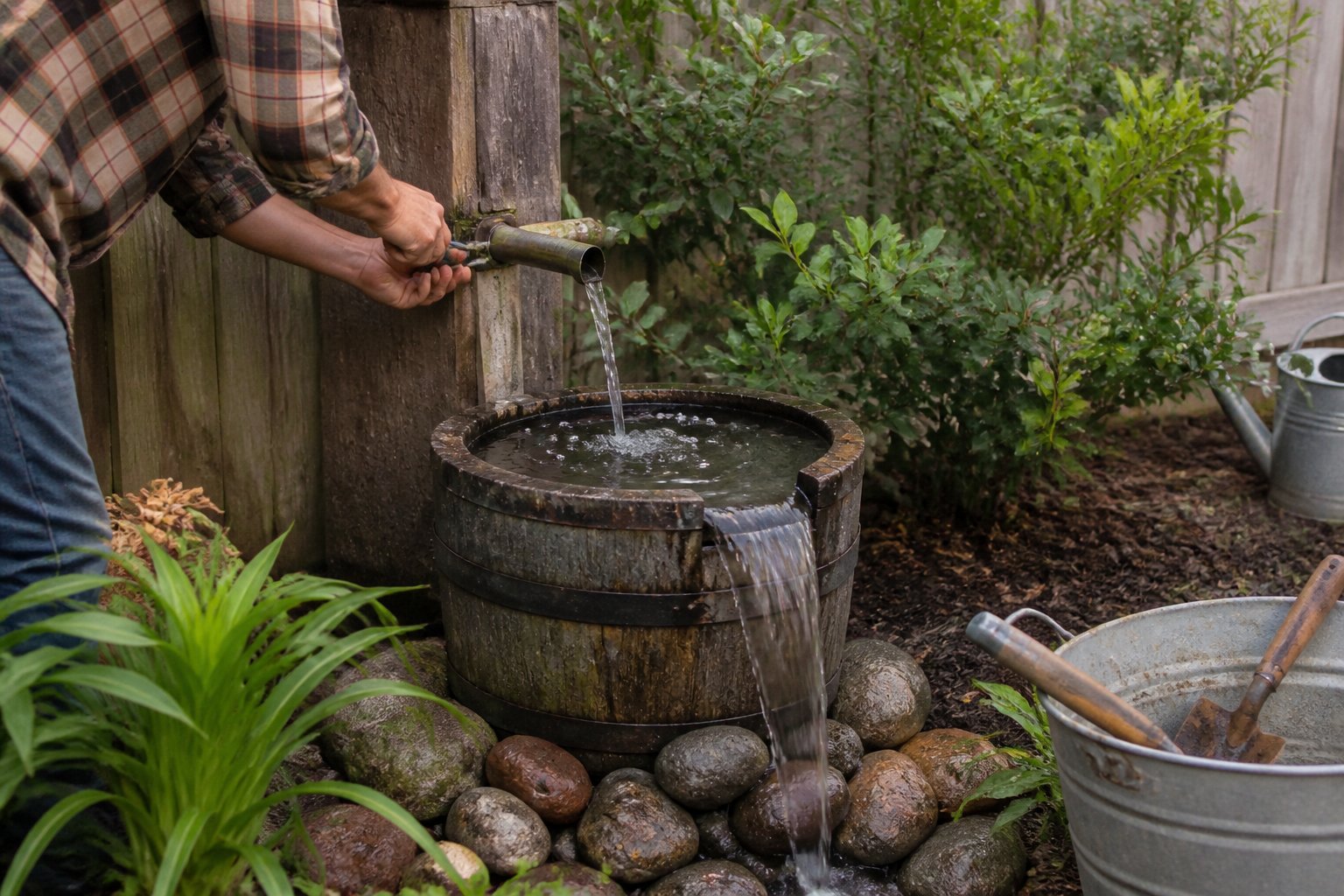
This idea is a hands-on DIY guide to turn an old barrel and broken stone into a spillover fountain. You set a barrel at the corner, stack flat stones on one side, and route a small pump so water pours gently over the stones into the barrel.
Use weathered stone for a natural look and seal gaps with outdoor mortar. A common mistake is using an oversized pump — it makes splashing and wastes power. Keep the pump flow low and test at night to check sound and sightlines.
If you want a rustic touch, stain the barrel dark and add a few native plants around the base. Try this simple build and tweak flow and stone placement until the look and sound fit your yard.
4) Compact Solar-Powered Stream with Pebble Bed
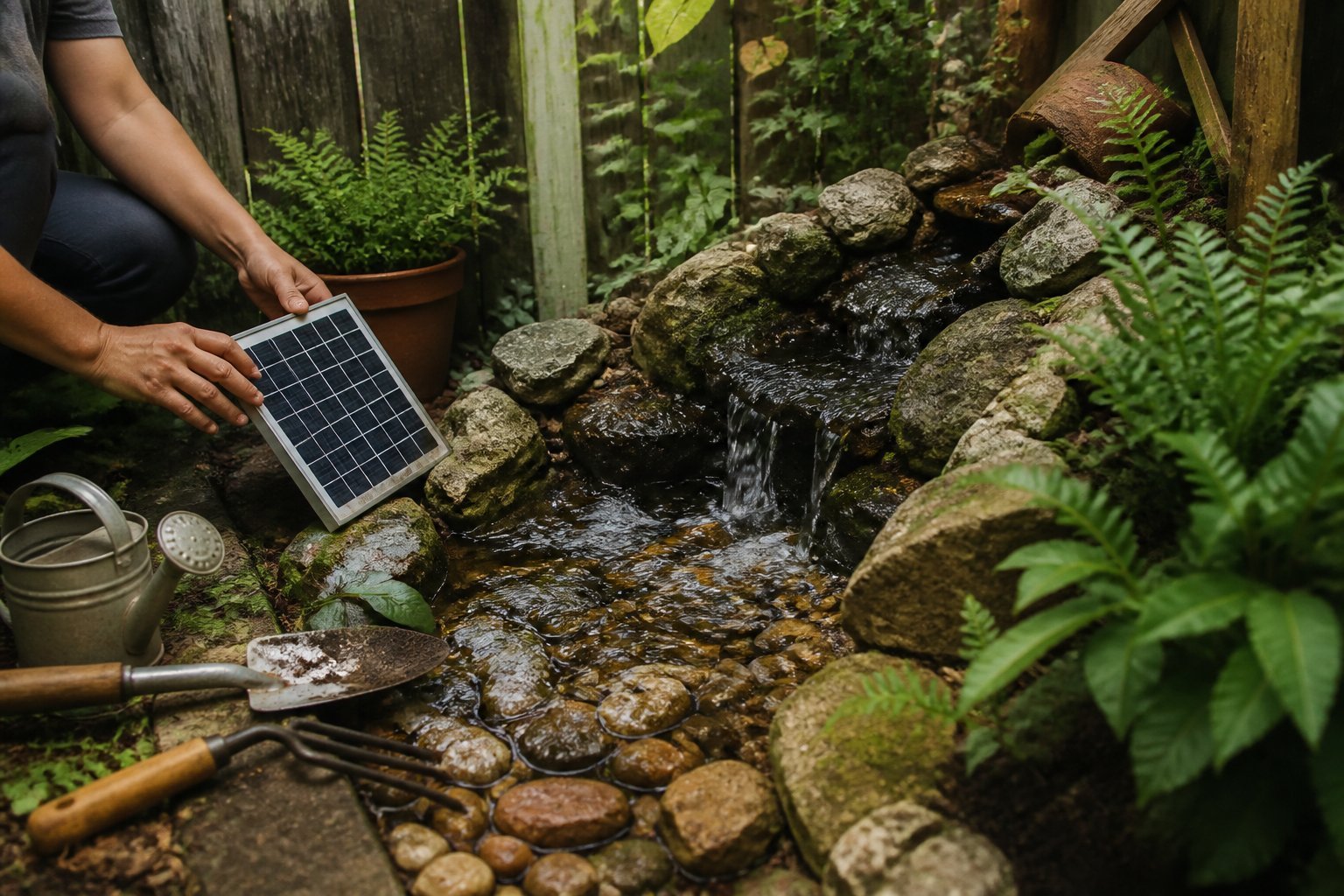
Guide: build a small solar stream that fits a tight corner and runs quietly on sun power. Start with a shallow liner trench and shape a gentle S-curve so water moves slowly over the pebbles.
Use a small solar pump sized for 100–300 gallons per hour and test it on a sunny day. Place larger river rocks at the top to hide the pump and let water sheet down over mixed pebbles for a natural look.
Watch for common mistakes: picking flat pebbles that clog, or placing the panel in shade. If flow sputters, clean the pump screen or raise panel angle for more sun.
Try edging with low plants like ferns to hide the liner and soften edges. If your stream runs low, add a hidden refill jug you can top up after dry spells.
5) Rustic Timber-Look Cascade and Moss Ledge
Intent: idea and guide. Build a small, wood‑style cascade that feels natural and low‑maintenance. Use weathered timber or composite planks to form the spillway and hide the pump; the look blends with plants and stones.
Place a shallow ledge below the cascade and plant moss or small ferns. The soft green will catch splashes and age the timber look for a true woodland feel. Watch for common mistakes: don’t let the ledge sit too steeply or water will run off instead of pooling.
Run the pump quietly and keep access panels hidden but reachable for cleaning. If you like, add a boulder at one side for variety and to anchor the composition visually. Try this when you want a cozy, natural corner that still needs only modest upkeep.
6) Mini Japanese Rock Garden Waterfall with Basin
Intent: guide. Build a small, calm focal point using a stone cascade, shallow basin, and single pump. Start by picking smooth river rocks and a low-profile basin that fits your corner; this keeps the look authentic and easy to maintain.
Stack stones so water spills gently over each lip. Aim for small drops—1–3 inches—to keep the sound soft and reduce splash. Place the pump hidden behind the largest rock and test flow before finalizing grout or moss.
A common mistake is overbuilding height; taller stacks need stronger anchors and look out of scale in tiny yards. Plant a low fern or dwarf bamboo nearby to frame the piece without crowding it.
Try an irregular rock pattern rather than perfect symmetry; it reads more natural. When you’re ready, run the pump daily for a week to check for leaks and adjust water flow.
7) Wall-Mounted Pondless Waterfall with Hidden Reservoir
Choose this design if you want water without losing floor space; it works well on a fence or retaining wall. You mount a slim spillway and tuck the pump and reservoir behind the wall so the water vanishes into a hidden basin.
Plan for weight and waterproofing. Use a metal or stone spillway and back it with waterproof membrane, then frame an access panel for pump service. A common mistake is underestimating reservoir size; pick one large enough to avoid frequent topping up.
Aim the flow so it creates a smooth sheet or a textured cascade, depending on your look. For visuals and how-to steps, see a practical how-to guide on building a pondless waterfall. Test and adjust the pump quietly at dusk to get the sound and flow you want.
8) Raised Planter Waterfall Integrated into Retaining Wall
This idea is a practical guide for adding a planted waterfall to a retaining wall. You get both structure and greenery in one feature, which saves space in a small corner.
Place a waterproof planter ledge into the wall so water spills gently over planted soil. Use moisture-loving plants like ferns or hostas, and slope the planter slightly to keep water flowing instead of pooling.
Build a hidden recirculating pump and a small reservoir behind the wall. A common mistake is undersizing the pump; test flow rates before finishing the facade so the waterfall looks natural.
Finish with stacked stone or pavers that match the wall. If you want inspiration for styles and spillways, see retaining wall waterfall ideas for visuals and options: https://www.garden.eco/retaining-wall-waterfall-ideas/.
9) Container Fountain with Bamboo Spout (Shishi-odoshi style)
Idea: build a small container fountain that uses a tipping bamboo spout for a soft clack and steady water flow. You’ll learn a simple DIY setup and common mistakes to avoid.
Start with a sturdy container and a pump sized for low flow. Mount a hollow bamboo or PVC spout so water fills one end, tips, and then resets. This creates the classic shishi-odoshi sound without a large installation.
Place the fountain in a shady corner and add stones or moss to hide the pump. Watch for leaks where tubing meets bamboo and avoid overpowered pumps that stop the tipping motion.
If you want a ready-made option, consider a bamboo-style kit to speed installation. Try different container depths until the rhythm and sound feel right for your space.
10) Corner Bog Garden Waterfall for Moisture-Loving Plants
Intent: guide you to build a bog-style waterfall that feeds damp-loving plants.
Place the waterfall against a shaded corner where soil stays cool and wet. Use a shallow liner and a hidden pump to keep water moving slowly; too-fast flow dries out moss and ferns.
Plant water-tolerant species like skunk cabbage, hosta, and marsh marigold around the spill edge. Layer gravel and peat to retain moisture; a common mistake is using only topsoil, which compacts and drains too quickly.
Keep the flow gentle so roots stay saturated but not flooded. Check water level weekly and rinse the pump each season to prevent clogging from leaf litter.
If you want visual impact, add stone slabs at staggered heights so water trickles rather than pours. Try one small experiment plant and adjust moisture before filling the whole corner.
Planning for Space and Materials
Decide how much room the feature will take, what tools you already own, and which materials fit your budget and style. Measure the corner, note sunlight and access to power, and list stones, liner, and a pump you’ll need.
Assessing Your Corner Area
Measure the length and depth of the corner in feet and mark the footprint with spray paint or string. Check for slopes, roots, and underground lines; call before you dig if utilities may be nearby. Note sun exposure for at least a day — full sun dries beds faster and may raise algae issues.
Sketch the layout to scale on graph paper or a phone app. Include nearby patio edges, fences, and plantings so the waterfall won’t block doors or pathways. Common mistake: ignoring pump access. Plan a hidden access hatch or use a pondless design so you can reach the pump for maintenance.
Choosing Waterfall Styles for Small Spaces
Pick a compact style: stacked stone cascade, tiered bowls, or a pondless drop. Pondless waterfalls save space and cut mosquito risk because water returns to a hidden reservoir. If you want plants, choose shallow planting shelves or a single basin no more than 3 feet wide.
Match materials to your skill level. Preformed basins and waterfall kits speed installation; natural stone gives a custom look but needs more time and leveling. Example: a stacked slate drop looks high-end but use mortared edges if kids play nearby. Buy a pump rated 1.5–2 times the expected flow to overcome head height; undersizing is the most common performance problem.
Enhancing Ambiance and Maintenance
You will pick lighting, plants, and simple care routines that shape how the corner waterfall looks and runs every day. Small choices—bulb color, plant placement, filter schedule—make the biggest difference in atmosphere and reliability.
Selecting Lighting and Plant Features
Intent: guide. Add LED spotlights of 3000K warm white to highlight stone texture and create a cozy glow. Place one uplight behind the highest rock and a low-angle wash along the pool edge to avoid glare and wet lens fogging. Use 12V low-voltage fixtures with IP68 submersible ratings for safety near water.
Choose plants that tolerate splash and partial shade. Good picks: Japanese forest grass (Hakonechloa), dwarf mondo grass, and water iris. Put taller plants like ferns at the back to hide plumbing, and low groundcovers up front to soften the stone edge. Avoid big roots near the liner—opt for container planting if you want shrubs. Add one floating plant, like water lettuce, for surface movement and to shade algae-prone spots. Mistakes to avoid: overplanting tight corners, and using harsh white LEDs that wash out nighttime color.
Simplifying Upkeep and Water Care
Intent: tutorial. Keep maintenance quick with a basic schedule and a few right tools. Clean the pump basket weekly for the first month, then every 2–4 weeks once settled. Use a small pond net to skim leaves daily during heavy fall months. Install a removable skimmer or a pre-filter sponge to cut down cleaning time.
Test water chemistry monthly: check pH (6.8–7.6) and avoid hard swings by topping up with tap water slowly. Use a 3–5 watt UV clarifier on small ponds to control green water without chemicals. Perform a 10–20% water change every 6–8 weeks if you see buildup. Winterize by removing pumps to a frost-free area if your climate drops below freezing, or use a floating de-icer to keep a small opening for gas exchange. Start these steps now and you’ll spend less time fixing problems later—try the weekly basket check this weekend.