10 Stunning Wrap Around Porch Ideas That Transform Your Home Instantly
You want outdoor space that feels like a true extension of your home and life. Whether you crave quiet mornings with coffee or a welcoming spot for friends, a wrap‑around porch gives you room to relax, dine, and enjoy the view without stepping far from the door.

This article shows ten real wrap‑around porch ideas, practical planning tips, and common mistakes to avoid so you can choose a design that fits your style and budget. Expect clear examples—from cozy swings and corner dining to screened porches and modern farmhouse touches—plus guidance on materials, finishes, and how to blend the porch with your house.
1) Victorian wrap‑around porch with turned spindle railings and gingerbread trim
Intent: idea and brief how-to for a classic look you can build or restore.
You want a porch that reads as handcrafted detail from every angle. Use turned spindle railings for rhythm and gingerbread trim for delicate shadow lines; together they signal Victorian character without feeling fussy.
Start by matching spindle spacing to local code and the scale of your house. A common mistake is using too‑thin spindles on a large porch—they look fragile. Pick rot‑resistant wood or painted PVC for low maintenance.
Paint contrasts work well: muted body color with crisp white trim brings out the scrollwork. Add period‑appropriate light fixtures and a swing to make the porch usable, not just ornamental.
If you’re restoring original trim, document each piece before removal so reinstalling feels true. Consider hiring a woodworker for complex gingerbread—poor cuts are obvious. Update wiring and structural supports while you have the boards off.
2) Modern farmhouse wrap‑around porch with board‑and‑batten siding and matte black fixtures
Intent: idea and guide. Picture your home with clean board‑and‑batten siding and a matte black metal roof edge. The contrast makes details pop and draws the eye along the porch.
Choose wide boards for the siding to keep the look simple and modern. Paint in cool white or soft gray, then add matte black fixtures—lighting, porch brackets, and guttering—for crisp contrast. Avoid tiny, ornate lights; they clash with the clean lines.
Think about seating placement; a pair of bench swings balances the wrap’s curve and keeps the entry visible. Watch for common mistakes like undersized columns or cluttered decor that make the porch feel crowded.
If you want inspiration, explore modern farmhouse exteriors showing board‑and‑batten and black trim for real examples. Add a personal touch with simple planters and a black door to tie everything together.
3) Screened wrap‑around porch with overhead fans and retractable shades
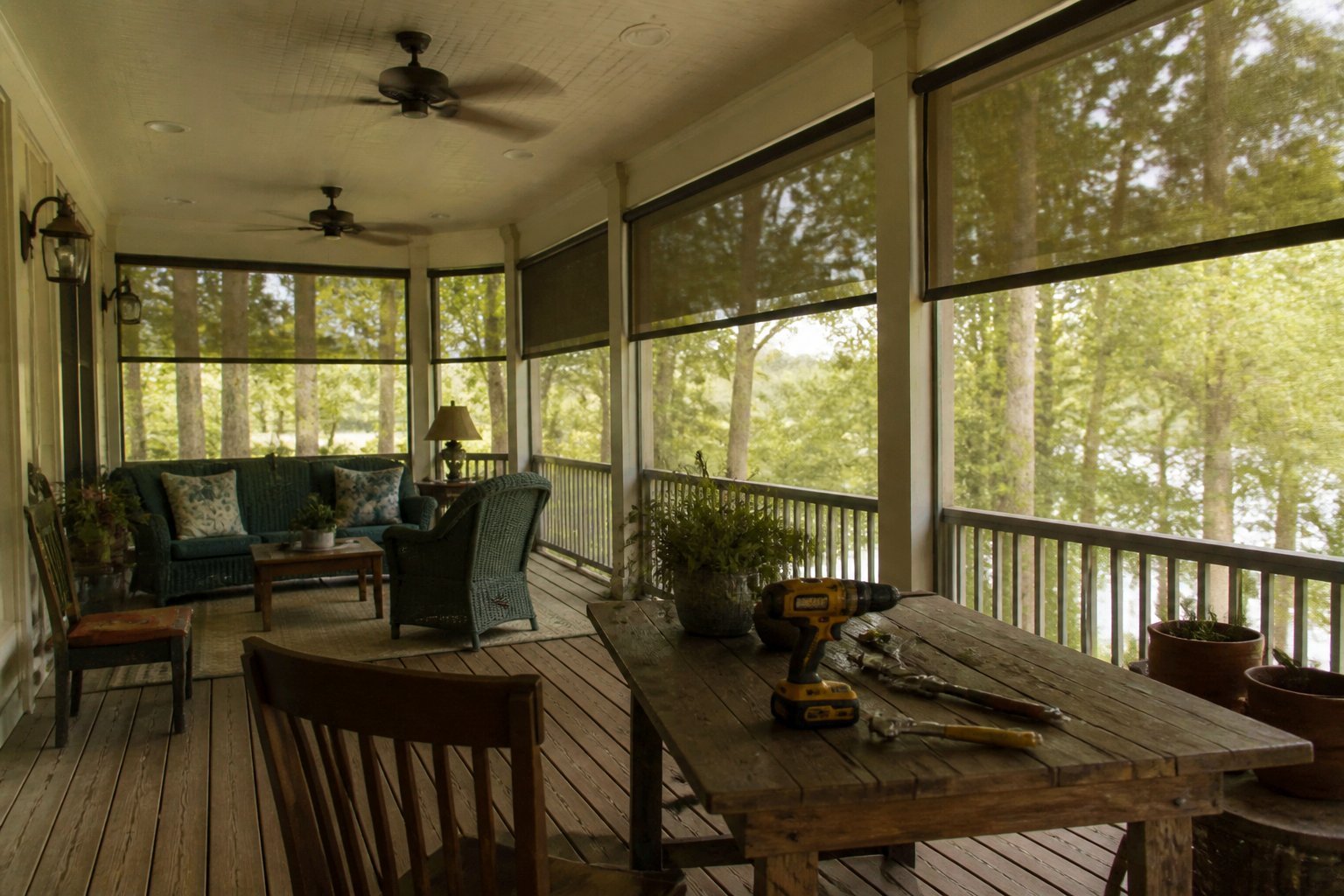
Intent: idea and how-to. You’ll get a bug-free living space that still feels open and airy.
Place ceiling fans where people sit, not just in the center. Fans move air and cut humidity, so pick outdoor-rated models and set them to reverse in cooler months to circulate warmth. A common mistake is undersizing fans for the porch span; measure first.
Add retractable shades for sun control and privacy. Use motorized shades for convenience, or manual ones to save cost. Test them in wind and rain—cheap mounts can fail, so choose sturdy hardware.
Imagine a summer evening: fans hum softly, shades lowered against the west sun, and you can dine without mosquitoes. Try layered lighting and furniture zones to make the space usable day and night. Update one element at a time to manage budget and see what works for your routine.
4) Coastal blue wrap‑around porch with navy‑and‑white palette and wicker seating
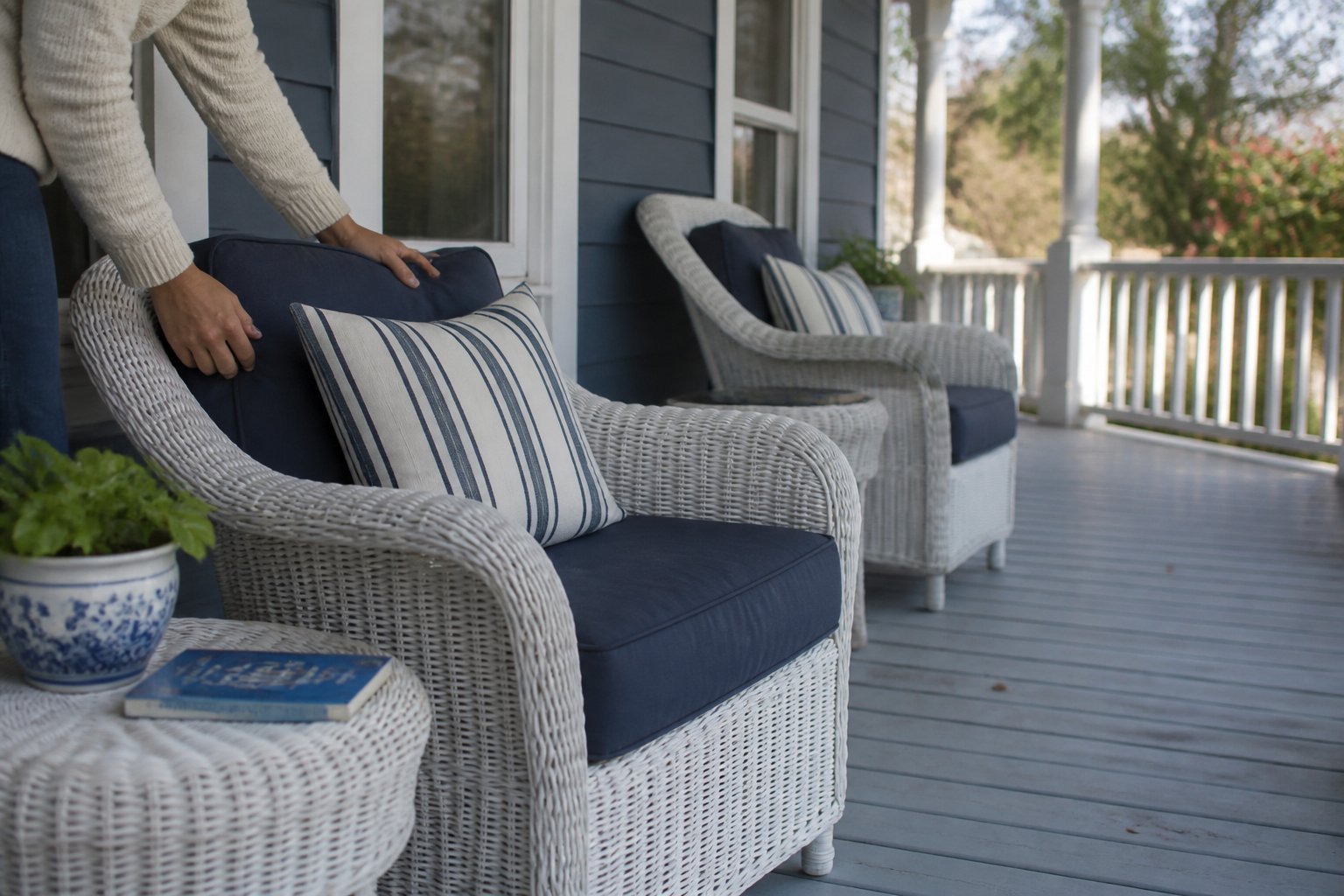
Intent: idea and how-to for a coastal navy-and-white porch you can build or refresh.
Paint the trim and door navy to anchor the porch. Navy contrasts cleanly with white siding and makes wicker furniture pop.
Choose durable wicker or synthetic rattan for low maintenance. Add striped navy-and-white cushions and a weatherproof rug to tie the palette together.
Use brass or polished nickel hardware for small, bright accents. Hang a simple porthole-style sconce by the door to improve evening light and curb appeal, but avoid oversized fixtures that crowd the space.
A common mistake is over-cluttering with decor; leave clear walkways on the wrap‑around path. Try one focal seating area and a small side table for drinks.
5) Covered wrap‑around porch with built‑in bench seating and storage cubbies
Intent: idea and guide for adding seating that hides clutter and boosts function.
Build a continuous bench along the porch wall to create a cozy, unified look. You’ll gain extra seating and a spot to admire views without crowding the walkway.
Include hinged lids or front cubbies for shoes, cushions, and garden tools. A common mistake is shallow storage—make cubbies at least 14–16 inches deep so items fit without bulging.
Use durable materials like rot‑resistant cedar or composite decking for tops and moisture‑proof plywood inside. Paint the bench to match trim, or stain it to highlight wood grain for a tailored finish.
Add cushions with ties and drainable fabric so wet cushions don’t mildew. If you want ideas for layout and style, check wraparound porch inspiration on BHG’s gallery of wraparound porch ideas.
Try a mockup with plywood first to confirm seat height and walkway clearance before building.
6) Corner dining wrap‑around porch with a farmhouse table and pendant lighting
Set this up as a guide: create a cozy dining nook at the porch corner where you can eat, work, or entertain. Place a sturdy farmhouse table that fits the corner without blocking the walkway; allow at least 36 inches behind chairs for easy movement.
Choose a pendant light with weather-rated wiring and a dimmer so you control mood from bright breakfast to soft dinner. A single large pendant or a row of smaller fixtures works; avoid low-hanging lights that hit heads when people stand.
Dress the table with a runner and simple centerpiece. Add removable seat cushions and a small rug to define the space. Watch for common mistakes like oversized furniture or poor lighting placement that makes the area feel cramped.
If your porch faces sun or rain, add roll-up shades or clear panels. Try it one weekend and adjust spacing and light height until it feels right. For more farmhouse porch ideas, see this roundup of wrap around porch ideas.
7) Sunroom conversion on a wrap‑around porch with insulated glass and skylights
Intent: guide. You can turn a wrap‑around porch into a year‑round sunroom by using insulated glass and well‑placed skylights. Start by assessing roof load and insulating needs so you avoid cold spots and moisture problems.
Choose insulated, tempered glass for the walls to control temperature and reduce noise. Add low‑E coatings to cut heat gain in summer and keep warmth in winter. A common mistake is skipping proper framing—use weather‑rated headers and keep drains clear.
Skylights bring light into deep corners of the wrap‑around layout. Position them over seating or a plant nook, and pick venting models to relieve heat build‑up. You might follow a project example where adding two small skylights transformed a dim corner into a bright reading spot.
For detailed design ideas, see sunroom conversion examples and skylight placement tips at Houzz and VELUX. Start planning measurements and a contractor consult so your sunroom works all year.
8) Porch swing focal point on a wrap‑around porch with braided outdoor rug
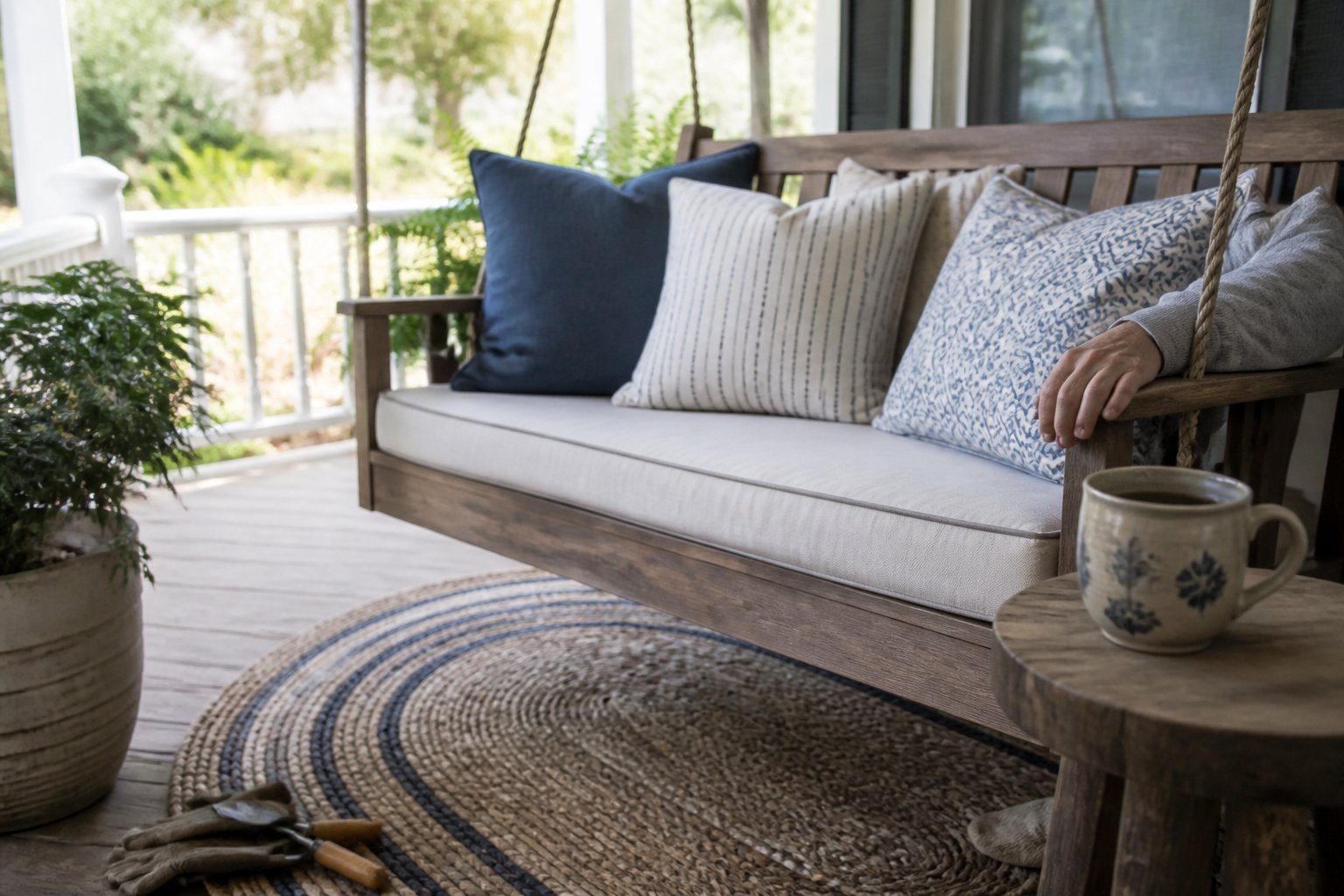
This idea is a how-to and design guide that helps you make a porch swing the main feature. Place the swing where sightlines meet — at a porch corner or near steps — so it draws the eye from multiple angles.
Choose a sturdy swing and hang it from beam points rated for loads. Add a braided outdoor rug under the swing to anchor the space and protect decking. Pick a rug color that ties your cushions and trim together.
Avoid common mistakes like hanging too low or using a rug that slides; add non-slip pads and check hardware every season. If you want a cozy touch, layer a weatherproof throw and a few patterned pillows.
Try this setup on one side of your wrap‑around porch to create a relaxing nook and invite guests to sit.
9) Multi‑level wrap‑around porch with steps to a garden terrace and planters
Intent: idea and guide. Build a porch that steps down to a planted terrace to make outdoor rooms that flow.
Start by mapping elevation changes so your steps feel natural, not forced. Place wide treads and a landing to slow movement; narrow steps cause trips and look cramped.
Use built-in planters at rail height to hide structural joints and add greenery without extra pots. Choose durable, weatherproof materials near soil to avoid rot. Mix perennials and trailing vines for year-round texture.
Create a low retaining wall where the porch meets the terrace. This anchors the house and gives a seat. Light the steps with recessed fixtures to prevent missteps and highlight the path.
Common mistake: overloading planters with big shrubs—pick roots that won’t push decking boards. Try one bold specimen and layered smaller plants for balance. Take a photo after each stage to track progress and adjust plant placement.
10) Wrap‑around porch with classic rocking chairs and beadboard ceiling

Intent: design idea to create a timeless, comfy porch you’ll use daily.
Place a row of classic rocking chairs where you can watch the yard and chat with neighbors. Pick weatherproof wood or coated metal; cushions add comfort but choose quick-dry fabrics to avoid mildew.
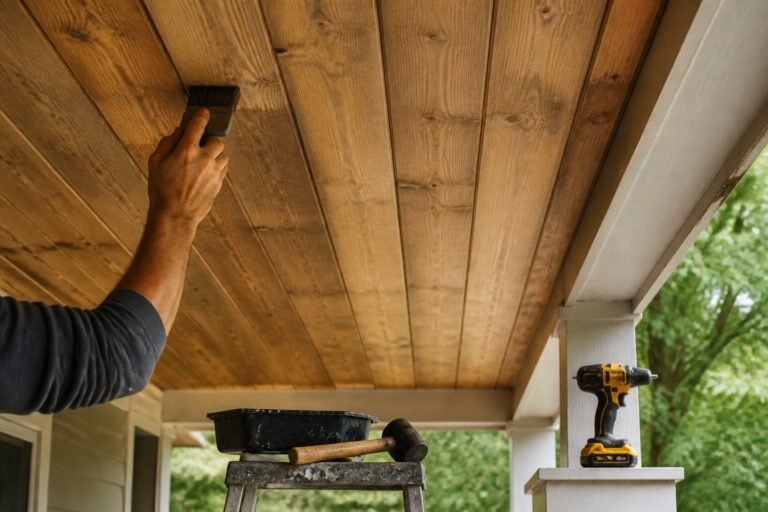
A beadboard ceiling gives the porch a finished, cottage look and hides wiring for pendant lights or ceiling fans. Paint it a soft blue or crisp white to reflect light and reduce bugs; deep paint mistakes include using indoor paint or skipping primer.
Think about spacing: leave room between chairs for side tables and easy walking. Add layered lighting — a pendant for dinner and sconces for evening — so the space works at any hour. Try one small change, like swapping cushions or adding a rug, and enjoy how the porch becomes your go-to spot.
Planning for Porch Integration
Decide how the porch will connect to your home’s look and the yard. Think about rooflines, sightlines from main rooms, and how people will move between porch and garden.
Architectural Harmony
You want the porch to look like it was always part of the house. Match roof pitch and eave depth to nearby rooflines so the porch reads as a natural extension. Pick column styles that echo existing trim — square Craftsman posts for a bungalow, turned posts for a Victorian. Use the same siding and paint palette; a mismatched material is the most common mistake.
Think about sightlines from inside. Place large openings or doors where you want a view and plan porch depth so seating doesn’t block windows. For load-bearing changes, hire an engineer. Small details matter: match railing proportions to window muntins and choose lighting that complements existing exterior fixtures.
Landscaping Considerations
Your porch should frame views and guide movement through the yard. Plant low shrubs near corners to soften transitions and keep taller trees at least 10–15 feet away to protect foundations and allow roof gutters to function. Use a layered planting plan: groundcover, mid-height shrubs, then specimen tree to create depth.
Create clear paths from driveway and street to porch steps using hardscape materials that match or complement porch flooring. Consider sightlines at night: add low-level path lights and uplights on focal plantings. Avoid placing heavy-root trees near porch footings; roots can heave foundations and lead to costly repairs.
Choosing Materials and Finishes
This section helps you pick materials that last and look right for your porch. Focus on slip resistance, UV stability, and how the finish will age where you live.
Weather-Resistant Options
Treat your porch like a furniture piece that lives outdoors. For decking, use capped composite or marine-grade PVC for strong resistance to rot, fading, and salt if you’re near the coast. These materials need less sanding and staining than wood and hold screws well.
If you prefer wood, choose dense species like ipe or cedar and plan a yearly inspection. Apply a penetrating oil or semi-transparent stain to protect against moisture while showing grain. For railings and trim, powder-coated aluminum resists rust and keeps paint jobs longer.
Floor finishes matter: choose slip-rated paints or textured epoxy on steps and high-traffic zones. Use marine-grade stainless steel fasteners everywhere to avoid pink staining and corrosion. Common mistake: using interior paint or non-stainless fasteners — they fail fast.
Sustainable Building Materials
You can build green without sacrificing durability. Reclaimed hardwood planks offer character and strong performance when properly milled and treated. Look for FSC-certified cedar or composite with recycled plastic and wood fibers to reduce environmental impact.
Cork and bamboo are good for porch furniture and accents because they regrow quickly and resist moisture when sealed. Use low-VOC stains and water-based sealers to cut fumes during installation. For structural posts and beams, consider engineered wood like glulam; it uses smaller trees but holds up well.
Think lifecycle: choose materials with long warranties and repairable parts. That lowers future waste and saves money. Ask suppliers for product data sheets so you can compare UV ratings, rot class, and recycled content before you buy.