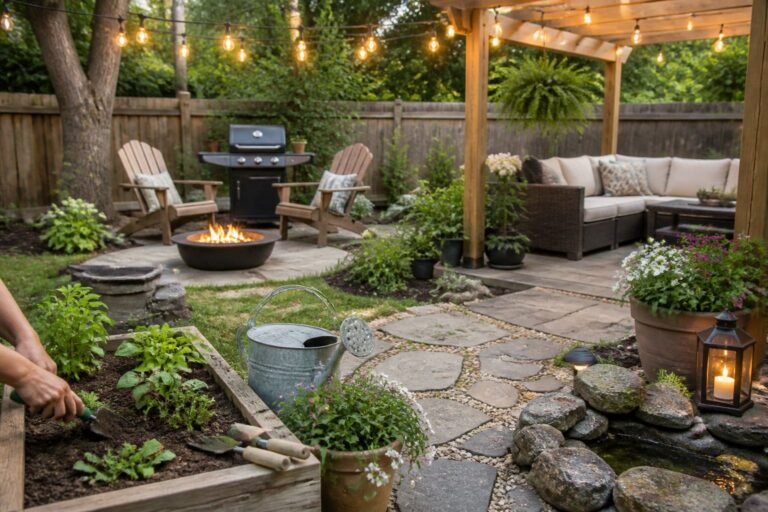
10 Stunning Backyard Waterfall Ideas to Transform Your Outdoor Space Instantly
You want a backyard that feels calm and looks polished, and a waterfall can deliver both without a full remodel. You’ll learn easy, stylish waterfall ideas that fit small patios to large gardens, plus what to plan for and how to avoid common mistakes.
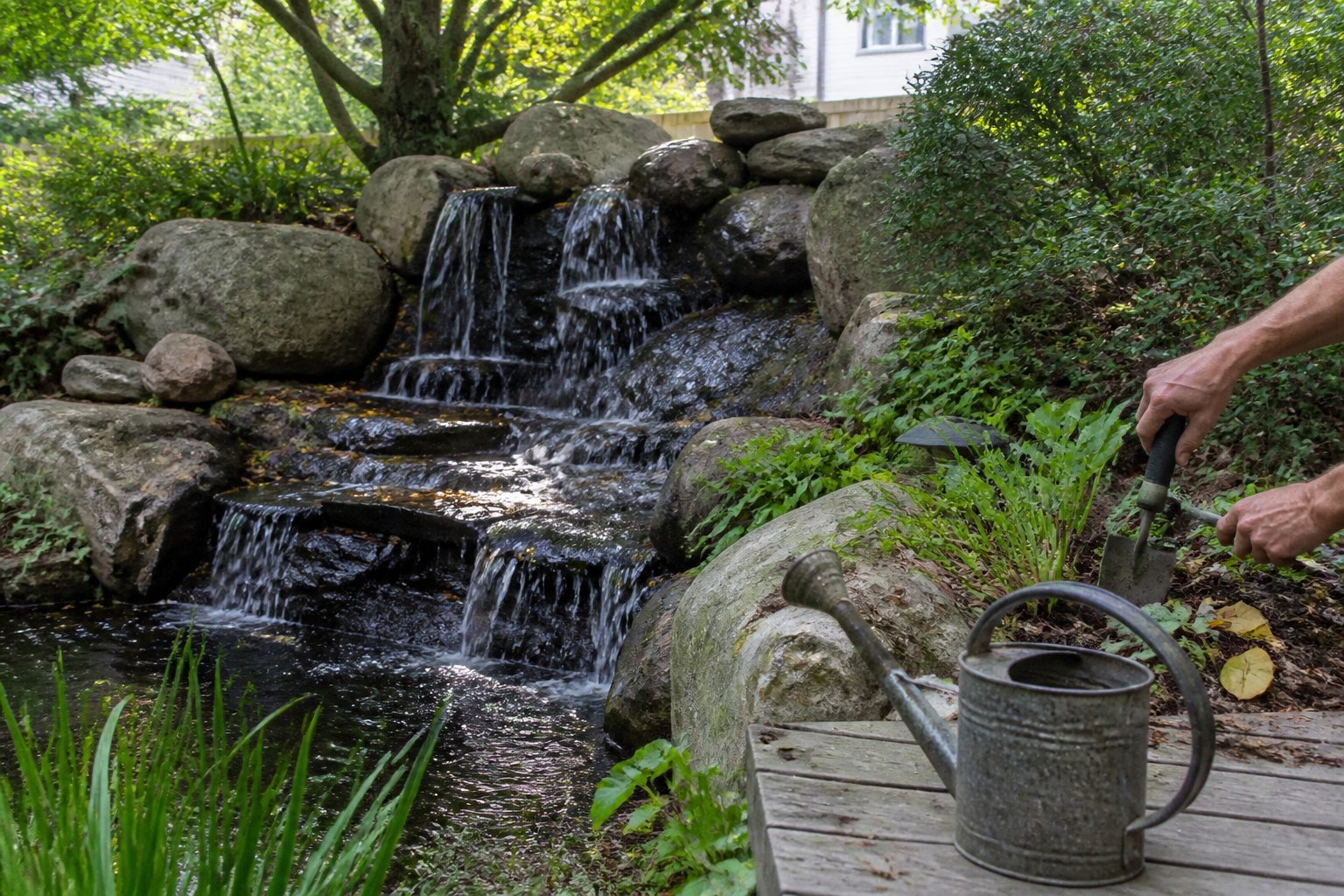
I’ll guide you like a pro who’s built many features—sharing quick examples, design tips, and upkeep advice so you won’t waste time or money. Expect practical choices from sleek modern sheets with LED lighting to rustic log weirs and tiny solar fountains, along with simple planning and maintenance steps that keep your water feature running smoothly.
1) Multi-tier natural stone cascade with planted shelves
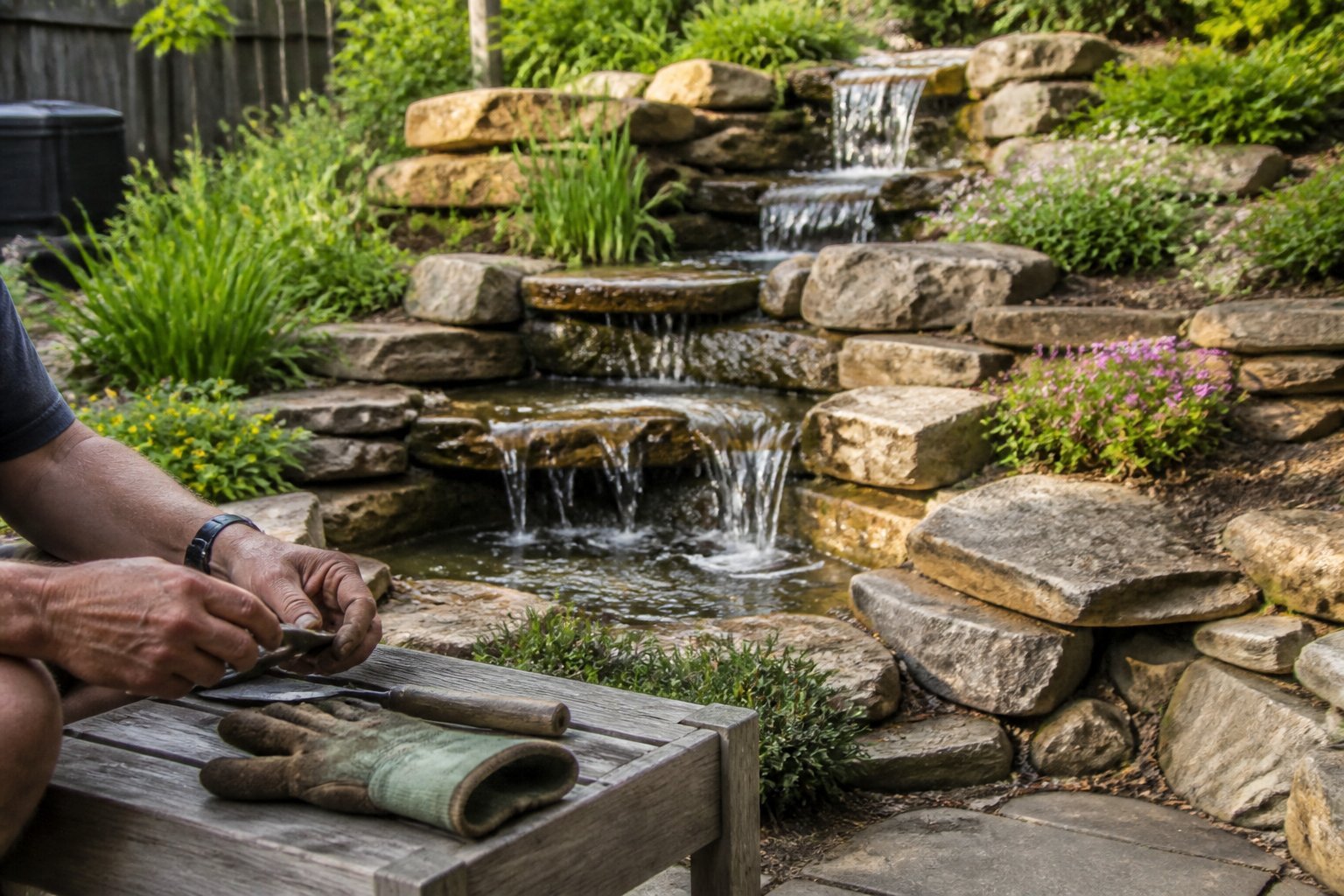
Intent: guide — build a layered stone waterfall that looks natural and supports plants.
Start by sketching tiers that step down gently; you want water to spill, not crash. Use large flat stones at the base and smaller flats above so each shelf forms a shallow planting pocket. Plant moisture-loving ferns or creeping sedge in those pockets to soften hard edges and hide pump fittings.
Place the pump and plumbing behind the largest rocks so they stay hidden but accessible for maintenance. A common mistake is stacking stones too steeply — that makes water run too fast and washes out soil. Test flow rates and adjust stone spacing until water glides over each tier.
Think about scale: keep the top tier narrow to concentrate flow and widen lower tiers for a calm pool. Try one photographed example from a multi-tier natural stone waterfall guide for visual reference and ideas you can adapt.
2) Modern corten steel sheet waterfall with LED uplighting
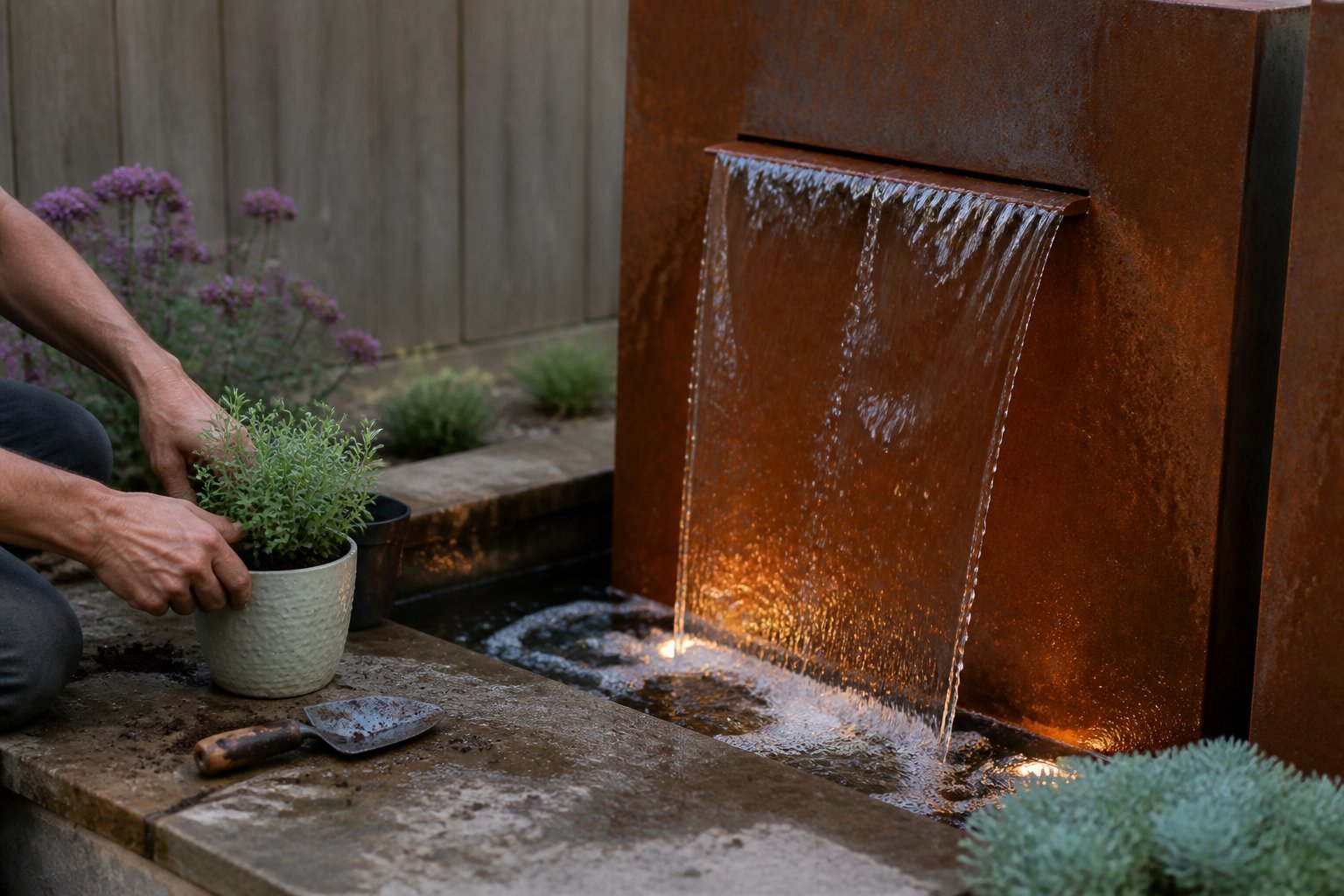
This idea is a practical design guide for a clean, modern water wall you can install in a small yard. A corten steel sheet makes a thin, even curtain of water that looks sharp by day and dramatic at night when paired with LED uplighting.
Place the sheet near a low pond or hidden trough; pump selection matters — choose one rated for continuous use. Aim LEDs at the steel edge to catch texture and rust patina; warm white lights soften the metal, while cool whites make water sparkle.
Watch for common mistakes: poor drainage, undersized pump, or lights placed too low. If you want a simple project, mount a prefabricated blade from a reputable maker like this corten waterfall listing (https://www.etsy.com/market/corten_steel_waterfall) and test lighting positions before final installation.
3) Small container tabletop waterfall with recirculating pump
Intent: tutorial. This compact build gives you a water feature you can move and enjoy on a patio table or shelf.
Pick a shallow container, a small submersible pump, and a few flat stones or driftwood. Place the pump hidden under rocks so the flow spills over a ledge. Test pump strength—too strong causes splash, too weak looks limp.
You can use a plant saucer, ceramic bowl, or metal trough. Common mistake: using a pump rated for larger ponds; it wastes energy and makes noise. Another tip: add activated charcoal to keep water clear and change water every 2–4 weeks.
This project takes a few hours and works well as a DIY gift. Try a bamboo spout or stacked slate for a calm, natural look. Build one today and enjoy the sound of moving water at eye level.
4) Boulder spillway into koi pond with waterfall grotto
Intent: guide. Use a boulder spillway to blend stone with smooth water flow into a koi pond and create a tucked-in grotto that invites quiet moments.
Choose a natural boulder and carve or mount a hidden channel so water pours in a sheet. This gives a broad, gentle fall that koi love and improves aeration. A common mistake is using too-small pumps; test flow rates to avoid splash or weak cascades.
Place the grotto with stepping stones and recessed lighting so you can view koi from inside the shelter. Line the grotto back with flat stones to hide plumbing and add plant pockets for moss and ferns. If you want a hands-on example, study built projects that pair wide spillways with deeper pond edges to keep fish safe.
Install access panels for pump servicing and lock electricals safely. Try a trial run before finishing rockwork so you can tune flow and sound. Choose materials that age well and you’ll enjoy the space for years—go adjust the flow and see how it changes the pond’s feel.
5) Rain curtain wall waterfall for a minimalist patio
Intent: idea and quick guide to install a sleek rain curtain that keeps your patio calm and modern.
A rain curtain gives you a clean, glass-like sheet of water that fits a minimalist patio. Mount a narrow trough above a wall and use a steady low-flow pump for an even curtain; test nozzle spacing to avoid gaps.
Choose materials that match your palette—smooth concrete, corten steel, or dark tile work well. Frame the curtain with simple lighting to highlight texture at night. A common mistake is overcomplicating the plumbing; keep lines short and accessible for winter shutoff and routine cleaning.
Picture sitting with a drink while thin water sings behind you; the sound stays gentle if the drop is 2–3 feet. If you want ideas, see a range of rain curtain options for modern gardens at this rain curtain waterfall overview. Pick one small change and try it this weekend.
6) Pebble-lined stream connecting two ornamental ponds
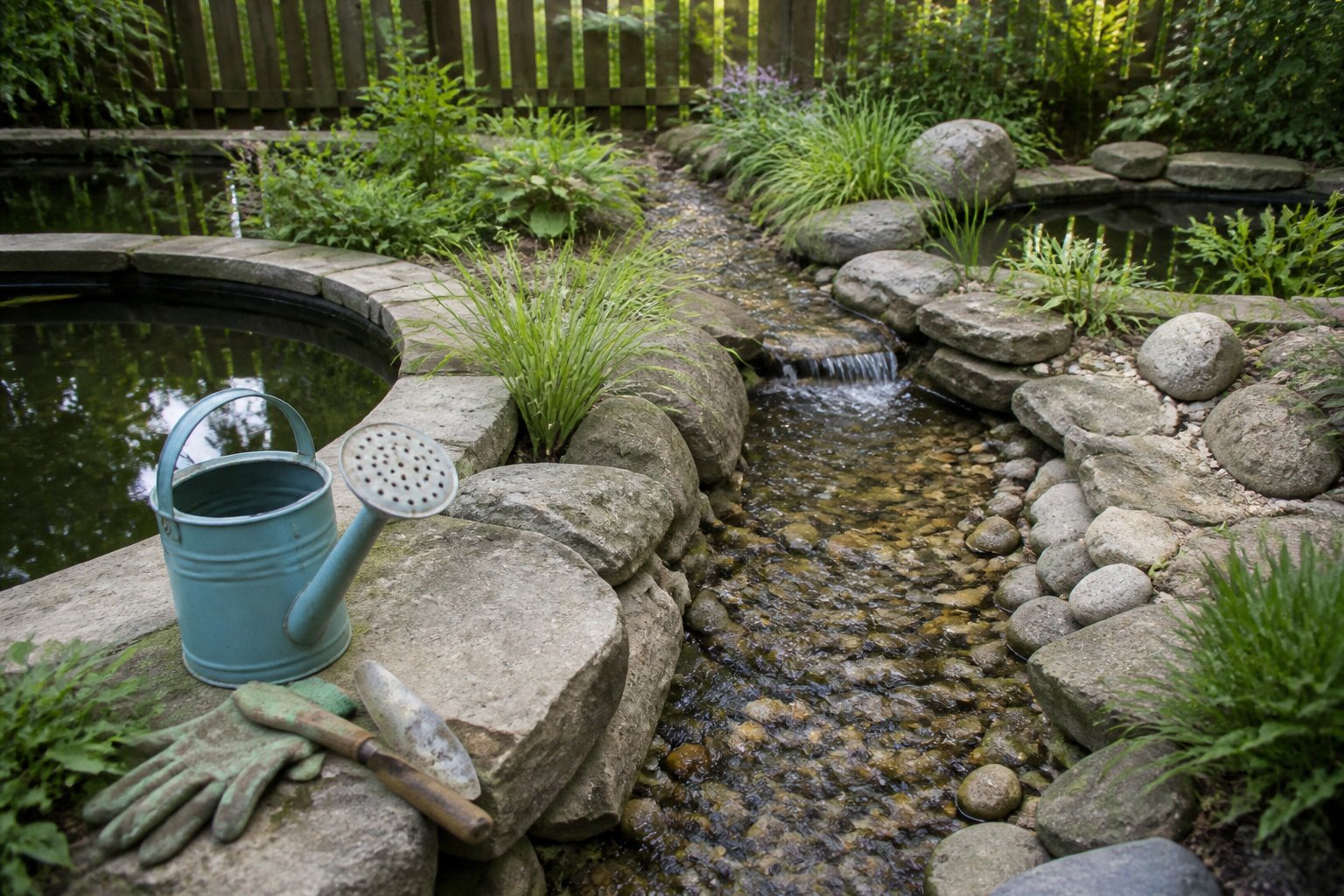
Guide — idea: build a shallow pebble-lined stream to link two ponds and add motion, sound, and habitat.
Start by digging a gentle channel that follows your yard’s slope. Lay a flexible liner, then add washed pebbles so water flows naturally over smooth stones. Use a small pump sized to lift water between ponds and test flow before finishing edges.
Plant low grasses and moisture-loving perennials along the banks to hide liner edges and slow runoff. A common mistake is using overly large rocks; keep most pebbles 1–3 inches so water glides and won’t trap debris.
If you want a natural look, mix flat stepping stones across the stream. Try it first in a compact area to fine-tune slope and flow, then expand when you’re happy with the sound and movement.
7) Freestanding copper rain chain waterfall feature
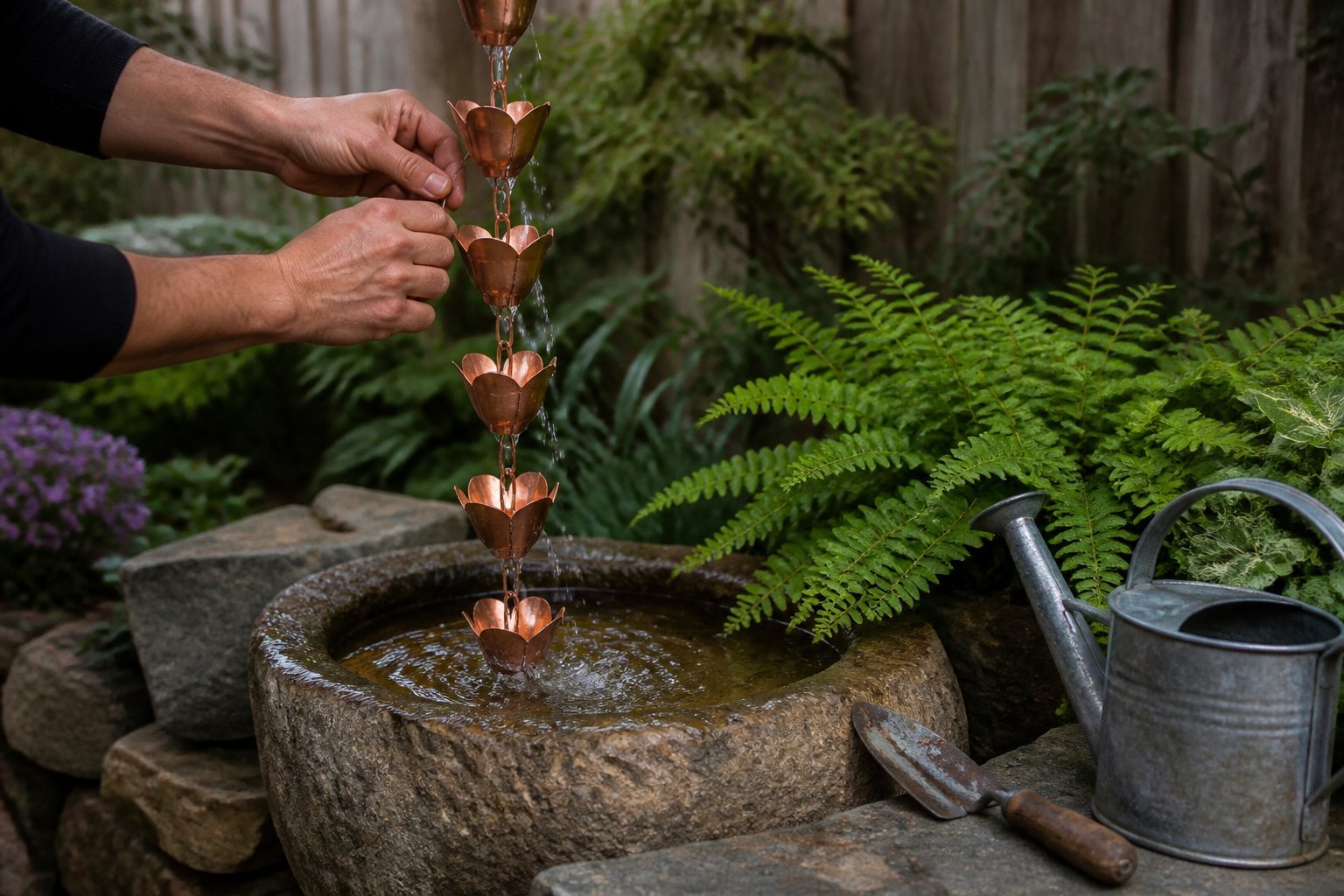
Intent: guide you through building a striking, low-maintenance water feature.
A freestanding copper rain chain pairs sculptural copper cups with a simple pump and basin. You hang the chain from an arm or shepherd’s hook so water drops through each cup, creating soft sound and a warm, aged glow as the copper patinas.
Start by placing a sturdy post 3–4 feet above your basin and secure a weatherproof arm. Use a submersible pump sized to lift water that height; too weak and the chain will sputter, too strong and cups overflow. A common mistake is skipping a splash ring—add one to protect the basin edges and reduce evaporation.
Copper works well with plants like ferns and hostas around the base for a natural look. If you want less upkeep, choose pre-treated copper or plan for light cleaning once a year. Try a single long chain for a minimalist focal point or cluster multiple chains for a richer, musical cascade.
8) Tiered slate cascade with native ferns and moss
Intent: tutorial and idea. Build a tiered slate cascade to add motion and texture to a shady corner. Start by stacking flat slate slabs to create small steps; aim for three to five tiers so water flows gently and avoids splashing.
Plant native ferns and moss between slabs to soften edges and help the stone look natural. Choose ferns that tolerate shade and moist soil, and press moss into thin soil pockets so it establishes quickly. A common mistake is steep drops—test flow and lower pump speed to keep the sound calming.
Use a hidden reservoir and a submersible pump sized for gentle circulation. Line the basin with pond liner under the slates to prevent leaks. If stones shift, reset them and compact soil to avoid collapse. Try mixing different slate textures for a layered, aged look.
9) Woodland log weir waterfall for a rustic garden corner
Intent: idea and guide. Plant a low log weir across a small stream or pond edge to add a natural, rustic focal point. Use old reclaimed logs or split timbers to build a short, staggered weir that lets water spill in soft sheets.
Place the weir where the slope is gentle; too steep makes a noisy drop and splashes. Line the base with river rock and coarse gravel to slow erosion and hide the pump. A common mistake is using untreated wood too close to the pump—choose rot-resistant timber or replace sections every few years.
Imagine evenings with the soft gurgle of water and moths drifting near native ferns. Try combining the weir with mossy stones and a single spotlight to highlight texture after dusk. Start small, test flow, and adjust the log spacing until the sound suits your space.
10) Solar-powered waterfall fountain for balconies
Intent: quick tutorial and idea to add moving water without wiring.
You can add a compact solar waterfall fountain to a balcony to get the sound and movement of water without running power. Pick a sun-facing spot and a shallow basin or container that fits your rail or floor space.
Choose a kit or DIY with a floating solar pump; they’re easy to install and often sit in birdbaths or small planters. A common mistake is placing the panel in shade—test sunlight through the day first.
Use stones or slate to hide the pump and create a natural cascade. For safety, secure the basin to prevent tipping and empty it before freezing weather.
Try a single-nozzle design for small spaces or a tiered mini waterfall if you want more height. Buy a tested model or follow a reliable build guide like this floating solar fountain idea to avoid rookie errors.
Planning Your Backyard Waterfall
Decide where the waterfall will sit, how big it should be, and which materials will blend with your yard. Think about sunlight, nearby plants, and how you’ll access the pump and plumbing for maintenance.
Site Selection and Space Considerations
Intent: guide — pick a practical, visible spot that fits your lifestyle.
Measure your space before buying any kit. A 4–6 foot cascade needs about 8–10 square feet of flat ground plus room for a pump chamber. Place the waterfall where you can hear it from your main seating area but not so close that splashing soaks furniture.
Check slope and drainage. A slight slope helps return water to the basin; avoid low spots that collect runoff. Note overhead power access. Most pumps need a GFCI outlet within 25 feet; plan for concealed wiring or a weatherproof box.
Watch root zones and utilities. Don’t dig near large tree roots or buried lines. If you want plants around the falls, pick species that tolerate splash and partial shade. Common mistake: underestimating pump access — leave a removable panel or hatch for quick service.
Choosing Materials for Natural Appeal
Intent: tutorial — select stones and liners that look real and last.
Use a mix of sizes: large flat ledge stones for the drop, medium stones to form banks, and small river rocks to hide liner edges. Natural flagstone or fieldstone gives an authentic look; lightweight faux rock works if your soil can’t bear heavy loads.
Pick a durable pond liner (EPDM) or a preformed basin sized 1.5–2 times the pump flow rate to avoid dry runs. Seal joins with outdoor-rated butyl tape and cover seams with gravel so they stay hidden. For edging, landscape adhesive and hidden rebar keep stone in place.
Example: stack two flat stones with a thin mortar bed to create a clean spillway that sings instead of splashes. Common error: using mismatched stone types that fade differently. Test a small mock-up before final placement to confirm the sound and flow you want.
Maintenance and Long-Term Care
Keep water clear, pumps running, and rockwork stable. A short weekly check and a seasonal deep clean will prevent most problems and protect your investment.
Water Quality and Algae Control
You must test and balance water regularly. Use a basic test kit to check pH (aim 6.8–7.6) and ammonia/nitrate levels; adjust with pond treatments if values drift. Install a mechanical skimmer or fine filter to remove leaves and debris before they break down.
Algae grows fastest in warm, sunny spots. Add floating plants like water lilies to shade the surface and reduce nutrients. Treat stubborn green water with an algaecide labeled for garden ponds, and follow label doses—overdosing can harm plants and fish.
Clean the pump intake and filter every 2–4 weeks. Remove string algae from rocks with a soft brush during cleaning. Common mistake: skipping small cleanings until the pump clogs—this shortens pump life and raises repair costs.
Seasonal Upkeep Recommendations
Prepare for winter and summer with specific tasks. In fall, remove excess leaves, clip dead plant matter, and lower the pump or add a heater if you keep fish. Use a net over the waterfall area during heavy leaf drop to cut cleanup time.
In spring, inspect flexible liners, hoses, and pump seals for cracks from freezing. Flush the system, scrub algae stains from stones, and replace worn tubing. Summer requires more frequent topping up to replace evaporation; keep an eye on water temperature for fish safety.
Write down dates for filter changes and pump service. A simple calendar reminder prevents skipped maintenance and helps you catch small issues before they become costly repairs.