10 Modern Cozy Cottage Designs for Stunning Transformations!
You want a home that feels warm, fresh, and unmistakably yours. Whether you crave a cozy porch, clean modern lines, or a kitchen that blends farmhouse charm with today’s ease, this article shows how small, smart moves transform ordinary spaces into timeless cottages that work for real life.
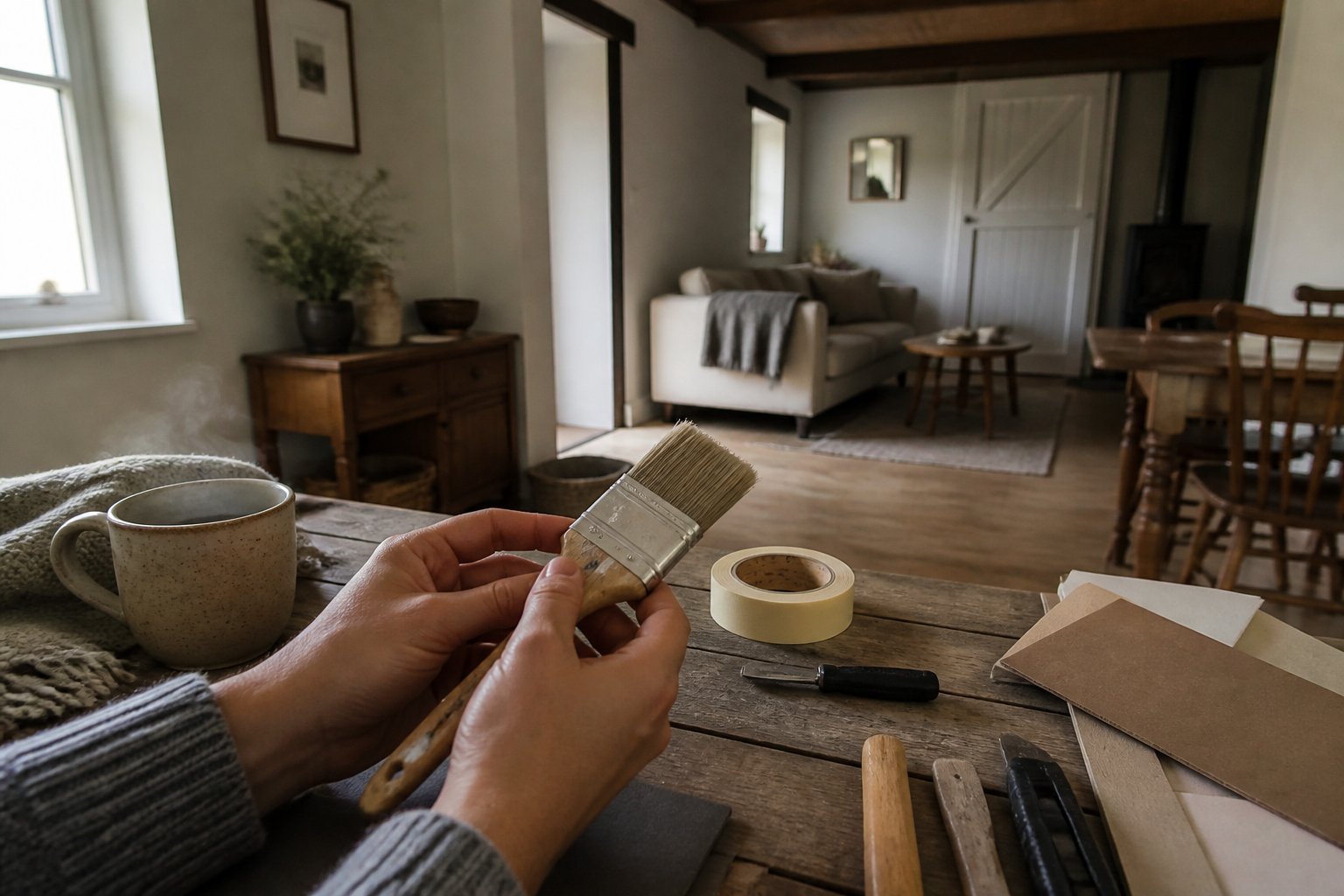
You’ll learn practical design choices, common mistakes to avoid, and concrete ideas you can use right away to make your home feel both cozy and modern. Expect clear guidance on roofing and porches, cladding mixes, window and storage solutions, warm palettes, and decorating tricks that enhance light and flow so your cottage feels roomy, lived-in, and camera-ready.
1) Gabled Roof with Deep Front Porch
Intent: design idea and guide to boost curb appeal and function.
A gabled roof with a deep front porch gives your cottage strong curb appeal and a sheltered outdoor room. Pick a steep pitch for classic charm, or a low pitch for a modern look.
Use exposed rafters or timber trusses to add character. Pair with wide eaves to protect walls and create good shade. Common mistake: building a shallow porch that looks tacked on; aim for at least 6–8 feet deep so the porch feels like a real living space.
Finish the porch with durable materials like cedar or fiber cement and comfortable seating near the entry. For inspiration and varied styles, explore porch gable examples that show how simple rooflines can transform a home’s front. Add lighting and planters to make the space usable day and night.
2) Mixed Cladding: Board-and-Batten + Brick Accent
Choose this idea as a practical design guide to add charm and structure to your cottage. Pair vertical board-and-batten on the upper walls with a low brick base to ground the house and show clear material transitions.
Use matching mortar tones and a simple trim line where materials meet. For example, a warm red brick with soft white battens feels classic; a gray brick with charcoal battens reads modern. Avoid abrupt color clashes and flimsy flashing—those are common mistakes that cause water issues later.
Focus on scale: keep the brick height proportional to porch and window lines so the facade reads balanced. Try a single-story wrap of brick for a cozy look, or brick only at entry for a focal point. Test paint chips and a small mock-up before committing.
3) Soft Neutral Palette with Warm Wood Tones
Intent: idea — show how to use soft neutrals and wood to create cozy cottage warmth.
Start with a soft neutral base—warm whites, creamy beiges, or pale greige—to keep rooms bright and calm. Pair those walls with oak or walnut floors and honey-toned trim to add instant depth and a lived-in feel.
Use furniture in natural wood or wicker and layer in textiles like linen curtains and wool throws. For example, a pale greige wall, reclaimed oak coffee table, and olive-green cushions feel balanced and intentional. Watch for one common mistake: using too many cool greys with warm wood; it creates visual friction.
Add small vintage pieces—an old ladder for throws or a wooden stool—to give character without clutter. Try this palette in a kitchen or bedroom, then test paint samples on different walls before committing.
4) Casement Windows with Black Metal Frames
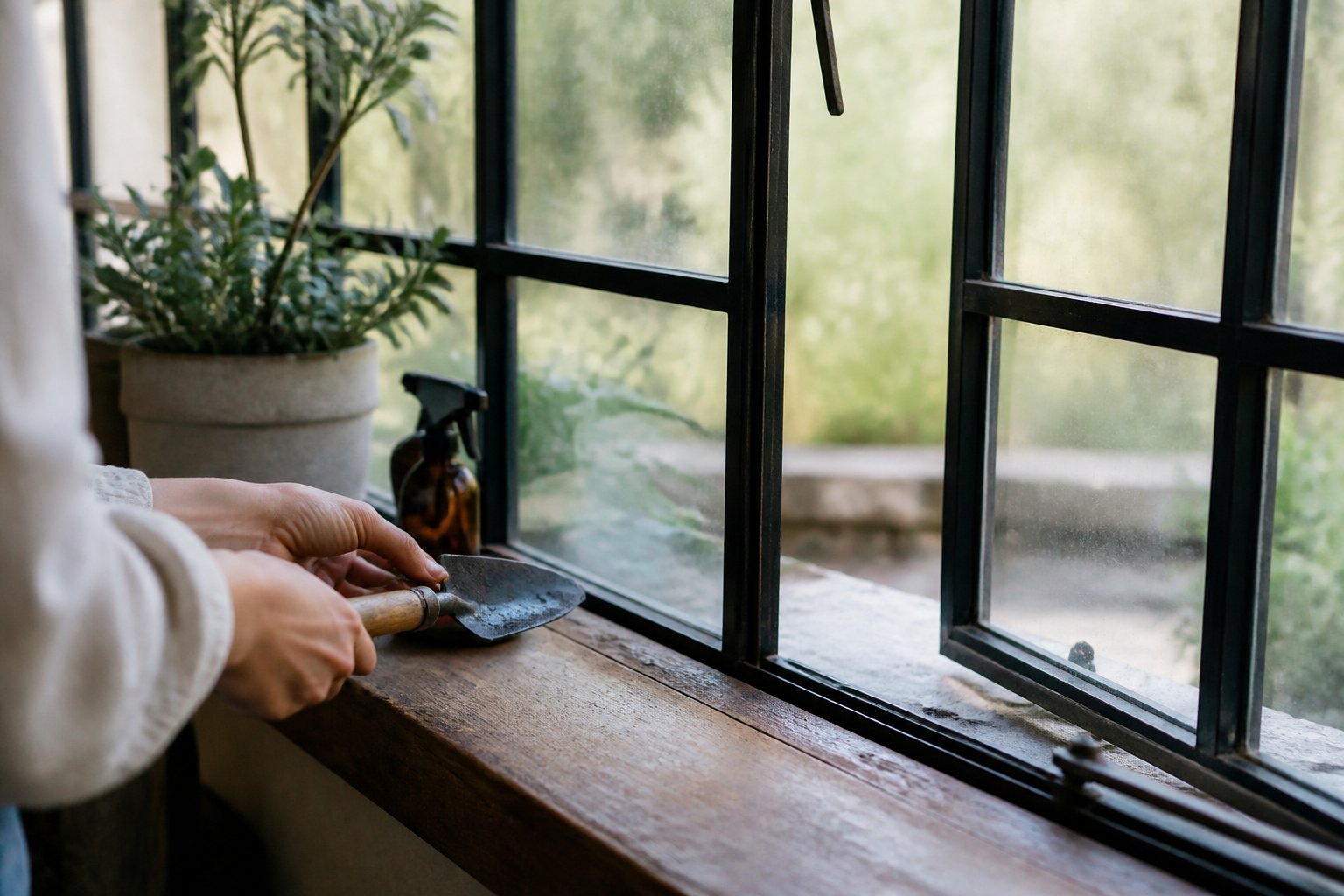
This idea is a practical guide to adding modern contrast to your cottage. Casement windows with black metal frames give clean lines and a crisp look that lifts soft, cozy interiors.
Choose narrow steel or aluminum frames for slim profiles that don’t block views. You get more glass, more light, and a strong architectural edge without heavy ornamentation.
Install them where you want a focused view — over the kitchen sink, beside a reading nook, or framing a garden vista. A common mistake is using overly large black frames on small windows; scale matters.
Maintain them by checking seals and hinges yearly so they swing freely and stay weather-tight. If you want a real change, pair the frames with white trim and warm wood floors to balance modern and cottage warmth.
5) Built-in Window Seat with Storage
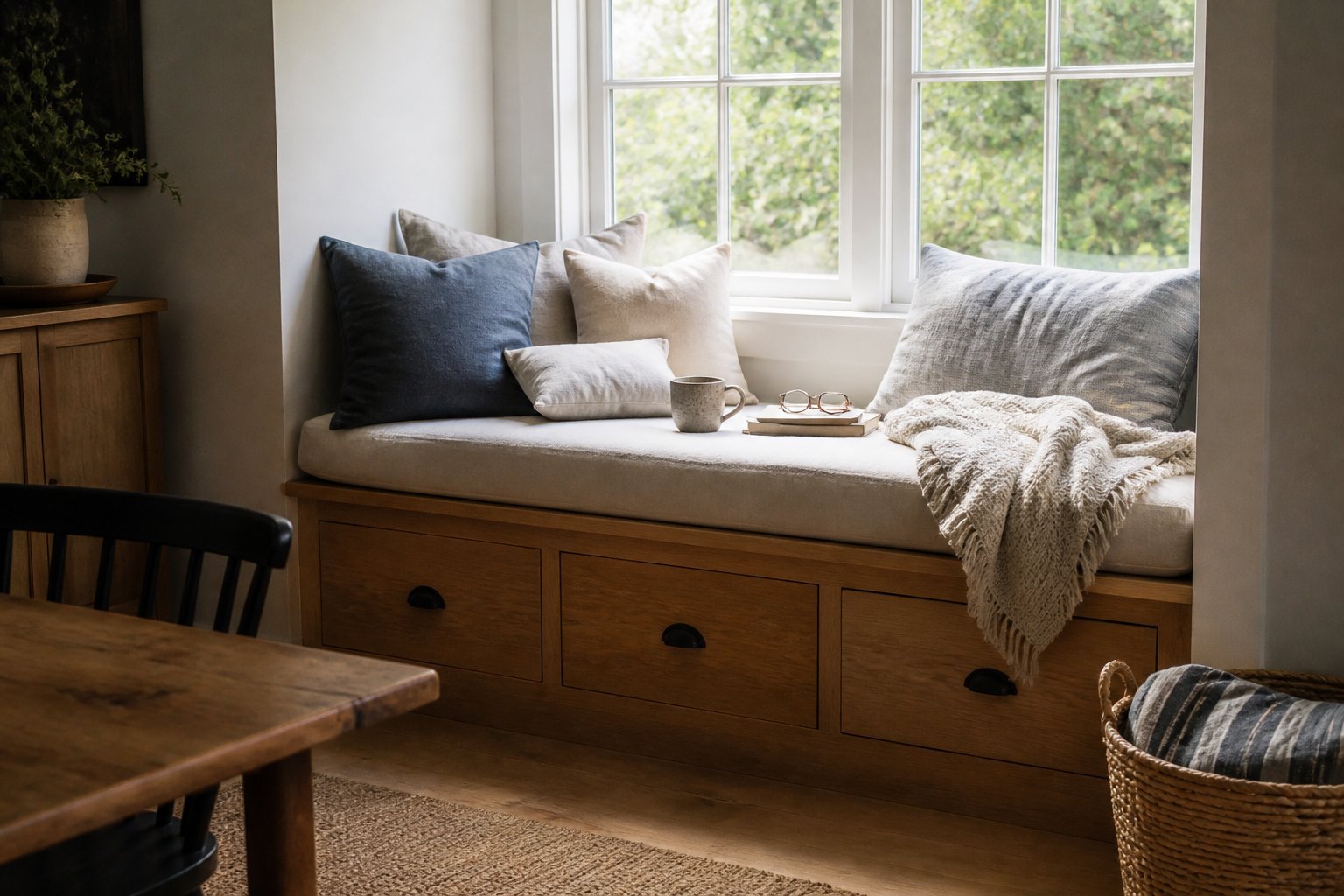
Intent: idea and brief guide to planning and building a window seat that adds coziness and function.
A built-in window seat turns wasted space into storage and a comfy spot to read. Pick a hinged top for easy access, or deep drawers if you want tidy, visible organization.
Think about cushion depth and back support. Too-thin padding feels cheap; a 4–6 inch foam core wrapped in batting works well. Add side shelves or recessed cubbies for books and plants.
Watch common mistakes: failing to check window trim clearance, and underestimating knee space for drawers. Measure before buying hardware and test the lid lift with the cushion in place.
For design ideas and construction tips, see a practical guide on built-in window seats with storage. Consider colors that match your cottage trim and soft fabrics that stand up to sunlight and pets.
6) Exposed Ceiling Beams in Painted White
Intent: idea and guide. Use painted white beams to brighten your cottage while keeping warmth.
White beams open the room and make the ceiling read higher. Paint smooths rough wood and ties beams to white walls for a cohesive feel.
Try keeping the beam faces white but leave joists or hardware slightly stained for contrast. A common mistake is using flat paint that shows dust; choose a washable satin or eggshell finish instead.
If your ceiling is low, paint beams and ceiling the same white to avoid chopping the space. For vaulted rooms, dark-stained accents on select beams add depth without losing airiness.
Visualize the result before painting by clamping a painted board in place. If you like what you see, proceed — and test finishes on scrap wood first.
7) Modern Farmhouse Kitchen with Shaker Cabinets
Intent: idea and guide. You want a kitchen that blends farmhouse warmth with clean modern lines. Start with shaker cabinets for a timeless base; they pair well with wood islands and matte black hardware.
Choose white or soft gray cabinets to keep the room airy. Add a warm wood island or open shelving for contrast. A farmhouse apron sink and simple pendant lights complete the look.
Common mistake: crowding the layout with too much ornament. Keep countertops clear and pick one or two statement finishes, like quartz counters or a butcher block island. Think about traffic flow so your space stays cozy and functional.
Try mixing textures—wire baskets, linen towels, and a reclaimed-wood cutting board—to make the room feel lived in. If you need help choosing finishes, test samples on the wall and near natural light.
8) Layered Cozy Textiles: Linen, Wool, and Bouclé
Guide: show you how to mix linen, wool, and bouclé for a warm cottage feel. Start with linen as your light, breathable base on curtains or slipcovers.
Add wool throws and a chunky knit to bring warmth and texture. Drape a wool blanket over an armchair and fold another at the foot of the bed for easy layering.
Use bouclé as an accent—pillows or a single chair—to add soft, tactile interest without clutter. Avoid matching everything; contrast smooth linen with nubby bouclé and dense wool.
A common mistake is overloading on pattern. Stick to two colors and vary textures. Try a neutral linen sofa, a rust wool throw, and a cream bouclé pillow for balanced depth.
Swap pieces seasonally so your room stays fresh and cozy. Test combinations on a small scale before committing to big pieces.
9) Compact Mudroom Bench with Cubby Storage
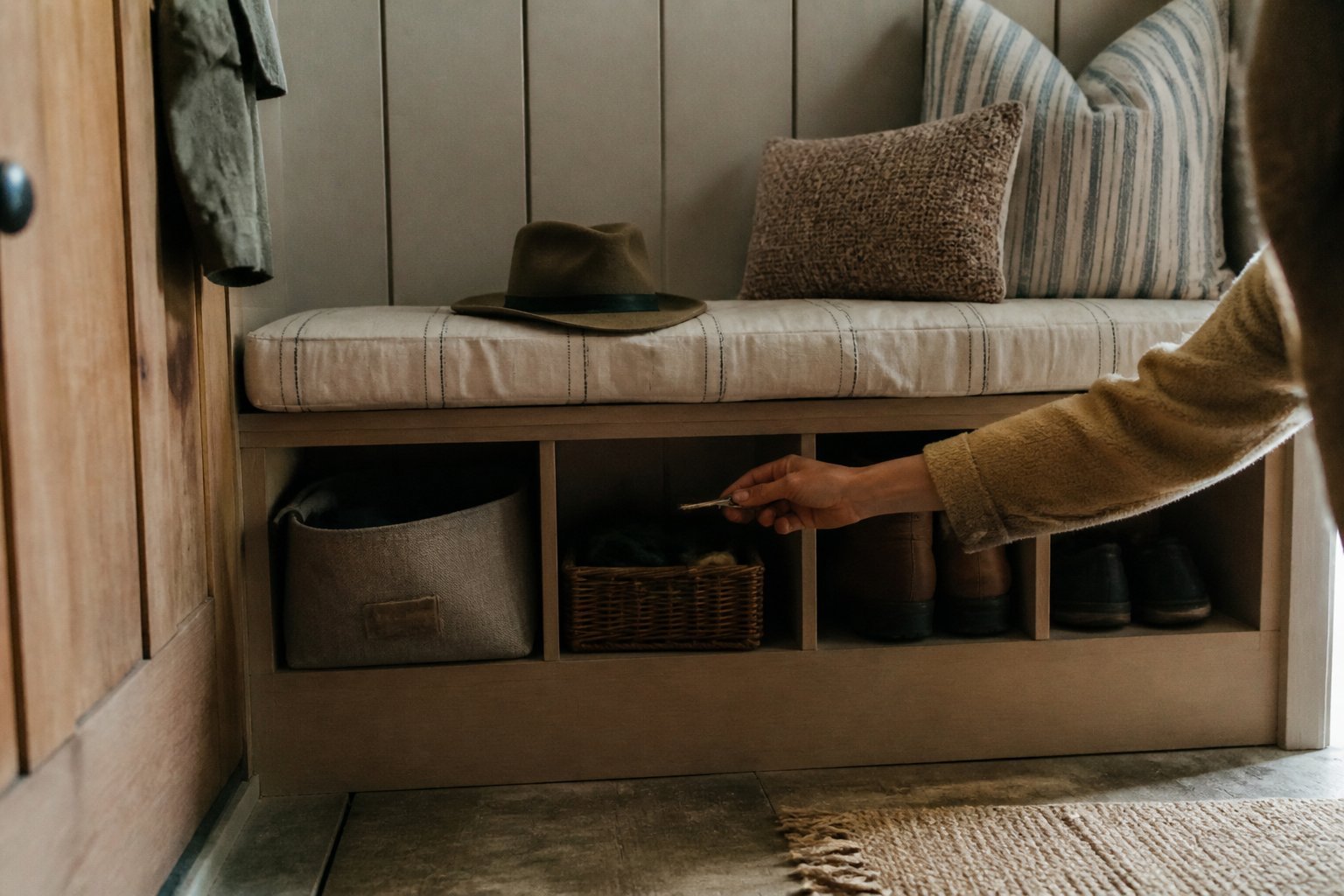
Intent: design idea and short how-to.
Choose a compact bench that fits your entry width and adds cubbies below. You get a place to sit, stash shoes, and hide clutter without crowding the hall.
Pick durable materials like painted pine or a wipe-clean laminate. For a cottage feel, add beadboard backing and soft knobs; for a modern look, keep straight lines and matte hardware.
A common mistake is shallow cubbies that can’t hold boots. Make each cubby at least 12″ deep and 10″ tall so boots, baskets, and dog leashes fit. Label baskets or use uniform bins to keep the view tidy.
If you’re handy, build a bench with a hinged seat for extra storage. Or adapt an existing console table by adding open boxes beneath. Try this small change first; it often transforms a chaotic entry into a calm, useful space.
10) Minimalist Open Shelving with Curated Vintage Finds

Intent: idea and tutorial. Use open shelves to show off a few treasured vintage pieces without clutter.
Keep shelves mostly empty and place three to five curated items per run. Mix textures like worn wood, enamelware, and glass for depth. Group items by color or function to make the display feel intentional.
A common mistake is overfilling shelves. You want breathing room; negative space highlights each object. Try a single antique pitcher beside a stack of neutral plates and a small plant for contrast.
When styling, think of a small story on each shelf: breakfast cups, a cooking tool, a keepsake. Rotate items seasonally and photograph arrangements that work so you can recreate them quickly. Choose simple lighting to keep the focus on your finds.
Principles of Modern Cottage Design
You’ll focus on warm comfort, clean lines, and materials that age well. Think livable rooms, bright neutral palettes, and tactile surfaces that invite touch.
Balancing Comfort and Style
Intent: guide you to mix cozy elements with modern restraint.
Start with seating that feels lived-in: a deep linen sofa, a cushion pile, and an armchair with room to curl up. Pair those with lean coffee tables or metal-framed side tables to keep lines clean. Layer textiles—wool throw, cotton slipcover, braided rug—to add softness without clutter.
Lighting matters. Combine a statement pendant or black metal sconce with table lamps that cast warm pools of light. That contrast keeps the space modern while still feeling intimate.
Avoid over-accessorizing. Choose 3–5 meaningful decor pieces per room: a ceramic vase, one framed print, and a stack of books. Too many small items break the calm and make the space feel staged rather than lived in.
Common mistake: matching everything. Mix warm wood tones with cool metals and soft fabrics to create depth. If you want a real-life cue, copy a favorite café’s mix of comfortable chairs and spare, modern tables.
Choosing Durable, Natural Materials
Intent: guide you to pick materials that look better with use and last.
Prioritize hardwood floors—white oak or maple—finished in matte to hide wear. Use stone or porcelain tile in entryways and kitchens for toughness. For counters, choose honed quartz or soapstone; they resist scratches and look less glossy over time.
Textiles should be natural and durable. Choose linen or cotton slipcovers for sofas and washable rugs made from wool or jute. These materials patina nicely and clean up without losing character.
Hardware and fixtures should be solid: brass or blackened steel holds up and gains a patina. Pick paints with washable, low-VOC formulas in warm neutrals that hide scuffs and refresh easily.
Common mistake: chasing “antique” finishes that are fragile. Instead, choose new materials that wear gracefully and let you live in the space without fear.
Enhancing Space With Smart Decorating Techniques
You’ll use texture, color, and layout to make rooms feel larger and cozier at once. Focus on items that add depth without clutter and arrange furniture so traffic flows and every piece earns its place.
Layering Textures and Colors
Guide: idea — teach you how to mix finishes and fabrics so spaces feel warm and curated.
Start with a simple base: painted walls in warm whites or soft greys. Add a mid-tone like muted sage or dusty blue on one focal wall or in textiles to anchor the room. Use three main textures: a natural wood (floor or beam), a soft woven (rug or throw), and a tactile accent (linen cushions or a boucle chair).
Mix scales. Pair a large jute rug with small, patterned cushions and a chunky knit blanket. That contrast keeps the eye moving without busying the space. Metal accents in aged brass or matte black provide modern edge and prevent the look from feeling too “shabby.”
Common mistake: piling on prints of the same scale or too many glossy finishes. Instead, swap one high-shine lamp for a linen shade to soften glare. Add a houseplant for color and a different leaf texture.
Optimizing Layout for Small Footprints
Guide: tutorial — show step-by-step placement choices that increase usable space and comfort.
Measure first. Place the largest piece (usually the sofa or bed) against a long wall to open sightlines. Create zones with rugs: a 5×8 rug can define a living area in a small room, while a runner anchors a hallway seating nook. Choose narrow-profile furniture—slim arms, exposed legs—to keep sightlines clear.
Use vertical storage: open shelves above eye level display decor while freeing floor space. Float a console behind a sofa to serve as a slim table and visual barrier. Angle a chair at 45 degrees to create a conversational triangle without blocking walkways.
Avoid one big coffee table; opt for two small nesting tables that move when you need space. Keep pathways at least 24–30 inches wide. Try these changes and tweak placement until movement feels natural.