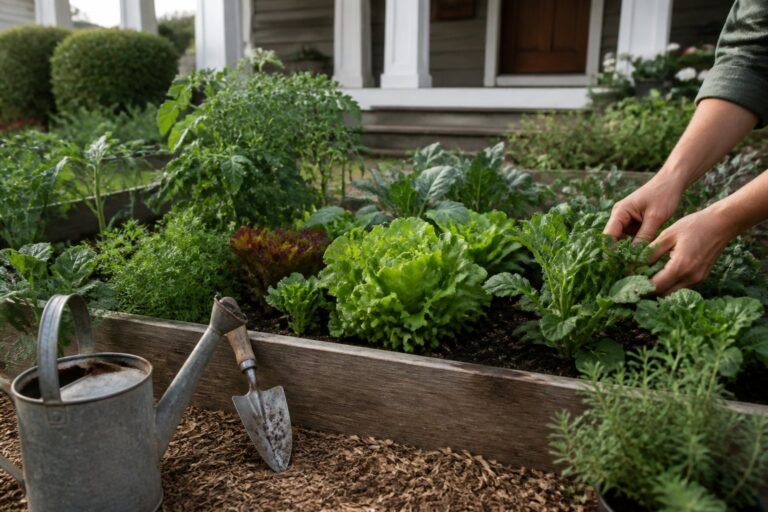
10 Best Shrubs for Front of House That Boost Curb Appeal Instantly
You want a front yard that looks welcoming without taking over your weekends. Whether you crave low-maintenance evergreens, seasonal color, or a neat frame for your porch, this guide shows shrubs that deliver curb appeal, privacy, and year-round interest. You’ll learn which shrubs suit different sun, soil, and space needs so you can pick plants that thrive where you live.
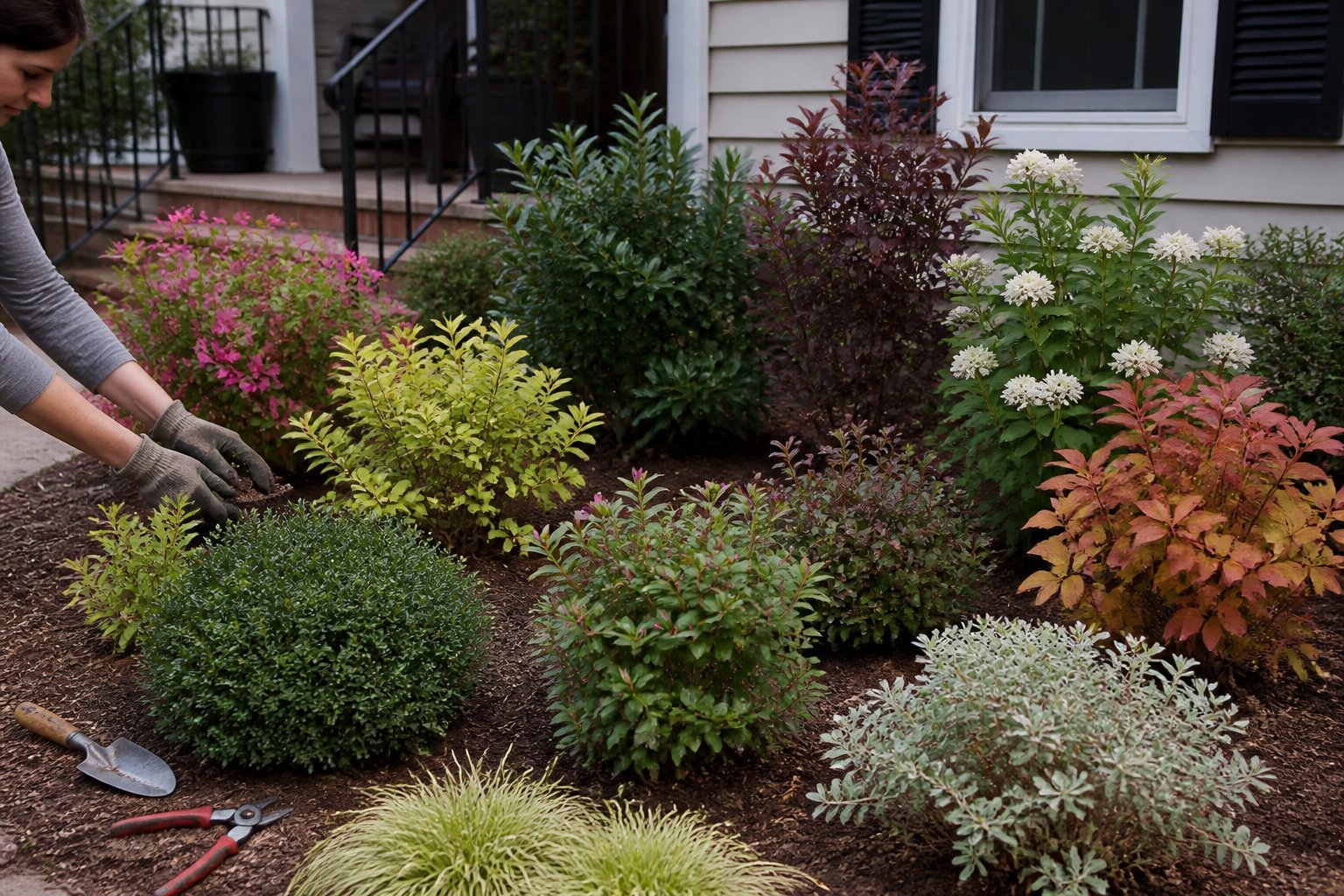
An experienced gardener will walk you through common planting mistakes, easy care tips, and pairing ideas that make small yards look intentional and large yards feel balanced. Expect practical examples—like using boxwood for a tidy hedge or hydrangea for bold summer blooms—and clear steps for selecting, planting, and maintaining the right shrubs for your home.
1) Boxwood (Buxus sempervirens)
Choose boxwood when you want a tidy, evergreen anchor for your front foundation. You can trim it into low hedges, spheres, or let it stay natural; each look works well against walkways and porches.
Plant where it gets morning sun and afternoon shade to avoid leaf scorch. A common mistake is crowding boxwoods too close to the house—give them 2–3 feet for air and growth.
Prune lightly in spring to keep shape and remove dead wood. If you spot brown patches after winter, check for winter burn or poor drainage rather than assuming disease.
Try Northstar or Korean boxwoods for smaller footprints and reliable color. If you need fast tips on spacing or pruning timing, ask for a quick planting sketch.
2) Dwarf Yaupon Holly (Ilex vomitoria ‘Nana’)
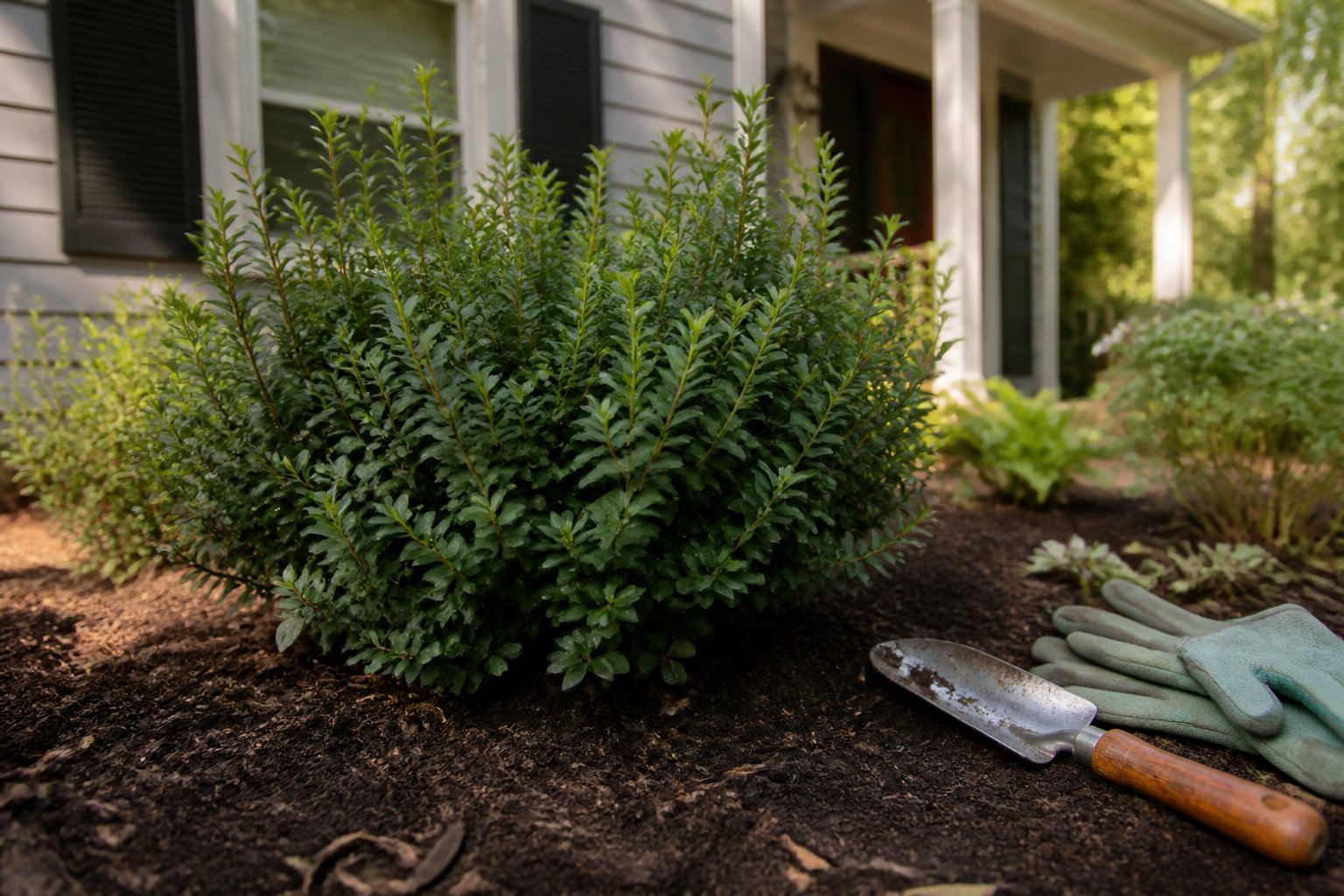
Use this as a low hedge or foundation plant when you want neat, year‑round green without fuss. It stays compact, tolerates drought and salt, and holds bright red berries in winter that attract birds.
Plant in full sun to part shade and in well‑drained soil. Space plants 2–4 feet apart for a tidy low hedge. Mulch and water until established; after that it needs little watering.
Prune lightly in spring to keep a rounded shape. Avoid heavy shearing that leaves bare stems; instead thin older branches to keep air moving and reduce dead wood.
A common mistake is crowding it too close to the house or mixing it with plants that need richer, wetter soil. For more planting tips and landscape uses, see Dwarf Yaupon Holly care.
3) Smooth Hydrangea (Hydrangea arborescens ‘Annabelle’)
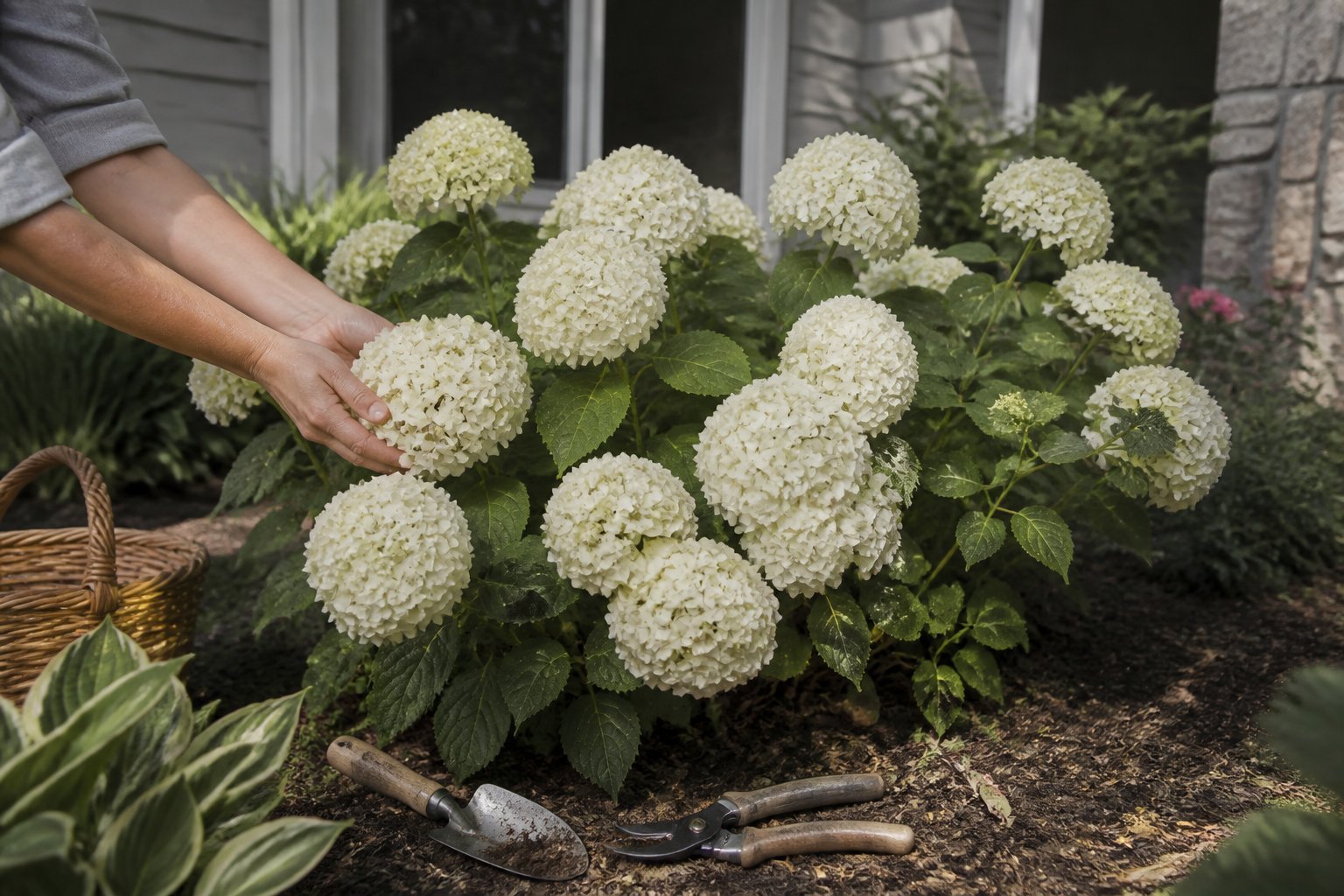
Intent: guide — show you how to use Annabelle at the front of your house.
Plant Annabelle for big, white blooms that read clean from the street. It tolerates shade and cold, so you can place it under windows or along walkways without fuss.
Prune hard in late winter to keep stems strong and blooms large. A common mistake is light pruning—this makes floppy flower heads. Cut back to about 12–18 inches to encourage sturdy growth.
Space plants 3–5 feet apart for a full, layered look. Add mulch and consistent moisture the first two years; Annabelle likes steady water but not wet feet.
For extra curb appeal, pair with evergreen foundation plants for winter structure and a low, flowering perennial in front. Try one plant under each window to frame your home and soften hard edges.
4) Inkberry Holly (Ilex glabra)
Use this as a reliable evergreen for a neat front-yard look; it holds dark, glossy leaves year-round. Plant it in full sun to part shade and choose acidic, well-drained soil for best results.
Inkberry makes a tidy hedge or foundation planting. Try the compact Strongbox® types for a formal edge, or go with taller varieties for screening. Space plants 3–5 feet apart depending on the cultivar.
Watch for one common mistake: planting too deep or in poorly drained soil. Inkberry has mostly shallow roots, so mulch lightly and avoid root suffocation. Prune in late winter to keep shape and remove crossing branches.
For native-friendly options and landscape uses, learn more about Inkberry’s garden roles and cultivars at this guide to Inkberry holly varieties.
5) Dwarf Rhododendron (‘PJM’ Hybrids)
Guide: pick PJM hybrids for year-round color and low-maintenance structure near your front steps. They hold glossy evergreen leaves and early spring blooms that brighten the entryway without growing too tall.
Plant them where they get morning sun and afternoon shade. Space them 3–5 feet apart for a tidy hedge or group them in odd numbers for a natural look. A common mistake is planting in hot, reflected-sun sites; leaves can scorch.
You can prune lightly after flowering to keep shape and encourage new growth. Mulch and good drainage matter more than fertilizing; soggy roots invite rot. For variety notes and care tips, see a compact rhododendron guide from Epic Gardening.
6) Japanese Andromeda (Pieris japonica)
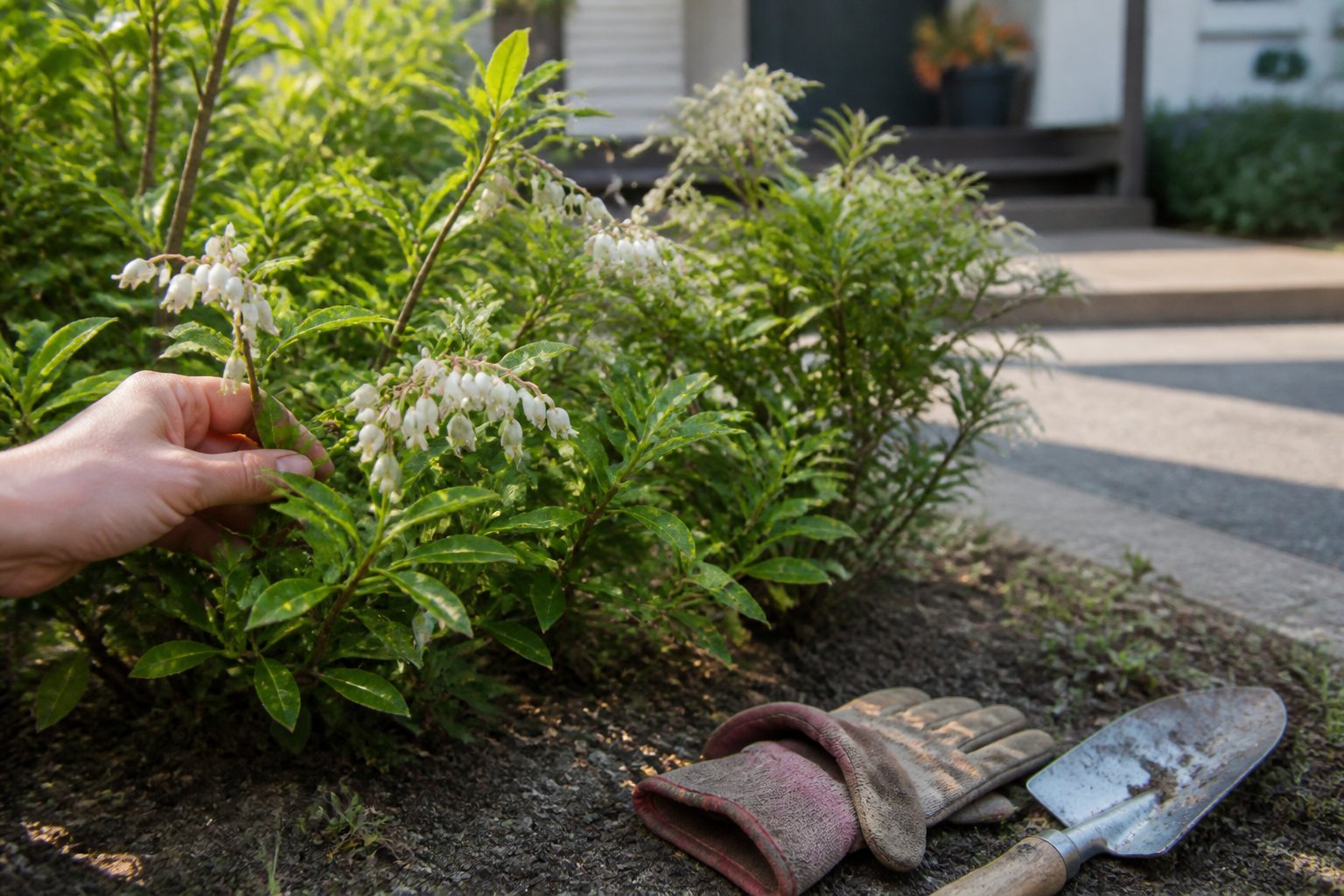
Choose Japanese Andromeda when you want an evergreen shrub with showy spring flowers and colorful new growth. It thrives in part shade and acidic soil, so plant it near azaleas or rhododendrons for a cohesive bed.
Place it where you can enjoy its drooping clusters of white or pink blooms up close; they perfume the air in spring. Watch new leaves—bronze, red, or pink depending on variety—for added seasonal color without extra effort.
Avoid full sun on hot afternoons and heavy clay that stays wet; both stress the plant and invite leaf browning. Prune lightly after flowering to keep a neat shape and remove dead wood.
Try ‘Brouwer’s Beauty’ or compact cultivars for small beds or containers. If deer nip your plants, Pieris often fares better than many ornamentals, but still protect young shrubs.
7) Lavender (Lavandula angustifolia)
Plant lavender as a guide for fragrance and low maintenance near walkways or windows. It likes full sun and well-drained soil, so pick a sunny spot and avoid heavy clay.
Choose English lavender for cooler climates and prune lightly after bloom to keep a tidy shape. A common mistake is overwatering; lavender prefers dry roots and can rot in wet soil.
Pair lavender with drought-tolerant companions to create a neat, fragrant border. Visitors will notice the scent when they pass; you can also harvest spikes for sachets or drying.
Check winter hardiness for your zone before planting and give young plants good drainage and a slow start. Try a single row beneath a window to frame your house and boost curb appeal.
8) Azalea (Rhododendron indicum varieties)
This guide shows how to use Azaleas to add color and structure to your front yard. Plant them where they get morning sun and afternoon shade for best blooms.
Choose evergreen varieties for year-round leaves, or deciduous types for a spring display. Popular picks include compact hybrids that fit a narrow bed and keep sightlines clear.
Water deeply but infrequently; shallow, frequent watering leads to weak roots. Mulch with pine bark to keep soil cool and slightly acidic — many gardeners skip testing pH and then wonder why blooms fade.
Prune right after flowering to shape plants without cutting next year’s buds. If you want bright color without much height, pick a dwarf cultivar and plant in groups for instant impact.
9) Dwarf Korean Lilac (Syringa meyeri ‘Palibin’)
Use this guide to plant and care for a compact, fragrant shrub that fits small yards and front foundations. The Dwarf Korean Lilac blooms in late spring with sweet-smelling lilac-pink flowers that draw pollinators and neighborhood compliments.
Place it in full sun for best flowering; partial shade reduces bloom. Space plants 4–6 feet apart so they keep a neat mound without crowding. Prune lightly after flowering to keep shape and avoid cutting next year’s buds.
A common mistake is overwatering young plants; they prefer well-drained soil and moderate moisture. If you want a low hedge, plant several and trim to a tidy edge. Learn more on growing and care from this Dwarf Korean Lilac plant guide.
10) Dwarf Japanese Maple (Acer palmatum ‘Dissectum’)
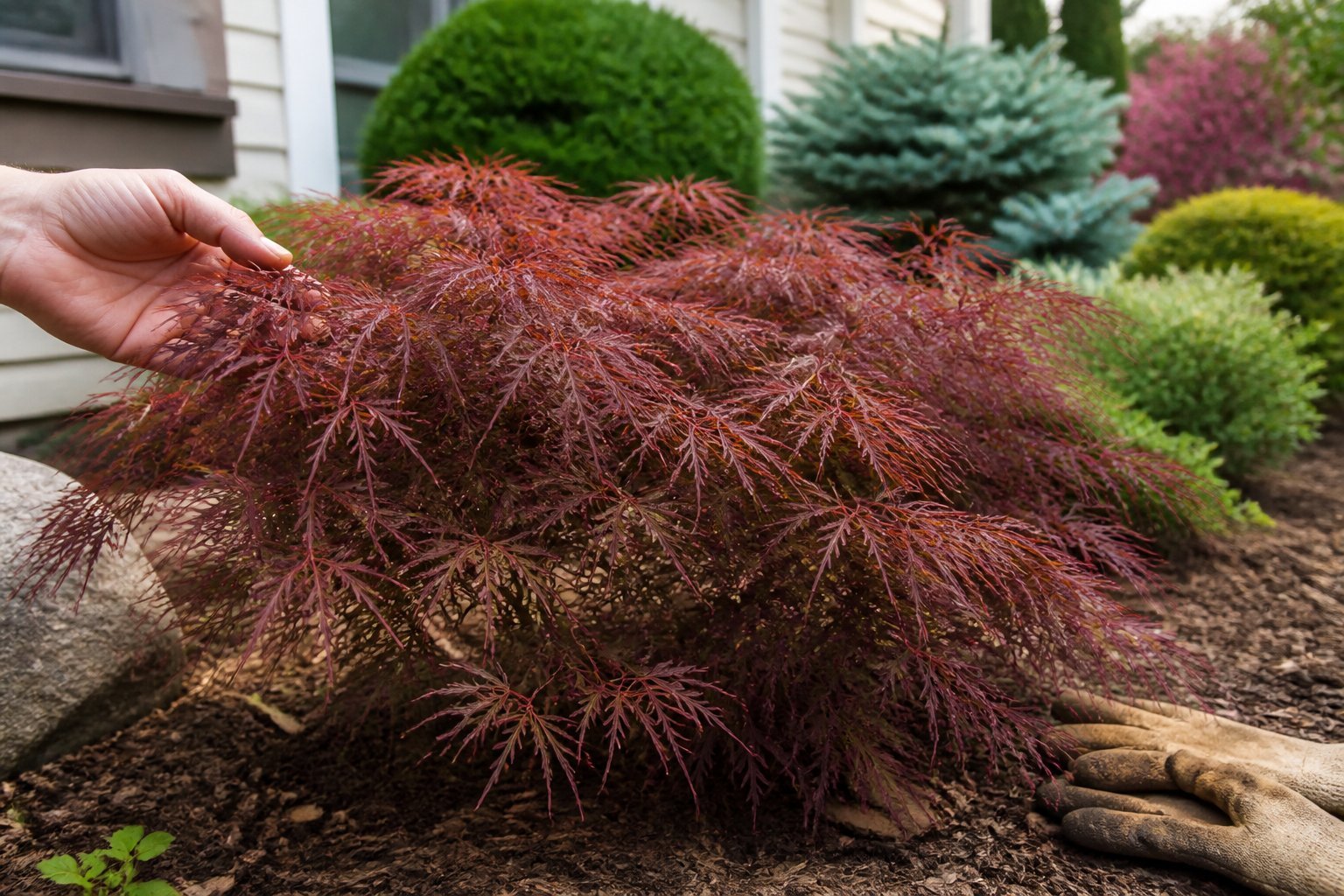
Intent: guide. Plant this dwarf laceleaf maple where people see it from the porch or sidewalk.
You get striking, finely cut leaves that change color through the seasons. Place it in part shade; too much sun can scorch the leaves and too much shade dulls the color.
Plant in well-drained, slightly acidic soil and mulch the root zone to keep soil cool. Water deeply during hot, dry spells; shallow, frequent watering weakens roots.
Common mistakes include planting too deep or crowding near foundations. Give it 6–10 feet of room so its layered form shows off without rubbing on structures.
Try ‘Crimson Queen’ or a green dissectum for contrast near evergreens. Check graft unions if buying; grafts can fail over years. Add one to frame an entry and prune only to shape.
Choosing Shrubs for Curb Appeal
You want shrubs that fit your site, add color through the seasons, and sit at the right scale next to walkways, windows, and the house. Focus on sunlight and soil first, then match bloom times and evergreen structure, and finally place plants so they frame — not crowd — your home.
Assessing Sunlight and Soil Conditions
Guide: measure light and test soil so you pick shrubs that thrive with less fuss.
Stand in the planting spot at midday and note how many hours of direct sun it gets. Full sun is six-plus hours, part sun is three to six, and shade is under three. This simple check prevents planting roses in a shady gap or hollies in a hot, exposed bed.
Dig a 6–8 inch hole to see soil texture and drainage. If water puddles for a day, choose moisture-tolerant shrubs like azaleas or hydrangeas. Sandy, fast-draining soil favors lavender and rosemary. Amend clay with compost and coarse sand to improve drainage before planting.
Common mistake: trusting nursery tags alone. Match the plant’s light and soil needs to your actual site. That small step cuts replanting and pruning later.
Color and Year-Round Interest
Idea: plan for seasonal blooms plus evergreen structure so your front looks good in every month.
Pick a mix: two evergreen anchors (like boxwood or holly) for winter shape, plus two seasonal bloomers (rhododendron in spring, spirea in summer). Stagger bloom times so you have color from spring through fall. Include one shrub with attractive fall foliage, such as burning bush, for autumn impact.
Use a simple palette of two dominant colors and one accent to avoid a busy look. For fragrance near the door, choose a scent-safe distance so blooms don’t clash with entry traffic. Avoid all-flowering shrubs that die back completely in winter; you’ll lose structure and curb appeal.
Watch for pests and diseases tied to color choices—some bright varieties need more spray or care. Choose resistant cultivars when available to save time.
Balancing Size and Placement
Tutorial: place shrubs by mature size and sightlines to prevent crowding and hide ugly views without blocking architecture.
Check plant tags for mature height and spread, then mark circles on the ground at planting time. Small foundation shrubs should sit 2–3 feet from the wall; medium shrubs 4–6 feet; large specimens 8–12 feet. This keeps windows and walkways clear and reduces future pruning.
Layer in thirds: low plants up front, medium in the middle, tall at the back. Use odd-number groupings (3 or 5) for natural rhythm. Avoid planting tall evergreens directly at corners unless you want a strong vertical frame.
Common mistake: planting by current size, not mature size. That causes crowding and root stress. Place with future growth in mind to cut maintenance and keep your house lines visible.
Planting and Caring for Shrubs
You will prepare the soil, pick the right spot, and plan routine care so your shrubs look tidy and healthy year after year. Focus on soil depth, sun exposure, watering schedule, and pruning timing to avoid common problems.
Best Practices for Planting
Intent: guide — plant shrubs correctly the first time to reduce rework.
Dig a hole twice as wide as the root ball and the same depth. Loosen compacted soil at the bottom so roots can grow down. If your soil is heavy clay, mix in coarse compost or sharp sand to improve drainage.
Place the shrub so the top of the root ball sits level with the finished soil line. Backfill with native soil mixed 20–30% compost. Firm the soil gently — don’t stomp — to remove large air pockets. Water thoroughly right after planting to settle the soil.
Space shrubs according to their mature width. For a 4-foot mature spread, plant 4–6 feet apart. Mulch 2–3 inches around the base, keeping mulch 2–3 inches away from stems to prevent rot. Stake only if the shrub is tall and unstable.
Watering and Fertilization Tips
Intent: tutorial — water and feed shrubs for steady growth without overdoing it.
Water new shrubs deeply twice a week for the first month, then taper to once a week for the first year depending on rainfall. Use a slow soak or soaker hose for 20–30 minutes so water reaches the roots. Test by digging down 3–4 inches — soil should be moist, not soggy.
Feed in early spring with a balanced slow-release fertilizer (e.g., 10-10-10) following label rates. For acid-loving shrubs like azaleas, use a fertilizer formulated for ericaceous plants. Avoid high-nitrogen feeds in late summer; they push tender growth that cold weather can damage.
Adjust water and fertilizer if leaves yellow, drop, or show scorched edges. These signs often mean overwatering, poor drainage, or nutrient imbalance.
Common Maintenance Mistakes
Intent: guide — avoid missteps that stunt shrubs or raise costs.
Over-pruning is common. Don’t shears-cut flowering shrubs in spring if they bloom on last year’s wood; you’ll lose blooms. Instead, do light shaping after flowering or major pruning right after bloom for those species.
Cutting mulched beds too deep or piling mulch against trunks invites rot and pests. Keep mulch away from stems and maintain 2–3 inches depth. Another mistake: shallow, frequent watering. That creates weak, surface roots and stress during drought.
Ignoring soil pH and light needs wastes effort. Plant a sun-loving shrub in shade and expect poor performance. Read plant tags and replant if a variety consistently declines. If pest or disease signs appear, remove affected branches and consult a local extension or a trusted nursery for a targeted treatment.